
Today Adam gives us the heads-up on Helmet…
Helmet is an American rock band formed in New York City by guitarist/vocalist Page Hamilton (below, far left). Hamilton is the only member to have been in the band since its formation in 1989. The original line up consisted of Page Hamilton on guitar/vocals, Henry Bogdan on bass, Peter Mengede on guitar, and John Stanier on drums. Helmet has released seven studio albums and two compilation albums. Their music is characterized mainly by syncopated, staccato guitar riffs in drop C tuning, along with distorted time signatures on the drums. The guitars often produce a dissonant sound, which proved to be captivating despite the relative simplicity of a lot of the riffs themselves. Hamilton’s vocals provide variation to the music, as they sometimes consist of heavy screams and at other times melodic singing. Helmet has been categorized by different critics as alternative metal, alternative rock, funk rock, experimental rock, and groove rock.

Helmet first achieved mainstream success in 1992, shortly after signing to Interscope Records. Soon after they signed, they put out their first Interscope record, which was entitled Meantime. The album sold over two million copies and went Gold in 1994. The album contained singles such as “In the Meantime” and “Unsung.” To this day, it is Helmet’s most widely acclaimed album. The next album they put out was Betty, which provided a more melodic sound than the previous Meantime, which had a much heavier, darker sound. This was due in large part to Page Hamilton using singing in his vocal work a lot more than screaming. Betty was referred to by many as Helmet’s experimental album. It has a broader approach, with forays into some jazz and blues influences. Songwriter Hamilton did in fact study jazz at music school before forming Helmet, so he stated that in this album he wanted to indulge in some of those influences. Betty reached number 45 on the Billboard 200 and had two singles off it, with the songs “Beautiful Love” and “Milquetoast.”
Helmet broke up temporarily in 1998 and most people did not see a reunion in their future as the split was quite bitter, according to the band members at the time. However, the band did get back together after this hiatus and put out their fifth album, Size Matters. This album contained the single “See You Dead,” which was released in August 2004.
 Yep. Every single book. Spreadsheets at the ready, book nerds! Making a list of thousands of awesome indie and small press books is immensely fun, of course (and there’s so much good stuff to choose from), but it’s also rather time-consuming. And we’re hoping to finalize most of our selections before we head to next week’s BookExpo in New York.
 Perfectionism is the voice of the oppressor, the enemy of the people. It will keep you cramped and insane your whole life, and it is the main obstacle between you and a shitty first draft. I think perfectionism is based on the obsessive belief that if you run carefully enough, hitting each stepping-stone just right, you won’t have to die. The truth is that you will die anyway and that a lot of people who aren’t even looking at their feet are going to do a whole lot better than you, and have a lot more fun while they’re doing it.
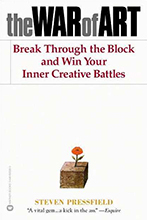 Resistance cannot be seen, touched, heard, or smelled. But it can be felt. We experience it as an energy field radiating from a work-in-potential. It’s a repelling force. Its aim is to shove us away, distract us, prevent us from doing our work … Resistance will tell you anything to keep you from doing your work … Resistance has no strength of its own. Every ounce of juice it possesses comes from us. We feed it with power by our fear of it.
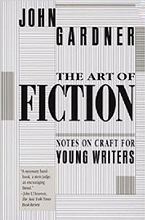 We may observe, first, that if the effect of the dream is to be powerful, the dream must … be vivid and continuous—vivid because if we are not quite clear about what it is we’re dreaming, who and where the characters are, what it is that they’re doing or trying to do and why, our emotions and judgements must be confused, dissipated, or blocked; and continuous because a repeatedly interrupted flow of action must necessarily have less force than an action directly carried through from its beginning to its conclusion.




 American poet Louise Glück isn’t the cheeriest duck in the pond—loneliness, divorce, and rejection are her favored themes—but she can shoulder the weight of myth like no one else, and her spare, intimate, unflinching voice is utterly compelling. If you’re new to Glück, her Pulitzer-Prize-winning collection,