Kafka Was My Boyfriend

KafkaFor the gloomy teenage girl with literary pretensions, Franz Kafka was The One. The dim-but-cool kids went gooey for Kerouac; the jocks-with-brains thumped each other with battered copies of Hemmingway. But for the determinedly miserable lit-nerd, there was only one bloke in the game: K. It helped, of course, that he met the standard requirements of an emo Ken doll—tall, dark, handsome, and riddled with tuberculosis—but what really got this maudlin adolescent’s heart a-poundin’ was the TORMENT. Oh, the torment!

I read the short stories and The Trial and The Castle, of course—teenagers in love are such completists—and I was vaguely aware that all this nightmarish bureaucracy stuff somehow spoke deeply to adults, or at least made them say Kafkaesque every time the office photocopier jammed. But bureaucracy wasn’t much of a force for evil in my young life (the indignity of compulsory ballroom dancing lessons not withstanding), and what really moved my soppy teenage heart were his letters to Felice and Milena.

Writing letters…means to denude oneself before the ghosts, something for which they greedily wait. Written kisses don’t reach their destination, rather they are drunk on the way by the ghosts.
Reason

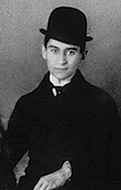
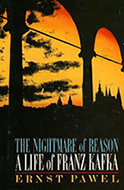
I kept the two volumes of letters on my bedside table, along with a black and white photo of Kafka in a bowler hat and a copy of my favorite Kafka biography, The Nightmare of Reason, which I liked as much for the Scream-ish sunset on the cover as for its insightful commentary. I wrote ridiculous marginalia—Am inglorious failure! Must learn German!—and cultivated vehement opinions concerning the relative merits of my rivals-in-love. Felice was conventional and had troubling teeth; Milena was dashing and clever and her horrible father once had her locked away in an asylum for being a bit naughty. Surely every young Kafka obsessive must be Team Milena? I told my mother that if I one day had a daughter I would name her Milena. My mother, a nurse, advised me against it; with a name like that, there would be teasing.

He wasn’t the perfect boyfriend, of course. I had to overlook the visits to prostitutes and his insistence on chewing every bite of food thirty-two times before swallowing—but what romantic relationship is without vexation? I also had to ignore the not inconsiderable biographical evidence that suggested Kafka was in fact a dapper, popular fellow who spent his evenings gadding about at proto-hipster shindigs, since my Kafka spent his evenings alone in an attic, sitting at a small wooden desk, troubled by headaches, thank you very much. But all in all, he served me well. Tracing a path of logic through his labyrinthine sentences made my brain work better, and the purity of his writing wiped the ironic smirk off my adolescent face. He made me laugh (no, really; dude is funny), and his neurotic meanderings were a peculiar consolation.

What happened was that the brain could no longer endure the burden of worry and suffering heaped upon it. It said: ‘I give up; but should there be someone still interested in the maintenance of the whole, then he must relieve me of some of my burden and things will still go on for a while.’ Then the lung spoke up, though it probably hadn’t much to lose anyhow. These discussions between brain and lung which went on without my knowledge may have been terrible.

Eventually I grew up, stopped being so morose, and expanded my obsessions (step aerobics has not stood the test of time nearly so well). But I still love the letters and diaries, still read them from time to time, still think of them as some of the most beautiful sentences I’ve ever read. And I will happily force a volume or two into the hands of anyone whose cheerful adolescence robbed them of a perfectly miserable Sunday afternoon in bed with Kafka.

Note: The two quotes above are from Letters to Milena; I cut-and-pasted them from a teenage girl’s Tumblr. Plus ça change….
AWP is Nigh!

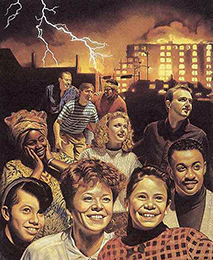
RaptureWith The Rapture Index approaching an all-time high (“news reports claim there is a surge in demand for exorcists”), it’s time to get packing for AWP! This year’s boozy MFA reunion conference kicks off in Boston on Wednesday, and Malvern Books will be there with bells on. We’ll be looking to stuff our tote bags with all manner of splendid wares—bookstore shelves don’t stock themselves, people!—so please do keep an eye out for us (us = tall; Texan; curly of hair and black of shoe), and feel free to thrust catalogs and cookies in our general direction.

And, in entirely related news, here are our favorite collective nouns for geese (painstakingly curated from the handy Collective Nouns for Birds website):

  • A plump of geese
  • A christmas of geese
  • A skein of geese
  • A covert of geese
  • A gagelynge of geese
  • A knob of geese
  • A little knot of geese
  • A string of geese
  • A wedge of geese
  • A chevron of geese

What should a group of publishers be called, I wonder? A gossip of publishers? An intoxication of publishers? A hatchet of publishers? A palimpsest of publishers? Whatever you are, publishers en masse, we look forward to seeing you shortly.

It Beats For As Long As It Can

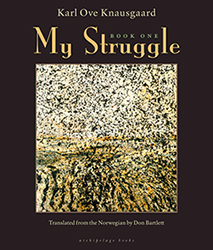
Karl Ove Knausgaard’s My Struggle is an embarrassing book to read on the train—I kept expecting an elderly woman in a fur coat to hiss “Nazi filth!” at me—but it’s well worth the potential commuting debacle. Here are the first few lines:

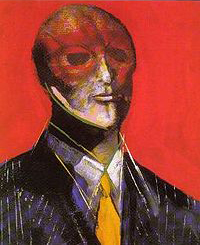
My StruggleFor the heart, life is simple: it beats for as long as it can. Then it stops. Sooner or later, one day, this pounding action will cease of its own accord, and the blood will begin to run towards the body’s lowest point, where it will collect in a small pool, visible from outside as a dark, soft patch on ever whitening skin, as the temperature sinks, the limbs stiffen and the intestines drain.
It’s good to head into the weekend with a cheery reminder that death is imminent, no? And that’s what My Struggle is, really: reading this 430-page autobiography is like sticking a giant post-it note to your fridge with YOU WILL DIE scrawled on it in night-black sharpie. (If you’re headed to a baby shower tomorrow, it would make an excellent gift.)

Here’s the plot summary, booming movie trailer style: Ten years ago, novelist Karl Knausgaard’s father drank himself to death… now watch as our hero struggles to avoid his father’s fate! Can he put down the bottle and pick up a pen? Will he ever find peace of mind? (Cue shot of thirty-something man slouched at desk, eyes darting furiously between Jack Daniel’s in left hand and ballpoint in right hand.)

Knausgaard is Norwegian, and handsome in that tedious “beardy literary bloke who listens to Bach while chopping wood and thinking mean thoughts about his third wife” kind of way. In Norway he is apparently very famous and much gossiped about, and this book is a source of controversy because the various people mentioned in it are real and identifiable and perhaps not so thrilled with their roles. But, happily, we get to read his autobiography in translation, out of pop-cultural context, and can avoid having to think too hard about whether or not Knausgaard has been fair or decent. He’s just been excellent.

He eschews irony. He’s both weepy and unflinching. You know the old deathbed cliché of one’s life flashing before one’s eyes? That’s what My Struggle feels like: an entire life recalled at the moment of death, a flickering moment that somehow lasts forever and encompasses everything: the big deals—despair; heartbreak—and the tiniest details—the smell of your mother’s dressing gown and those rippling bands of shadow on your childhood ceiling and all that other maudlin minutiae that reduces you to tears in an instant.

But if I’m making it sound like kind of… a drag, it’s not. It’s a page turner to rival the very best Ruth Rendell, and for much the same reason: death is coming. There’s page after page of teenage ephemera—cigarettes and guitars and hanging around in the fields at night—and countless glimpses of a distant, terrifying father, a father encountered briefly in the hallway, or spotted through a window, and it all goes on for an eternity and yet somehow it’s the most thrilling thing I’ve read in ages because death is lurking in every syllable. You know you are galloping towards a shit-smeared couch, a filthy house of empty bottles, a body on a slab. As James Wood writes in his New Yorker review, “even when I was bored, I was interested.”

It’s a mad, Proustian project, and one that spans six volumes, so after you put down Book One and have a good weep and add draw up will and skydiving lessons? to your To Do list and write YOLO! on your Facebook wall, you can commence getting on with your life, safe in the knowledge that by the time you’ve restored your complacency and filled your days to bursting with arguments about whose turn it is to do the laundry, Karl Knausgaard will be back to remind you YOU WILL DIE.

Spoil the Child

From one of my favorite essays, Geoff Dyer’s “On Being an Only Child”:

My mother often quoted with approval the maxim “Spare the rod and spoil the child.” Unfortunately she thought this was intended as exhortation rather than warning. The mother’s instinct to indulge her only child was thereby reinforced by a higher authority. I was so spoiled that on the day my parents unexpectedly came to pick me up at primary school in the middle of the morning—I was about eight at the time—I told the teacher that it was probably because they wanted to buy me a toy. In fact it was to go to Shropshire where my grandmother was dying.

Do you like Huey Lewis and The News?

AmericanPsychoI apologize in advance if the tone of today’s post is a little petulant. There was some kind of terrible bedside misunderstanding between the two cats this morning—cat #1 made a small noise; cat #2 COULD NOT BELIEVE THE SMALL NOISE—and cat #2 decided to release the tension by spinning in daft circles on my face. This seemed to work well as a method of stress relief for cat #2, bless, but my right eyelid is now the right eyelid of someone who has been wearing their crown of thorns at a very jaunty angle. Jerks.

Onwards! Bret Easton Ellis reveals he is ready to start writing fiction again:

The idea to begin a new novel started sometime in January while I was stuck in traffic on the 1-10 merging into Hollywood after I’d spent a week in Palm Springs with the 26-year-old and a friend I’d gone to college with who was now losing her mind.

For the TLDRers, a summary of his post: Deepak Chopra retreat; CW network; phone calls from the production company. Yep, Bret Easton Ellis has been too busy being Californian to write another novel. But after coughing up the script for The Canyons onto the back of an American Apparel receipt, our lad is finally ready for a new challenge…

I jest because I love. Or at least, I quite like. I thought American Psycho was weird and funny and awful and intense and something that will stay with us (“sadly, an American classic,” as some bloke says). It took the vanity and vapidity and excess of the ’80s to its grotesquely logical conclusion. And I had to show I.D. to buy it from the Chartwell Whitcoulls, which was the most exciting moment of my young adult life.

But much of what Ellis has written since then has been more of the same—same day, different drug, now with vampires! I’d imagined him as some shabby, friendless weirdo who had locked himself away in a Vogue-lined chamber in order to write a grand, sweeping indictment of yuppie culture. But not so! In 2010 Ellis told an interviewer:

Patrick Bateman did not come out of me sitting down and wanting to write a grand, sweeping indictment of yuppie culture. [That’s me told.] It initiated because of my own isolation and alienation at a point in my life. I was living like Patrick Bateman. I was slipping into a consumerist kind of void.

For the love of god, man, pull yourself out! You’re that guy who gets excited about hanging out with models while also making fun of and despising the fact that you’re that guy who gets excited about hanging out with models? Fine. So you’re a meta-douchebag. That’s okay: you can tell us modern life is rubbish while standing knee-deep in muck. But you only needed to tell us once; the ickiness of it all has been well and truly grasped, and I don’t think I can drum up much enthusiasm for another round of aren’t-we-terrible-and-pass-the-martinis…

But what do I know? Ellis might be intending to go in a totally different direction. Maybe he’s had a revelation: if this scene is so awful, why am I still here? Maybe he’s going to move to Minnesota and plant zucchini and write a tender memoir about how the smell of damp soil reminds him of his grandmother. Which would be worse? American Psycho Part 6: The SoulCycle Cycle? Or A Vegetable Saved My Life: How I Finally Learned to Stop Giving A Shit About What Goes On At The Chateau Marmont?

Basement Living

StressballIn the interests of stocking our bookstore shelves with the very best and brightest, we spent last weekend roaming the aisles of the American Booksellers Association conference, aka the ABA. (Yes, book people love acronyms; if one were so inclined, one could fill one’s days shuffling from AAP to ALA to BEA—though one might question the National Writers Association’s decision to join in this mania for initials.)

This was our first time attending a conference as a bookseller; previously we sat at the Host Publications table, behind a neat fan of jolly nice books. But whether you’re there to sell, buy, or browse, the commercial arm of the book conference is always the same: you are in a drop-ceilinged basement somewhere, surrounded by tote bags, and it’s fifteen degrees too hot or too cold. The room manages the amazing feat of being simultaneously vast and claustrophobic, and the carpet’s psychedelic swirls suggest that vomit concealment was the interior decorator’s primary concern. You wander the aisles for two or ten or possibly seventeen-hundred hours, filling your arms with catalogs and small cards inviting you to Hear Mike Michaels Read Tonight in Room 12B. Wine Provided! At every third table there is a woman selling a self-published poetry collection called And Then My Uncle Touched Me.

If you sit at a booth, a man visits your booth to ask if you sell books about fishing; he is persuaded to buy a book of Romanian poetry with a picture of a fish on the cover. Another man with a thick Polish accent and a helmet of ginger hair stops by to tell you about his cat, Eric, who was a stevedore in a former life. People pick up your novels, smear them with fingerprints, and place them back askew, with a cutting remark: “I really only read non-fiction.” (“I’m sorry to hear you broke your imagination,” you say, but only inside your head, which fills to bursting with horrible rudenesses as the minutes, hours, days go by.)

Somewhere above you, writers and academics host and attend panel discussions entitled Oh Do Shut Up, Mother!: Liminal Masculinity in the Works of Edith Wharton and Weeeee!: How To Write a Play in Ten Minutes. You pretend you are sad to be missing out on these panel discussions.

There are tchotchkes everywhere (and yet you will never, ever learn how to spell tchotchkes). Publishers fling Hershey’s Kisses and earth-themed stress balls at unsuspecting poets, while tchotchke sellers try to convince bookstore owners that finger puppet squids and miniature plastic flamingoes will sell. (And they will. A transcendent work of literature may be an axe for the frozen sea within us, but it doesn’t look all that cute in your office cubicle.)

The day ends—you thought the day would never end—and you grab a glimpse of sunlight and a shot of vodka at the hotel bar, surrounded by exhausted conference attendees who appear to be playing the drink-whenever-someone-says-paradigm drinking game. People take sides about Sebald. People kiss people who are not the people they should be kissing. People weep about the kissing, and about their tenure prospects, and possibly even about the Sebald. (“What’s so great about a picture of a flamin’ teas-maid?!” “You imbecile!”) You trudge back to your hotel room smelling like $1 bills. You watch ten minutes of a reality TV show called Too Much Lovin’, about an obese man who hoards lizards, and then you fall asleep in your clothes, clutching a tiny can of minibar Pringles.

And on it goes. Rinse and repeat. At some point on the last day, every vendor at every table begins to drink from a hip flask of Jim Beam stashed in their Tin House tote bag. The drunkest vendor vomits quietly in a corner; the carpet will not betray his secret. And then it’s over and the professional dismantlers appear and begin to reduce your recent past to a huge pile of mangled 50% OFF signs and a sea of abandoned catalogs.

And yet! In a triumph of hope over experience, you look forward to the next conference, and the one after that. The voices of the barking mad fish enthusiasts fade in your memory, to be replaced by fond recollections: of that grilled cheese you ate in the hotel restaurant, and of the conversations you had with all those charming, passionate dorks. My people, you think, thrilled to belong to that earnest tribe of bookish folks who wear their Smartish Pace t-shirts with pride and think reading is the best possible use of one’s hours. So do your worst, AWP 2013! Have at us with your branded key chains and your novelty erasers. We’re ready for you and your disgusting carpet.