Staff Picks: The Milk Bowl of Feathers

Claire recommends: The Milk Bowl of Feathers: Essential Surrealist Writings, edited, with an introduction, by Mary Ann Caws
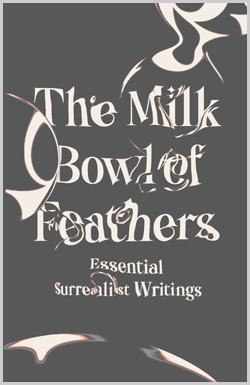
The Milk Bowl of Feathers is Mary Ann Caws’ most recent addition to the surrealist catalogue, and though it is (delightfully) slim for an anthology, this volume manages to feature an unexpected cast of surrealist writers, and a good percentage of them are women.

Distinguished Professor of English, French, and Comparative Literature and Emerita and Resident Professor at the Graduate School of the City University of New York, Mary Ann Caws has translated and written on many Surrealists, so it is with a comprehensive knowledge of the canon that she has curated this treasury of often-overlooked female Surrealist artists, whose captivating work really takes the spotlight, even as it is presented alongside the usual suspects of André Breton, Tristan Tzara, and the like. The stellar female Surrealists included here are: Dora Maar, Joyce Mansour, Elsa von Freytag-Loringhoven, Claude Cahun, Leonora Carrington, Mina Loy, Alice Rahon, Gisèle Prassinos, Kay Sage, Meret Oppenheim, Alice Rahon, and Léona Delcourt.

As Caws expresses in her brief yet compelling introduction, Dada emerged as a globalizing artistic force post WWI. It was the Dada movement, not André Breton, that was the true forbear of Surrealism. Though many claimed sovereignty in the movement (“I am Surrealism” says Salvador Dalí on repeat), this collection is proof that Surrealism belongs to no one, despite how it is traditionally anthologized. More importantly, this collection is a reminder that Surrealism belongs to everyone.

In her introduction, Mary Ann Caws says: “Essential to Surrealist behavior is a constant state of openness, of readiness for whatever occurs, whatever marvelous object we might come across, manifesting itself against the already thought, the already lived.” Concisely, Caws conveys the importance of spontaneity to this formative movement, the unlimited potential that it holds for the creation of art. And in the work of these featured female artists, we can read a more complete spectrum of this openness to the subconscious, often expressed in enthralling pangs of obsession, wild emptiness, and desire.

Love, Caws reminds us, is the emotion that triumphs through Surrealist writings, experiencing the transcendent emotion “always for the first time” (Breton). Love in Surrealism is a kind of enchantment with consciousness, even its darker tributaries:

I love sliding I love upsetting everything

… writes Jaques-Bernard Brunius in his poem “I Love”. A stunning and complex specter of love steps through in Dora Maar’s poem, “I Rested In The Arms Of My Arms”:

An eternal shivering of thoughts
Fear love Fear love
Close the window open the window
You’ll see you’ll see
The hummingbird motionless as a star

Among the diverse cast of writers is Claude Cahun, a non-gender-conforming writer who lived and wrote well before the term non-binary came into the nomenclature. Born Lucie Renee Mathilde Schwob, Claude Cahoun was a chosen name. A French photographer, sculptor and writer, Claude’s self-portraits often depict doubles of the artist which result in a kind of visual twinning, and reveal their deep investigation of identity and social constructs. Within Claude’s short piece in The Milk Bowl of Feathers, I found one of my favorite passages of the collection:

Only with the very tip would I wish to sew, sting, kill. The rest of the body, what comes after, what a waste of time! Only ever travel in the prow of myself.

Cahoun is not widely translated into English, and their titles in translation are currently out of print, so it is a rare treat to come across this piece in Caws’ collection. (any translators out there looking for a new project?).

Léona Delacourt, a name many people may not have come across, also finds its way into this collection. Léona was the dedicatee of Andre Breton’s infamous novel, Nadja, in which she is obsessed over and exoticized beyond recognition. Though her pieces here are very short, and are themselves drafts of letters to Breton, they lend humanity and a frantic voice back to the person who had been all but lost to history within the heroine, Nadja:

—my soul is troubled—and turns in all directions to find the fire—

Joyce Mansour was a prolific Jewish-Egyptian Surrealist poet whose work hasn’t seen much translation into English, but who authored 16 books of poetry during her lifetime. Her apartment was fabled to be a favored meeting place for Surrealist rendezvous. Her poetry is wrenched by deep bodily sensations, known for her brazen use of erotic imagery, but also for diving deep into the sensations of the mind’s surf:

Shining with a thousand quivers
Consumed by ecstatic mad inertia

Discovered by André Breton at age 14, Gisèle Prassinos is yet another female Surealist whose image has traditionally been cast in the light of a femme enfant, a young muse, objectified by male artists. But it is apparent that Gisèle was something of a prodigy; her words absolutely slice through the page in her intellectual and freaky prose:

I know that by taking on generally the superiority of prophetic organization, your heart will never dare to claim mine.

So, by fixing upon you curtsies and spinnings, I moan these words at you, as a hoax: ‘let’s fear the senses.’

If you like what you read of Gisèle Prassinos in The Milk Bowl of Feathers, check out her full collection of stories, The Arthritic Grasshopper (Wakefield Press, 2017) on the shelves at Malvern Books.

The Milk Bowl of Feathers also includes a range of writings done by visual artists, including a story by everybody’s favorite British expat painter, Leonora Carrington. Carrington’s stories (check out this great collection put out by Dorothy Project, also on the shelves at Malvern Books) feel like stepping into one of her paintings—they’re populated by bizarre humanoid creatures whose incoherent foibles mimic free association. For example, in her story “The Sand Camel,” two young boys fashion a camel out of butter and sand, and this weird pet animates, and goes on to hold their grandmother upside-down as a kind of makeshift umbrella.

The Milk Bowl of Feathers is a fresh salute to the Surrealist spirit, which is as relevant now as ever in its openness to possibility; in reaching beyond the rational, we push against capitalism, nationalism, and against a hierarchy of meaning that can create toxic frameworks, such as the phallocracy that dominates our understanding of Surrealism. I think we could all benefit from an injection of receptivity, and a more inclusive exploration of art and life that exists in a sheer state of exuberance.
Staff Picks: A King Alone

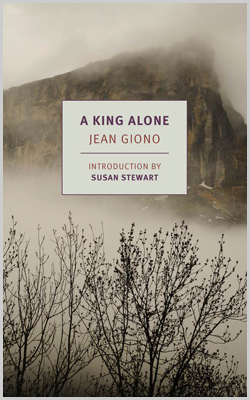
Celia recommends A King Alone by Jean Giono:

I slid into this novel first through its language. So: “Everything piles up on us; nothing moves. Green at first, the light turns the color of hare innards, then an extraordinary black that, black as it is, has shadows of deep purple.” Or else: “How can such perfection not have a consciousness, when all it takes is a puff of wind, an unfortunate shift of evening light, an odd tilt to its leaves for its beauty, defeated, to lose all its power to awe?”
Like much of Jean Giono’s other work, A King Alone takes place in an isolated community, both embraced and menaced by the natural world. There’s a beech tree in the mountains, a remote village, an unnamed Monsieur V. whose descendant once read Nerval while sitting under the hollyhocks of his mother’s farm, long after the events with which the novel deals were over, a “big illustrated book about Cartouche and Mandrin and werewolves with their different snouts all portrayed in it”—a jumble of innocent-sounding commonplace details, in other words, that, over the course of the novel, become less innocent and more and more sinister. There’s a formal severity to Giono’s chatty narrator, with his encyclopedic knowledge of the villages around him. He sees everything—or, if he doesn’t see it, he’s heard of it. But the reasons for things, the interior lives of those he watches, are often beyond him. The mystery, in this novel, is never what has happened, but rather why.

So, here is the what: it is 1843, and the people of a small mountain village have begun to disappear. One young woman vanishes into the fog and is never seen again. A second man is gripped from behind and nearly carried off, a scarf wrapped over his head. He gets free but never sees his assailant. A seasoned hunter disappears, leaving his breakfast cold on the table. All that’s found is blood on the snow—and, at one point, a pig is attacked with a razor, leaving it covered in cuts that “looked like the alphabet of some unknown, barbaric language.” Some villagers catch sight of the murderer, but he’s elusive. They see him from behind or in the dark or disappearing into fog, and for a while it seems that he’s the devil himself, or a spirit of bloody nature, a werewolf (remember those snouts in the novel’s opening!), a creature that rejects human sensibility.

Summoned to deal with this scourge is Inspector Langlois, but only after a year has passed. The beast takes people in winter, when the mountain roads are hardest and most dangerous to travel. In spring, the villagers enjoy an illusion of safety. Langlois arrives in the winter of 1844. He will not solve the mystery until the next year, long after the moment when he feels that he has most completely failed. And what is this solution, exactly? A name. A house. A human. Not an explanation for why what happened has happened, but a moment of convulsive violence, without apparent cause.

The true story happens on the fringes of the narrative, in the moments of calm that occur in the interval before death and blood. When a man named Frederic walks out in the morning mist, and witnesses yet another murder, the conflict that ensues is not one of strength or wits, but simply with his own endurance and memory. Will he be brave enough to follow the man to his destination? Will he trust his own memory of what he saw?

Then there is the innkeeper the villagers call Sausage, a former prostitute who strikes up a friendship with Langlois and who remains the best, although reluctant, historian of his time in the village. She’s a liminal character who, by the novel’s end, I thought had become its heart. In the beginning, the villagers know her only as the fat woman with whiskers and a checkered past who runs the inn, and slowly we see her revealed, in a way that few characters in this novel are. She attends a wolf hunt, in which the villagers, under Langlois’s supervision, band together to drive out a creature that might almost be the desperate reincarnation of their phantasmal killer. She helps Langlois find a wife. And she blames herself because, despite her friendship, she ultimately can’t save him.

What people need saving from, in this mystery, is not the murderer under the bed or the wolf at the window, but rather the unknown interior of things—the question, that is, of how to go on in a world that defies explanation.

Staff Picks: And China Has Hands

Celia recommends And China Has Hands by H.T. Tsiang:

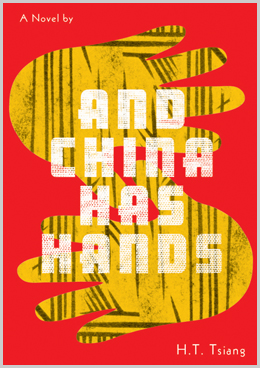
Here’s a book I was delighted to discover, reprinted in a lovely edition by Kaya Press: And China Has Hands, by H.T. Tsiang. It’s something of an unrecognized classic: written in 1937, it follows two Chinese Americans living in New York City. The heroes of the novel are Wong Wan-Lee and Pearl Chang (who Tsiang always refers to by their full names, never by a given name alone). Wong Wan-Lee is a recent immigrant from China in New York City, the son of a naturalized American citizen, who, having barely escaped an illegal deportation, buys the lease to a laundry business in order to try and pay off his legal fees. He’s a dreamer, a little bewildered by the country he’s immigrated to, but street smart in a gentle way. When a group of white school boys taunt him outside his laundry, he throws them some fruit and hopes to make friends. When various New York bureaucrats try to pressure him into paying bribes or protection money, he takes refuge in pretending that he doesn’t speak English. He can’t pay if he can’t understand, and he hopes this will protect him.
Pearl Chang, on the other hand, has grown up in the American South, the child of a Chinese father and a black mother. Having lived under segregation, she’s used to concealing her mixed-race heritage, in the hope of avoiding the worst anti-black sentiments thrown at her. She’s an outspoken would-be actress, and she and Wong Wan-Lee meet when she takes his side when he’s being harassed outside of his laundry. He quickly falls in a kind of love with her. It’s the 1930s, after all, when Chinese women were severely restricted from immigrating to the United States, a policy intended to prevent the Chinese men who came to build railroads or work in America’s cities from building communities and putting down roots in their adopted country.

As a result, Wong Wan-Lee barely knows any Chinese women in New York, and, lonely as he is, his feelings for Pearl Chang teeter between love and obsession. She likes him back for his gentleness, which is different from the white men she’s known, who have harassed her or treated her badly, and for the connection she feels with her father’s homeland, which she’s never been to. But while Wong Wan-Lee feels immediately connected with Pearl Chang, he’s also a little ashamed of her. She exoticizes him, imagining him as a foreign prince, and he takes her very American habits for evidence that she’s a bit of a fool. When they go out together, she sometimes teases him with the same racial slurs that his white customers use, and he refuses to hold her hand or walk beside her, lest anyone guess that they’re a couple.

Their elliptical, unsteady romance plays out against the backdrop of Depression-Era Manhattan, which seems at first to be a world in which anyone can make it—from laundry worker to millionaire, or waitress to movie star. But the game is rigged in ways that aren’t at first visible to the naked eye. Tsiang uses a light touch in painting the social and economic struggles that his heroes experience—he spends as much time on the intricacies of Wong Wan-Lee’s friendship with his cat as on his decision to make a deal with a loan shark—but slowly, the noose tightens, and Wong Wan-Lee and Pearl Chang descend into harder, more straightened circumstances.

Tsiang himself was a radical and a performer, a devoted Communist who worked as the secretary to the secretary of Sun Yat-sen, played bit parts in a dozen odd films, including the original Ocean’s Eleven, wrote and staged his own plays, and remained deeply involved with the leftist movement after immigrating to the United States. Having fled China in 1926, after his radical politics got him into trouble, he enrolled at Columbia University, only to face recurring problems with his student visa that nearly saw him deported under the Chinese Exclusion Act. In his original introduction to And China Has Hands, he credits the ACLU and the International Labor Defense with the legal aid that allowed him to remain in the United States.

Tsiang self-published a number of books before finally convincing a commercial publishing house to take a chance on And China Has Hands, a piece of autobiography that Tsiang turns into a good-natured joke on himself in one of the novel’s minor characters: a charming but rather hapless and self-absorbed “proletarian” novelist, who self-publishes his work and keeps getting kicked out of restaurants for trying to hand-sell copies of his book to pay his printing bill. Near the end, he finally secures a publisher—who, learning that he plans to attend a restaurant workers’ strike (at one of the restaurants that has tossed him out), keenly hopes that “the author would get his head clubbed so his picture would appear in the papers and, by-productingly, his books be mentioned.” Tsiang’s own publishers don’t seem to have taken offense, although they did, perhaps somewhat backhandedly, refer to his “[rather startling] artless habit of calling a spade by its given name” in their jacket copy for the original book.

Tsiang’s contemporary critics also seem to have not entirely known what to make of him. In his afterword to Kaya Press’s edition of And China Has Hands, Floyd Cheung quotes one reviewer’s assessment that Tsiang’s written English was “functional and surprisingly effective, though not always ‘correct.’” In reading Tsiang, I was pleasantly reminded of the prose of Barbara Comyns, another rather brilliant prose stylist whose writing was dismissively received in her time as a kind of naïve art—and who takes a similarly fresh, playful, irrepressibly hopeful tone even when describing situations of acute isolation and hardship.

The simplicity of Tsiang’s sentences is deceptive. Throughout the novel, the straightforward, declarative way that Tsiang writes out his characters’ hopes, fears and dreams conceals the careful eye with which he captures the wider social and political context of his world. Their lives are not only their lives, but the precious components of the collective to which Tsiang devoted his work as an activist. Excluded from power, their lives are still invisibly and inexorably shaped by the actions of the rich and powerful around them. If Tsiang’s hopes for a world that is more just to the poor, to immigrants, and to refugees have not yet been realized, his work remains all the more relevant today for the clarity with which it foresees the questions of justice and belonging that the United States is still struggling to address.

NYRB Classics Spotlight: The Go-Between

Malvern staff member Fernando is a New York Review Books Classics enthusiast, and he has an excellent recommendation for y’all…

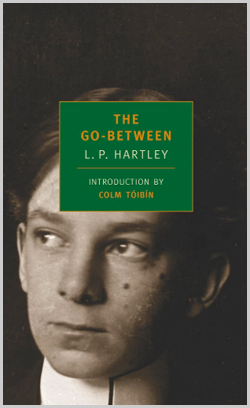
The Go-Between by L.P. Hartley

This is my idea of a summer novel: English, pastoral, bildungsroman, filled with secret love affairs, in a twentieth-century setting well before the outbreak of the First World War. Told in multiple layers, it is witty, deep, and at times heart-wrenching—what visions of the future the world held for us then.

Also recommended: The Fountain Overflows by Rebecca West. Growing up with talented siblings in early twentieth-century London is not easy, but it certainly is picaresque and strange.

Staff Picks: Little Glass Planet

Claire recommends Little Glass Planet by Dobby Gibson:

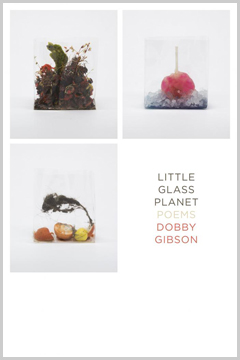
Poet Dobby Gibson is a gondolier, your most trusted confidante, a stern assistant principal who has taken you, a troubled student, under his wing. In Dobby’s poems, you can feel the tenderness with which he treats each line, examining each trinket and bauble of the world as though they were talismans, investigating every subject as if it were an injury on our collective body. He gives us the diagnosis, administers the salve and wrappings. In Little Glass Planet, Dobby writes as if we’re having a heart-to-heart with him, jocular at times, but never shirking the difficult conversation:
“The most horrible person
has been elected president.
The hardest thing to fathom
is the present.”

This kind of odd near rhyme is an instance in which we feel the terrifying comedy injected into everything in this world. Dobby’s lines often linger on the precipice of platitude, but don’t fall. He’s interested in truth—a real kind of hope, since most of us have become so skeptical—and the poet’s diligent eye will follow any spark of veracity unto its end, even into the eely crevices where we tuck away the worst parts of human nature.

From the first poem, titled “Dear Reader,” we know that Dobby is on our side. In a time when it’s difficult to assure anyone of anything, Dobby manages to put my heart at ease in the last line of “Prayer for November”:

we can be loved after all.

Even in his truth-seeking, he reaches toward the ineffable, for a sign—from cherubim, from the powers of ten, from a dog with one eye, from arsonists with no matches. This book surveys the pieces and shards of this world in all their shabbiness, and it is in them that we find the shades of real beauty that we can hold on to:

a lemon tree dressed in December ice
like a girl in her grandmother’s jewelry

Dobby is a poet who is engaging with the social issues and climate change in earnest, nuanced ways, never completely turning his gaze away from the parts of humanity still connected to mythos, and eternity. But he’s not afraid to make bold declarations about the true state of things. This feels especially poignant, after reading a new report by Australian climate experts which warns us that “climate change now represents a near- to mid-term existential threat” to human civilization. This prognosis, endorsed by the former chief of the Australian Defense Force, warns that human civilization could face complete destruction by the year 2050 due to the destabilizing societal and environmental factors caused by a rapidly warming planet. This, of course, is difficult to picture, let alone to truly believe, as we walk through the alarming fog of calamitous news each day and yet, the next day always comes. But as Dobby warns in his easy, yet ominous way:

When our great fire finally arrives
it will make no sound

As we look down the barrel of the next few decades, it is difficult to even process these possibilities. The small, personal actions we can each take to do our part in prevention don’t even come close to shutting down the sensation of inevitable doom. I find that the times when I feel the most hopeful are in small instances of humanness, our persistence in preserving the mysteries of this life, presumably our only, and as Dobby puts it in a title, “Inside the Compulsion to Wonder Lurks the Will to Survive.”

Dobby’s tall intuition is eternally reassuring, offering a kind of knowing that can’t be taught. His poems do not hesitate to gesture toward the eternal, even as they inhabit the irreverent humor of adolescence:

All of time is with us here,
each next moment waiting right where we left it
when we last felt safe inside our heads
wondering what kind of leathery faces
they might grow into as we held
the flashlight beneath our chins
to say the one funny thing we needed to
while leaning into the dark.

These poems have an irresistible way of reaching out to us as the reader, of drawing us in, and showing us compassion. As the reader, I know that I am part of this conversation, and that it continues far beyond the last poem in the book. I feel loved, taken care of, seen. This is the particular magic of these poems, one that creates the sensation of peace in a time of chaos, that pours us a glass of wine and offers to talk it out:

This is my love letter to the world,
someone call us a sitter.
We’re going to be here awhile.

Staff Picks: Sabrina

Julie recommends Sabrina by Nick Drnaso:

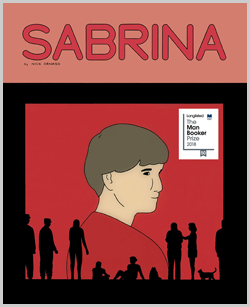
There doesn’t need to be another review of Nick Drnaso’s Sabrina; it was heaped with praise when it was published by Drawn and Quarterly in 2018. Zadie Smith said, “Sabrina is the best book—in any medium—I have read about our current moment.” And if you come across as many Zadie Smith blurbs as I do, you can spot the difference between a lukewarm this-certainly-wasn’t-the-worst-book-in-the-world Zadie Smith blurb and a glowing I-actually-loved-this-book Zadie Smith blurb. Sabrina also caught the attention of the Man Booker judges, becoming the first graphic novel to be longlisted for the prize. Suddenly, Sabrina was a book everyone wanted to read, and booksellers were forced to say “sorry, we’re sold out.”

I don’t care for buzz, nor am I the type of person who travels to the ends of the earth to read something that’s selling like hot cakes. Nearly a year after Sabrina’s release, I finally sat down to read this inked favorite, this game-changer, this magnificent addiction—and let me tell you, Sabrina is worth all the praise, and then some. If you, too, avoided the stampede to get a copy, I’m here to tell you, now’s the perfect time to read this superb creation.

The plot is basic: a woman goes missing. Her name is Sabrina, and Sabrina represents the archetypal MIA woman who intrigue swirls around. Out of the mystery of Sabrina’s disappearance, two old friends are thrown together. Calvin, a military worker whose family life is on the fritz, invites Teddy, Sabrina’s very depressed boyfriend, to live with him.

In my recollection, I haven’t come across a story (graphic novel, book, movie or otherwise) that depicts raw tenderness within heterosexual male friendships. We see women comfort each other—pick each other up off the linoleum floor—all the time but we rarely see men perform the same service. Calvin helps take Teddy’s pants and shirt off because he’s too depressed to. Calvin washes Teddy’s clothes, reminds him to eat, and routinely asks him if he needs anything.

As readers, we fear what Calvin has gotten himself into. Teddy vacillates between white hot rages and the fetal position. He’s in bad shape, real bad shape, and if you’re someone familiar with the fate of missing women, you might even begin to wonder if Teddy’s conscience is bothering him.

An element of mystery combined with depictions of an unhinged media make for a tense read. Teddy starts listening to an alarmist radio announcer. “The orchestrators,” the announcer says, “stir the pot, to keep us separate, suspicious and hostile… [T]hey manufacture tragedy. They deal in deception. They stage massacres. And murder civilians. This is the smoke screen.”

It’s surprisingly easy for Teddy (and the reader, too) to get sucked into the melody of the announcer’s warnings and rants. It’s the same black hole that can be found on Facebook, YouTube, and anywhere message forums pop up. Around the black hole congregate people who deny the Holocaust, 9/11, Sandy Hook, and accuse students who witnessed their classmates get shot in front of them of being paid actors.

As someone who doesn’t read very many graphic novels, I confess I’m at a loss for how to describe the drawings and the color palette of Sabrina. There’s an eeriness that I can’t quite place. The closest thing I can think of is an experience I had recently. I was approaching a bus stop at night. A man was sitting on the bench watching what I assumed was a Fox News type program. The man had his phone propped up on his stomach and his pale face was lit up by the glow of the screen. From the blaring volume, I heard clips of Trump shouting, and pundits throwing in their two cents, which is no sense at all. It was creepy, really creepy.

Sabrina is a bit creepy, too, but an artful, good kind of creepy. Creepy because it’s easy to recognize certain features of the current mess we’re in now. Creepy because the mess seems to be getting messier.