Malvern’s Christmas Gift Guide

Only fifteen shopping days till Christmas, my dears—and here at Malvern Books we’re doing the decent, festive thing and staying open every day until the 25th (with an early-ish 5pm closing on Christmas Eve, because even dedicated booksellers have trees to tinsel and eggs to nog). If you’ve left your shopping till the last minute, fear not, as all your essential Yuletide pressies can be found at yonder Malvern. Here are a few suggestions…

For the world traveler….

The PIP Anthologies of World Poetry of the 20th Century. Published by the wonderful Green Integer, these anthologies showcase major international poetry figures whose work might be unfamiliar to American readers. The series’ editor, Douglas Messerli, writes:

In an interview with a Brazilian journal, I was recently asked to comment if I felt Americans, and by extension American poets, knew of the poetry in other countries. My conclusion was a bleak one: most Americans don’t even know a poet in this country, I quipped; and, even more disturbing, is my guess that most American poets could name, perhaps, twenty poets from other countries. . . . My fear is that precisely this lack of knowledge of the writing and experiences of other cultures underlies the American arrogance and beliefs that not only is our culture superior to others, but that it should be the culture of others.

Put an end to cultural smugness: give the gift of international poetry! (It’s also the perfect present for your wretched cousin Tanner, who talks of nothing but the Green Bay Packers and BBQ ribs and how America, like, invented freedom.) Each volume has a different theme, from Dutch poets of the ’50s to contemporary Brazilian poetry, so there really is something for everyone. (I recommend you get Tanner the entire set.)

Gift Ideas

For the J.G. Ballard fan…

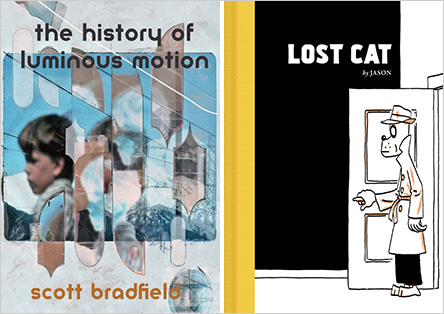
The revised edition of The History of Luminous Motion, Scott Bradfield’s 1989 cult classic. Described as “Blue Velvet meets Oedipus Rex,” Luminous Motion is a sad, strange, visceral novel set amidst the sticky strip malls of suburban Southern California and narrated by eight-year-old Phillip, a nutso drifter genius who makes Holden Caulfield look like a phoney. Dazzling, disturbing, and utterly brilliant:

The body, I have often thought, is like a promise. You keep things in it. Those things are covert, immediate, yours. There is something lustrous about them. They emit energy, like radium or appliances. They can be replaced, repaired or simply discarded. The promise of the body is very firm and intact. It’s the only promise we can count on, and we can’t really count on it very much.

For the lover of cats and/or comics and/or noir…

We have a few graphic novels by the prolific Norwegian artist Jason, and Lost Cat is my favorite. It’s a classic detective story that somehow morphs into a fable about loneliness. If you want to give a graphic novel but Jason is not your (gift) bag, be sure to check out the rest of our mighty selection, which includes classics like Ghost World and assorted Crumbs and Love and Rockets, as well as newer titles like Linda Medley’s Castle Waiting: Vol II and Lilli Carré’s charming Heads or Tails.

Gift Ideas

For the Francophile…

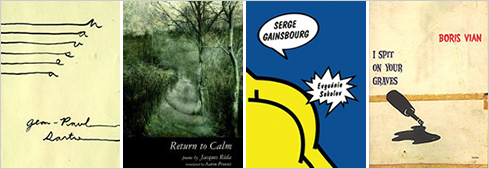
What could be better than a tub of Brie and a stylish edition of Satre’s Nausea? Or if you’d prefer to gift less existential fare, how about Return to Calm, a gently contemplative poetry collection from Parisian flâneur Jacques Réda? Or how about a little Evguénie Sokolov (new in store!), the only novel ever written by the legendary Serge Gainsbourg? Also new in store and sure to appeal to your French-loving friend (assuming they like racy, hard-boiled detective novels): I Spit on Your Graves by Boris Vian.

For absolutely everyone…

Don’t forget our smashing sidelines! We have cards, t-shirts, mugs, bookmarks, and lovely Leuchtturm notebooks. And if you feel overwhelmed by choice (we don’t blame you!), we have gift cards, too.

Newsworthy #1

In which we provide you with assorted delightful snippets concerning upcoming excitements and recent additions to our shelves:

  • On Thursday, November 14th at 2pm, Malvern Books will be hosting a very special event: the Center for Survivors of Torture has arranged an informal roundtable discussion with Father Ubald Rugirangoga, a priest of the Diocese of Cyangugu in Southern Rwanda. Father Ubald lost eighty family members and 45,000 members of his congregation in the 1994 Rwandan genocide; he has since devoted his life to spreading a message of forgiveness and reconciliation. This discussion is open to the public, and we strongly encourage you all to come along. To learn more about the remarkable Father Ubald, check out this inspiring TEDx talk.
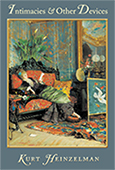
  • IntimaciesIf you like your poetry hot off the press, come in and pick up a copy of Kurt Heinzelman’s latest collection, Intimacies & Other Devices. A “hommage to the erotic in all its forms and manifestations,” Intimacies is imaginative, playful, rapturous, and, yes, a wee bit sexy. Highly recommended! (Also well worth checking out at Malvern: Demarcations, a bilingual French/English edition of poet Jean Follain’s masterful 1953 collection, featuring translations by Heinzelman.)
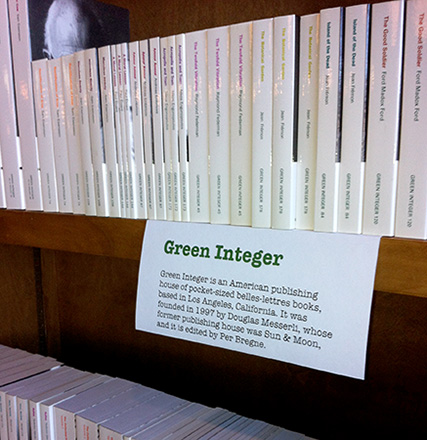
  • Have you checked out our splendid and quite sizable display of Green Integer titles? You really should! Edited by Per Bregne, Green Integer publishes a wide range of pocket-size books, including new works by leading contemporary artists, and overlooked fiction, poetry, and plays by some of history’s very best writers. So come on down to Malvern and get your Green on!

Green Integer

Swanlike Stuff

Following on from our introduction to the literary delights of Forklift, Ohio and Smartish Pace, let’s take a gander at another journal that will soon be propped up adorably on our shelves: Ugly Duckling Presse’s 6×6 series.

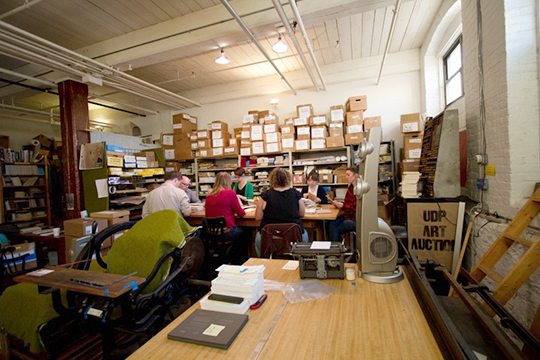
Ugly Duckling Presse is a publishing collective run out of an old can factory in the heart of industrial Brooklyn. The press(e) focuses on emerging writers, “forgotten” authors, and work in translation, and they’ve published some very impressive titles, including Tomaž Šalamun’s Poker, which was a finalist for the PEN Award for Poetry in Translation.

UDP

The press began in 1993 when college student Matvei Yankelevich and a friend pasted together a zine made up of collages and “ballpoint scrawl” and called it The Ugly Duckling. From this initial “beautiful mess,” the enterprise expanded and began to take shape as a collective of like-minded writers and artists. UDP is now a pretty big concern—they’ve published over 200 titles—but there’s still an irreverent, artisanal feel to all things Ducky. The press is still run by a volunteer collective, and its members still like to get their hands dirty; each and every book is handmade to some extent. Among UDP’s many projects, there’s the Eastern European Poets Series, the Lost Literature Series, the Cellar Series Podcasts (recordings of readings and discussions with UDP authors), and the poetry journal 6×6.

Ugly Duckling

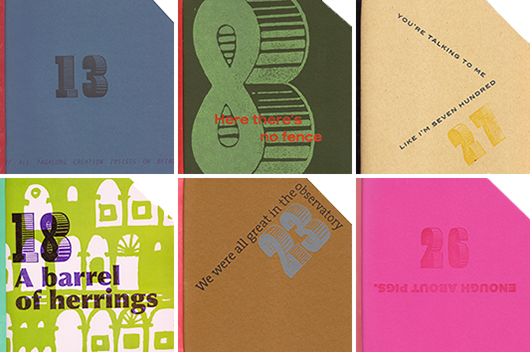
6×6 was first published in 2000 and is edited by Yankelevich and friends. The journal comes out three times a year, and showcases mostly young(ish), new(ish) poets from at home and abroad, with at least one work in translation in each issue. And as the series’ title might suggest, each issue features six poets, with each poet given six pages. The journal is a pleasingly symmetrical 7” x 7”—I guess 6” x 6” would have been a wee bit cute?—and is bound with a handsome rubber band (I’m not the only person who admires the bands; a question regarding rubber band stockists appears in the Ugly Duckling FAQ). And in keeping with the theme of sixes, apparently the plan is to call a halt to the series after the 36th issue. I can’t promise Malvern Books will have every issue in stock—some are already sold out—but I’m pretty sure we’ll be able to offer you at least… six.

Get Smartish

Yesterday we introduced you to the joys of Forklift, Ohio, one of the many literary journals you’ll be able to spill your latte on at Malvern Books (by the way, “you besmirch it, you buy it” is official store policy on days when we’re feeling cranky, so you might want to look into a lid). Today let’s take a peek at another cracking collectable, Smartish Pace.

Smartish Pace

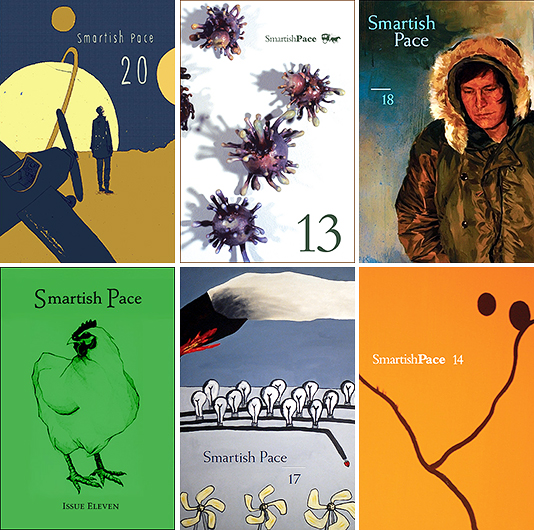
Poetry journal Smartish Pace was founded by Stephen Reichert in 1999, while he was studying law at the University of Maryland. He named the journal for a nineteenth-century English legal case, Davies v. Mann, which involved an illegally parked donkey and a horse-drawn wagon traveling at a “smartish pace.” (It’s kind of an interesting case, actually, especially as it involves repeated use of the word ass: Davies, the plaintiff, had illegally tethered his ass at the side of a highway so it could graze. This sounds charmingly idyllic, apart from the highway part, but alas our defendant, Mann, galloped by in his horse-drawn wagon, struck Davies’ ass, and killed it. Davies was rather miffed by the loss and took Mann to court, arguing that even if his ass-tethering was a little naughty, Mann was also negligent in going so fast. And just so you know: the court ruled in favor of Davies and his deceased ass, and this ruling has led to the doctrine of “last clear chance,” which basically states that if you’re the last person who has a chance to prevent a disaster and you fail to do so, well, you’re in big trouble—even when said disaster was set in motion by someone else’s screw up.) Anyway! Enough about asses. More about journals. Smartish Pace is published annually, and it features wonderful poetry from new and established writers, including Pulitzer Prize-winning fancypants poets like Ted Kooser, Paul Muldoon, Maxine Kumin, and Mary Oliver.

Also worth nothing: Smartish Pace sells very cool t-shirts. We make a point of picking up a couple whenever we encounter the SP folks at a book fair. (Those SP folks know how to have a good time at a book fair; I suspect it involves whiskey.) And another excellent Smartish endeavor: their website features a Poets Q&A section—”the first interactive poetry forum on the internet”—where well-known poets like Rae Armantrout, Jorie Graham, and Robert Hass answer questions from readers. Here are a couple of responses from Robert Creeley:

How do you know when a poem is truly finished?
Sue Kline, Lutherville, MD

Perhaps you remember what Williams says in “The Desert Music”—it’s literally the text of an interview Mike Wallace did with him—and it goes something like, “Why/ does one want to write a poem?// Because it’s there to be written.” One knows a poem is finished when one comes to the end of that “writing,” when there’s no more to say or do, when whatever need and energies compelled and provided for it have gone. “Fled is that music…” It’s done.

What is the single greatest influence that Pound had on you as a person, and not necessarily as a poet—if that distinction can be made?
Joel, Chicago

When he was still in St. Elizabeth’s, we had a very moving correspondence from my end—it was a complex of great Poundian maxims with sudden flashes of unexpected wit or playfulness. He’d sign his letters often: “Yours Anon/Y Mouse”—or he’d say, “You refer to something as being the case for the past forty years. Are you 24—or 64?” He used to address me as “Little Fish Basket”—terrific! Elsewise I’d be “the Creel”—and he gave me impeccable rules of thumb for paying attention, e.g., “Any tendency to abstract general statement is a greased slide…” or “Literacy is the ability to recognize the same idea in different formulations.” He quoted to me Aristotle’s “Swift perception of the relation between things is the hallmark of genius.” He taught me to take myself seriously as a writer (and person) and to learn how to work sans the usual frames of classroom or club. In short, he demonstrated that such writing as I hoped to do was serious, that it took concentration and practice, and that one had to keep engaged. As he says in the taped conversation with Geoffrey Bridson for the BBC, “You cannot have literature without curiosity.” One remembers it all.

Finally, here’s Reichert himself talking about the journal’s evolution in a digital age:

A Little Light Industrial Safety

We’ve told you that Malvern Books will be chock-full of delightful poetry and fiction, but have we mentioned that we’ll also be offering an outstanding selection of literary journals for your perusal? It’s true! We will! This week we’ll introduce you to a few of our favorites, starting with Forklift, Ohio.

Forklift

The journal’s full name is Forklift, Ohio: A Journal of Poetry, Cooking, & Light Industrial Safety, and I think you’ll agree that this is a winning trifecta of concerns. Produced “approximately 1.618 times per year” by three good friends, the Cincinnati-based journal’s stated aim is to “fetishize the aesthetics of early industrialized society in a distinctly post-industrial fashion.” I’m not entirely sure what that means, but I can tell you that each journal is handmade in limited quantities out of an assortment of odd materials. Some issues are furry, some are spotty, and some are riddled with bullet holes. Issue #18 comes dog-eared for your convenience, while Issue #24 can only be opened with a corkscrew.

If you manage to get inside your copy, you’ll find poetry, prose, and visual art, along with the promised recipes, safety tips (Forklift, Ohio is proud of its “thirteen-year record as an accident-free workplace”), and assorted silliness. The best bits of silliness come directly from the pages of old magazines: Issue #12 includes an advertisement for carcass splitters and “Nine Rules for Avoiding Constipation” (Rule No. 6 advises readers to “avoid cathartics”). But in case this all sounds a bit nincompoopy for you, let me assure you that the poetry in Forklift, Ohio is very good indeed. Esteemed poet Dean Young is a big fan of the journal and hands out copies to his pals—but if you’re not one of Mr. Young’s pals, you can always get your mitts on a Forklift at Malvern Books.

The Journal of Hélène Berr

BerrThe Journal of Hélène Berr is the English translation of a diary kept by a young Jewish woman in occupied Paris. The diary first came to light in 1992 when Mariette Job, Berr’s niece, decided to see if there was any truth to the family rumor that her aunt had kept a journal during the war. She tracked down Berr’s fiancé, and after numerous meetings he finally handed over the diary; he’d kept it tucked away in a brown envelope for almost fifty years. It was finally published in 2008, and became an immediate best seller, with reviewers dubbing Berr “the French Anne Frank.” Their journals cover much the same period, and the two young women shared the same fate—but while the teenage Frank was forced to remain hidden in her attic in Amsterdam, Berr was able, for a while at least, to carry out something that looked much like normal life.

We first meet twenty-one-year-old Berr on a rainy Tuesday in the spring of 1942. She’s going to Paul Valéry’s apartment to pick up a copy of his collected works that he’s inscribed for her: On waking, so soft is the light and so fine this living blue. Paul Valéry. Although the Germans have occupied France for nearly two years at this point, Berr’s life among the French elite still seems charmed, at least on the surface. She spends her days strolling in the Luxembourg Gardens and practicing the violin. She gossips with friends and agonizes about her romantic life: she has fallen in love with a young man called Jean Morawiecki (pictured with Berr below), but has already promised herself to a bore called Gérard (“there’s something too normal about him”), with whom she is in a fraught long-distance relationship.

Berr and friend

She also attends lectures at the Sorbonne, where she’s studying English literature, and she spends many afternoons hunched over her desk, plugging away at a doctoral thesis on “Keats’ Hellenism” (the anti-Semitic laws of the Vichy regime prevent her, however, from sitting the final exams required for her degree). For a few months, the outside world barely intrudes, and worries about the future are pushed aside:

Already this evening Papa got an expropriation notice … Let’s think about something else. About the unreal beauty of this summer’s day at Aubergenville [the family’s country house]. A day that unfolded in perfection, from the rising of a cool and luminous sun full of promise to the soft, calm dusk so rich with sweet feeling that bathed me as I closed the shutters just now.

Berr is apolitical, and barely aware of her Jewish identity. Her father, a renowned scientist and decorated WWI veteran, runs a major chemical company, and her family is secular, assimilated, cultivated, and utterly French:

When I write the word Jew, I am not saying exactly what I mean, because for me that distinction does not exist: I do not feel different from other people, I will never think of myself as a member of a separate human group…

But as the oppression becomes more flagrant, Berr’s eyes are opened to the reality of life in occupied France, and she is forced to think more deeply about questions of identity:

This is the first day I feel I’m really on holiday. The weather is glorious, yesterday’s storm has brought fresher air. The birds are twittering, it’s a morning as in Paul Valéry. It’s also the first day I’m going to wear the yellow star. Those are the two sides of how life is now: youth, beauty, and freshness, all contained in this limpid morning; barbarity and evil, represented by this yellow star.

The order that all Jews in occupied France must wear the yellow star went into effect on May 29th, 1942. At first, Berr is hesitant to put on the “degrading” badge, but she decides to wear it out of a sense of solidarity, and “in order to test my own courage.” The passages in which she describes what this feels like are utterly compelling. The stares of passersby; a friend who refuses to look her in the eye; a kind stranger who tells her the star only makes her prettier. The familiarity of people’s reactions, and Berr’s tangled mix of shame and defiance, is a poignant reminder that all of this was happening in a world much like ours, to people much like us:

I was very courageous all day long. I held my head high, and I stared at other people so hard that it made them avert their eyes. But it’s difficult. This afternoon it all started over again. I had to fetch Vivi Lafon from her English exam at 2:00. I did not want to wear the star, but I ended up doing so, thinking my reluctance was cowardly. First of all there were two girls in avenue de La Bourdonnais who pointed at me. Then at Ecole Militaire métro station … the ticket inspector said: “Last carriage.” … I suddenly felt I was no longer myself, that everything had changed, that I had become a foreigner, as if I were in the grip of a nightmare. I could see familiar faces all around me, but I could feel their awkwardness and bafflement.

As summer approaches, the persecution escalates and further decrees are issued: Jews are no longer allowed to cross the Champs Elysees, or dine in restaurants, or go to the cinema. Berr writes: “The news has been couched in normal and hypocritical terms, as if it was an established fact that Jews are persecuted in France, as if it was a given.” Neighbors warn the family that people are being rounded up and taken to camps. Many of Berr’s friends flee the Occupied Zone to seek safety in the south. However, Berr and her parents refuse to leave, even after Berr’s father is arrested and interred for a few months at Drancy, a camp near Paris. (His company pays a ransom for his release, and from that point on he is under house arrest.) Instead, they decide to stay in the city and do what they can to help those who remain. Berr spends her days volunteering at a Jewish-run holding camp for children whose parents have already been deported.
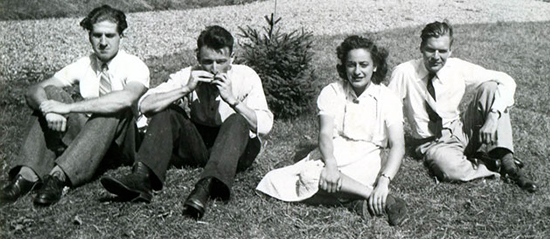
Berr

In November 1942, Morawiecki (far left, above, with Berr), now her fiancé, leaves Paris to join the Free French movement in London, and Berr is heartbroken. She stops writing in her diary for ten months, but as the persecution escalates, she feels a duty to begin writing again:

There are men who know and who close their eyes, and I’ll never manage to convince people of that kind, because they are hard and selfish, and I have no authority. But people who do not know and who might have sufficient heart to understand—on those people I must have an effect. For how will humanity ever be healed unless all its rottenness is exposed?

Her voice is somber now: she knows this is not going to end well. She no longer writes about lectures and literature and plans for the future; instead, she writes to bear witness, and also as a way of reaching out to Jean. She has a premonition that she won’t be there when he returns, and asks the family’s cook to give him the diary after the war. “I am leading a posthumous life,” she writes.

Knowing they might at any moment be taken in one of the raids, Berr and her parents leave their apartment, spending most evenings on various friends’ sofas. But on March 7th, 1944, the eve of Berr’s twenty-third birthday, the family decides to spend the night in their own home. They are arrested at 7.30am the next morning and sent to Auschwitz. The last words of Berr’s diary are in English: “Horror! Horror! Horror!”

Berr’s parents died at Auschwitz. Berr survived deportation for over a year, and was transferred to Bergen-Belsen in November 1944. She died there five days before the camp was liberated by the British (Anne Frank died there around the same time). In an afterword to the journal, Job describes Berr’s fate:

Hélène, sick with typhus, could not get up from her bunk for reveille. When her fellow inmates returned to the hut, they found her lying on the floor. She had been brutally beaten. The last spark of life she had clung to had gone out.

The Journal of Hélène Berr is an extraordinary account of a world gone mad. Berr is a wonderful writer, lucid, sensitive, and honest, and her journal is a nuanced and thoughtful record of the effects of persecution. It’s also a deeply unsettling book, because it reminds us that all this happened yesterday. This isn’t history—this is the entirely recognizable life of a whip-smart, modern young woman who lives in a cosmopolitan city. Everything feels so familiar. Most unsettling of all: we are always conscious of the impending conclusion, while Berr, recording events as they unfold, can only wait and hope. And as you turn each page and some ominous new horror is revealed, you want to shout at her to get out get out get out—but you already know how this all ends.