Malvern staff member Fernando is a New York Review Books Classics enthusiast, and he has an excellent recommendation for y’all…
Life with Picasso by Françoise Gilot and Carlton Lake
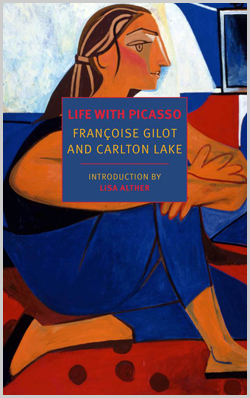 Françoise Gilot was in her early twenties, Picasso in his sixties, when they became friends and developed a decade-long relationship. Gilot was herself an ambitious artist, and this book chronicles Picasso through her eyes in those ten years, during which they had two children and she eventually left him. A revealing account of Picasso, and of Gilot’s singular experience coming into her own as an artist—this is a great read for your summer list.
Also recommended: Renoir, My Father by Jean Renoir. The renowned filmmaker’s account of his father, the painter Pierre-Auguste Renoir, offers great wisdom and insight regarding an artist’s life’s work.
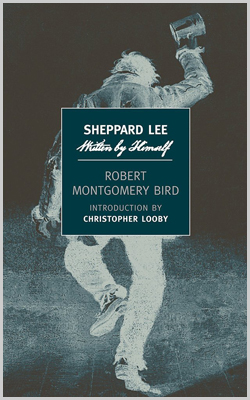 There exist those nineteenth-century American narratives that touch on the fantastic way beyond the realms of realism that, for some reason, were set aside by time. This novel, first published in 1836, tells the story of Sheppard Lee, who discovers he has the power of transmigration—to cast his soul into other bodies and control their lives. It is a clever, picaresque pursuit of identity, and Edgar Allan Poe was a fan of this novel in his time.
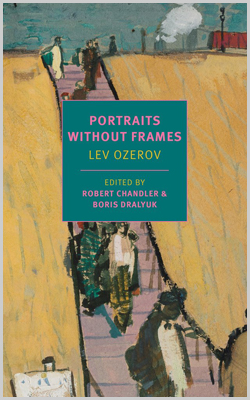 Born in the Russian Empire in 1914, Ozerov was a poet, critic, and editor who crossed paths with many of the writers, artists, and thinkers who helped shape the art and politics of Russia and the 20th Century. This collection of posthumously published prose poems reveals his intimate encounters with many of these figures in short, often very moving, pieces. Great for anyone interested in Russian artists, especially the more obscure, less translated figures.
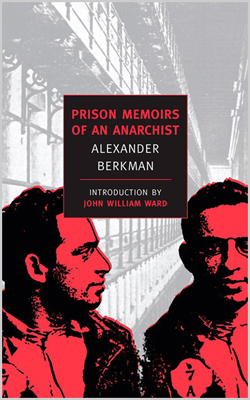 Does anybody remember the Homestead Strikers, Henry Clay Frick, or Carnegie Steel? Well, within that mess of history was Russian immigrant/anarchist Berkman, who in 1892 went to prison for attempting to assassinate the brutal industrialist Frick. This book, published six years after his release, captures his experiences while serving fourteen years out of a twenty-two-year sentence. It is a passionate and painful account of prison, politics, and being an outsider.
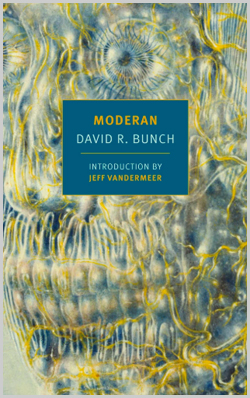 For years this book was only a myth among certain aficionados of science fiction. First published as a series of stories taking place in the future of Moderan, where patches of the earth are covered in plastic and nature is all but gone, this book does magical things with poetry and language to a degree that is uncommon in the genre. Not only that, it is darkly hilarious, and in some ways reminds me of The Wizard of Oz meets the Marvel Universe. Great read to start the new year!
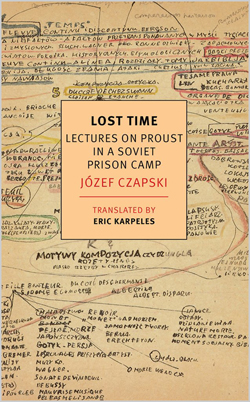 At the beginning of every year I ask myself, “Is this the year I will finally read Proust?” and by its end the answer is always no—however, I always enjoy reading about Proust. Polish artist and soldier Józef Czapski was a prisoner in a Soviet camp during the Second World War, and this book is based on two transcriptions of his lectures on In Search of Lost Time, which he delivered to his fellow inmates with only his memory to go on. It is a slim book, and I can vouch that it is very enriching for anybody interested in art, memory, Proust, World War II, and the power of literature.