Poetry, G

Poetry Month is officially over (it’s now Short Story Month, apparently), but that’s no reason to abandon our arbitrary and occasional Poetry A-Z series…

G is for Glück, Louise

GluckAmerican poet Louise Glück isn’t the cheeriest duck in the pond—loneliness, divorce, and rejection are her favored themes—but she can shoulder the weight of myth like no one else, and her spare, intimate, unflinching voice is utterly compelling. If you’re new to Glück, her Pulitzer-Prize-winning collection, The Wild Iris (1993), is a great place to dive in, and the more recent Averno (2007) is also wonderful. Here’s a poem from Averno to get your weekend off to a hellishly good start:

A Myth of Devotion

When Hades decided he loved this girl
he built for her a duplicate of earth,
everything the same, down to the meadow,
but with a bed added.

Everything the same, including sunlight,
because it would be hard on a young girl
to go so quickly from bright light to utter darkness

Gradually, he thought, he’d introduce the night,
first as the shadows of fluttering leaves.
Then moon, then stars. Then no moon, no stars.
Let Persephone get used to it slowly.
In the end, he thought, she’d find it comforting.

A replica of earth
except there was love here.
Doesn’t everyone want love?

He waited many years,
building a world, watching
Persephone in the meadow.
Persephone, a smeller, a taster.
If you have one appetite, he thought,
you have them all.

Doesn’t everyone want to feel in the night
the beloved body, compass, polestar,
to hear the quiet breathing that says
I am alive, that means also
you are alive, because you hear me,
you are here with me. And when one turns,
the other turns—

That’s what he felt, the lord of darkness,
looking at the world he had
constructed for Persephone. It never crossed his mind
that there’d be no more smelling here,
certainly no more eating.

Guilt? Terror? The fear of love?
These things he couldn’t imagine;
no lover ever imagines them.

He dreams, he wonders what to call this place.
First he thinks: The New Hell. Then: The Garden.
In the end, he decides to name it
Persephone’s Girlhood.

A soft light rising above the level meadow,
behind the bed. He takes her in his arms.
He wants to say I love you, nothing can hurt you

but he thinks
this is a lie, so he says in the end
you’re dead, nothing can hurt you
which seems to him
a more promising beginning, more true.

The Journal of Hélène Berr

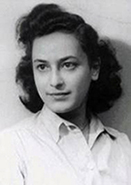
BerrThe Journal of Hélène Berr is the English translation of a diary kept by a young Jewish woman in occupied Paris. The diary first came to light in 1992 when Mariette Job, Berr’s niece, decided to see if there was any truth to the family rumor that her aunt had kept a journal during the war. She tracked down Berr’s fiancé, and after numerous meetings he finally handed over the diary; he’d kept it tucked away in a brown envelope for almost fifty years. It was finally published in 2008, and became an immediate best seller, with reviewers dubbing Berr “the French Anne Frank.” Their journals cover much the same period, and the two young women shared the same fate—but while the teenage Frank was forced to remain hidden in her attic in Amsterdam, Berr was able, for a while at least, to carry out something that looked much like normal life.

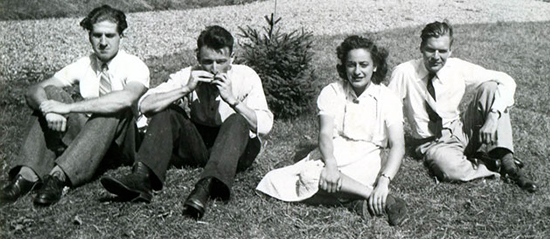
We first meet twenty-one-year-old Berr on a rainy Tuesday in the spring of 1942. She’s going to Paul Valéry’s apartment to pick up a copy of his collected works that he’s inscribed for her: On waking, so soft is the light and so fine this living blue. Paul Valéry. Although the Germans have occupied France for nearly two years at this point, Berr’s life among the French elite still seems charmed, at least on the surface. She spends her days strolling in the Luxembourg Gardens and practicing the violin. She gossips with friends and agonizes about her romantic life: she has fallen in love with a young man called Jean Morawiecki (pictured with Berr below), but has already promised herself to a bore called Gérard (“there’s something too normal about him”), with whom she is in a fraught long-distance relationship.

Berr and friend

She also attends lectures at the Sorbonne, where she’s studying English literature, and she spends many afternoons hunched over her desk, plugging away at a doctoral thesis on “Keats’ Hellenism” (the anti-Semitic laws of the Vichy regime prevent her, however, from sitting the final exams required for her degree). For a few months, the outside world barely intrudes, and worries about the future are pushed aside:

Already this evening Papa got an expropriation notice … Let’s think about something else. About the unreal beauty of this summer’s day at Aubergenville [the family’s country house]. A day that unfolded in perfection, from the rising of a cool and luminous sun full of promise to the soft, calm dusk so rich with sweet feeling that bathed me as I closed the shutters just now.

Berr is apolitical, and barely aware of her Jewish identity. Her father, a renowned scientist and decorated WWI veteran, runs a major chemical company, and her family is secular, assimilated, cultivated, and utterly French:

When I write the word Jew, I am not saying exactly what I mean, because for me that distinction does not exist: I do not feel different from other people, I will never think of myself as a member of a separate human group…

But as the oppression becomes more flagrant, Berr’s eyes are opened to the reality of life in occupied France, and she is forced to think more deeply about questions of identity:

This is the first day I feel I’m really on holiday. The weather is glorious, yesterday’s storm has brought fresher air. The birds are twittering, it’s a morning as in Paul Valéry. It’s also the first day I’m going to wear the yellow star. Those are the two sides of how life is now: youth, beauty, and freshness, all contained in this limpid morning; barbarity and evil, represented by this yellow star.

The order that all Jews in occupied France must wear the yellow star went into effect on May 29th, 1942. At first, Berr is hesitant to put on the “degrading” badge, but she decides to wear it out of a sense of solidarity, and “in order to test my own courage.” The passages in which she describes what this feels like are utterly compelling. The stares of passersby; a friend who refuses to look her in the eye; a kind stranger who tells her the star only makes her prettier. The familiarity of people’s reactions, and Berr’s tangled mix of shame and defiance, is a poignant reminder that all of this was happening in a world much like ours, to people much like us:

I was very courageous all day long. I held my head high, and I stared at other people so hard that it made them avert their eyes. But it’s difficult. This afternoon it all started over again. I had to fetch Vivi Lafon from her English exam at 2:00. I did not want to wear the star, but I ended up doing so, thinking my reluctance was cowardly. First of all there were two girls in avenue de La Bourdonnais who pointed at me. Then at Ecole Militaire métro station … the ticket inspector said: “Last carriage.” … I suddenly felt I was no longer myself, that everything had changed, that I had become a foreigner, as if I were in the grip of a nightmare. I could see familiar faces all around me, but I could feel their awkwardness and bafflement.

As summer approaches, the persecution escalates and further decrees are issued: Jews are no longer allowed to cross the Champs Elysees, or dine in restaurants, or go to the cinema. Berr writes: “The news has been couched in normal and hypocritical terms, as if it was an established fact that Jews are persecuted in France, as if it was a given.” Neighbors warn the family that people are being rounded up and taken to camps. Many of Berr’s friends flee the Occupied Zone to seek safety in the south. However, Berr and her parents refuse to leave, even after Berr’s father is arrested and interred for a few months at Drancy, a camp near Paris. (His company pays a ransom for his release, and from that point on he is under house arrest.) Instead, they decide to stay in the city and do what they can to help those who remain. Berr spends her days volunteering at a Jewish-run holding camp for children whose parents have already been deported.
Berr

In November 1942, Morawiecki (far left, above, with Berr), now her fiancé, leaves Paris to join the Free French movement in London, and Berr is heartbroken. She stops writing in her diary for ten months, but as the persecution escalates, she feels a duty to begin writing again:

There are men who know and who close their eyes, and I’ll never manage to convince people of that kind, because they are hard and selfish, and I have no authority. But people who do not know and who might have sufficient heart to understand—on those people I must have an effect. For how will humanity ever be healed unless all its rottenness is exposed?

Her voice is somber now: she knows this is not going to end well. She no longer writes about lectures and literature and plans for the future; instead, she writes to bear witness, and also as a way of reaching out to Jean. She has a premonition that she won’t be there when he returns, and asks the family’s cook to give him the diary after the war. “I am leading a posthumous life,” she writes.

Knowing they might at any moment be taken in one of the raids, Berr and her parents leave their apartment, spending most evenings on various friends’ sofas. But on March 7th, 1944, the eve of Berr’s twenty-third birthday, the family decides to spend the night in their own home. They are arrested at 7.30am the next morning and sent to Auschwitz. The last words of Berr’s diary are in English: “Horror! Horror! Horror!”

Berr’s parents died at Auschwitz. Berr survived deportation for over a year, and was transferred to Bergen-Belsen in November 1944. She died there five days before the camp was liberated by the British (Anne Frank died there around the same time). In an afterword to the journal, Job describes Berr’s fate:

Hélène, sick with typhus, could not get up from her bunk for reveille. When her fellow inmates returned to the hut, they found her lying on the floor. She had been brutally beaten. The last spark of life she had clung to had gone out.

The Journal of Hélène Berr is an extraordinary account of a world gone mad. Berr is a wonderful writer, lucid, sensitive, and honest, and her journal is a nuanced and thoughtful record of the effects of persecution. It’s also a deeply unsettling book, because it reminds us that all this happened yesterday. This isn’t history—this is the entirely recognizable life of a whip-smart, modern young woman who lives in a cosmopolitan city. Everything feels so familiar. Most unsettling of all: we are always conscious of the impending conclusion, while Berr, recording events as they unfold, can only wait and hope. And as you turn each page and some ominous new horror is revealed, you want to shout at her to get out get out get out—but you already know how this all ends.

Goodbye To All That

Time for a quick update on the progress of the soon-to-open Malvern Books! As you might remember, we signed the lease a couple of weeks ago, and May Day saw us officially take possession of our new home. It doesn’t look much like a bookstore yet:

Before

In fact, it currently looks like the armpit of a moth-eaten cardigan. But we’re getting there. The power is on, the water is running, and we’re ready to start RIPPING STUFF UP. Doesn’t that sound fun? Especially as it applies to floor coverings.

But what to do with all that room (1900 square feet, to be exact)? Our architect came up with a plan that looked smashing on paper, but when we went to the store and marked things out with bits of tape, we realized that our imaginings had been rather off. The staff breakroom that we’d envisaged as a spacious, cat-swingable kind of place turned out to be about as roomy as a bag of kibble when we stood within its marked out boundaries. So we went back to the drawing board and will soon put Plan #2 to the tape-on-carpet test.

And as for the future décor? At the moment we’re leaning toward a pirates/crucifixes/lions theme (one of Martha Stewart’s favorites, I believe; rumor has it her Newport estate is riddled with marble statues of plundering seafarers), but all that might change once the new carpet/shelves/lights are in place. One thing we know for sure: when selecting wall art, the former tenant’s rather saucy bathroom poster will not make the final cut—I’m sure LeRouge Boutique’s Free Thong Club (“Buy 6 Thongs and Get 1 Free!”) is an excellent and cost-effective scheme for thong collectors, but we’ll probably just go with a nice portrait of Wallace Stevens.

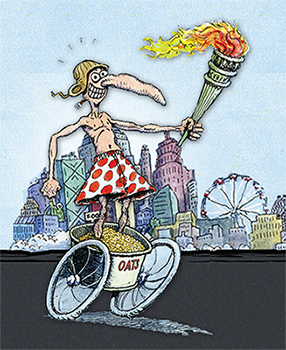
And as we spend more time on site, we’ll also be getting to know our new neighbors, including the venerable Oat Willie’s, Austin’s first head shop. Their slogan is “Onward, Thru The Fog” and their mascot is this guy:

Oat Willie's

Do bongs and poetry readings go together like tuna and mayonnaise? We couldn’t possibly comment. But we definitely need to come up with a mascot to go cycling with Mr. Willie. Suggestions, anyone?

Thursday Three #4

A twenty-two-second video of a cat vomiting on a turtle is clearly the internet’s raison d’être, but sometimes you long for something a little more…substantial. In today’s Thursday Three, our weekly assortment of randomness in triplicate, we take a quick look at three artful and arts-full aggregators.

Longform1. Longform is really two sites: the original Longform, which offers a collection of non-fiction, old and new, and their sister site for fans of make-believe, Longform Ficton. They have an impressive list of writers, from A. M. Homes to ZZ Packer (they index authors by first name, oddly), and they source their essays and short stories from a wide range of publications. I recently read—and heartily recommend—Zadie Smith’s essay on her uneasy relationship with Facebook and Mac McClelland’s account of her “brief, backbreaking, rage-inducing, low-paying, dildo-packing time inside the online-shipping machine” (i.e. why you should buy your books from a bricks-and-mortar bookstore and not that other place).

By the way, if you hate reading lengthy articles on your cumbersome computer screen, you can always sign up for a free service like Instapaper, which lets you save web content to read later—so when you’re on the bus and you’re sick of playing Hearts against computer avatars with 1950’s barbershop hair, you can pull up a saved essay about pro-level Ultimate Frisbee and feel just that little bit smarter.

2. Videosift is my go-to for kitten vids, but for documentaries, there’s always Watch Documentary. You have to sift through some less-than-exquisite films (the BBC’s My Big Breasts and Me unsurprisingly ranks high in the Most Watched category), but there’s plenty of good stuff to see, and it’s free. In the Arts & Artists section, for example, there’s Exit Through the Gift Shop, Annie Leibovitz: Life Through a Lens and an Al Jazeera doco about death row art in Texas. Best of all, they have the entire A History of Britain series, narrated by Simon Schama, the dapper and delightful narrative historian. You don’t have to be an Anglophile to enjoy the series; Schama is a wonderful writer and an engaging (and occasionally sarcastic) host, and his approach is to focus on characters and cultures, and not on the usual boring lists of royal Richards.

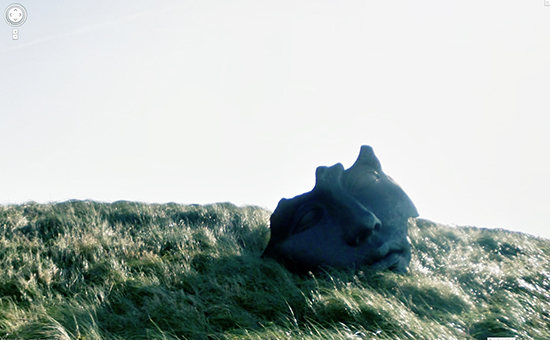
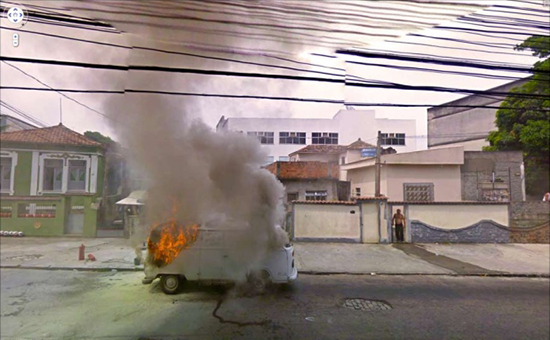
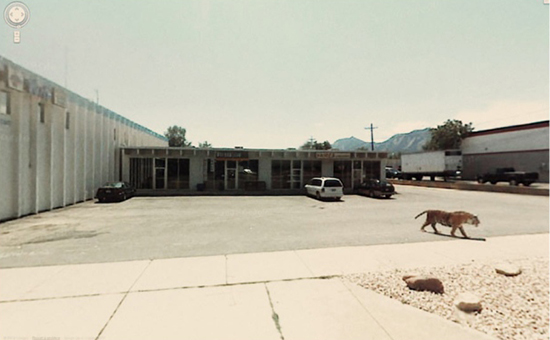
3. If you’d rather stare at a few frozen pixels, check out 9-Eyes, artist Jon Rafman’s compilation of images sourced from Google Street View’s cameras. Rafman combs through the millions of pictures to find the most beautiful and bizarre snapshots of our world. And it’s a truly weird place, full of naughty children and errant tigers; car crashes and prostitutes; mysterious forests and men in white masks. It’s silly, sinister, and beautiful—and best of all, you’re living in it.

9eyes4 9 Eyes 9eyes3 9-Eyes

PEN Festival: Opening Night Reading

PENOn Monday night Malvern Books attended the opening night reading of the ninth annual PEN World Voices Festival of International Literature in New York. And if there’s one thing more exciting than attending a book reading, it’s hearing a blogger recount their experiences of attending a book reading, amirite?! Okay, hang in there, let’s try and make this fun.
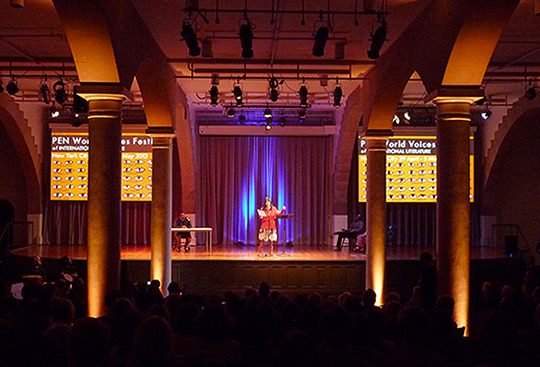
First up, there were protesters! They were milling about outside the event center, politely encouraging attendees to sign a petition calling for PEN’s new Executive Director, Suzanne Nossel, to resign or be dismissed. As a former State Department official under Hillary Clinton, Nossel championed a strategy of “smart power” (i.e. using ‘soft’ diplomacy in conjunction with ‘hard’ military might, including preemptive strikes), and the protesters felt this made her an odd choice to lead an organization that supports peace and human rights. The leaflet quoted Chris Hedges, Pulitzer Prize-winning journalist and a leader of the Occupy movement, as saying “this appointment makes a mockery of PEN as a human rights organization and belittles the values PEN purports to defend.”

The protesters seemed very pleasant and sane—they looked like kindly middle-aged librarians—and nearly everyone they spoke to accepted one of the bright yellow leaflets before filing inside. I wondered if Nossel was going to give a speech at the event, and if so, what it would be like for her to talk to an audience whose members were fanning their faces with neon sheets that demanded her dismissal. But it turned out to be a bit more… confrontational than that, because one of the protesters, John Walsh, had purchased a ticket for the event, and managed to sit himself and his giant placard right near the front of the stage. The event’s organizers urged him to leave before the readings began, but he muttered something about the right to free speech and they decided it was best to let him stay.

Nossel never appeared, but Salman Rushdie came out to give the opening address. Rushdie is always slightly exciting, because you get to sit there having all sorts of tricky conflicting emotions about him. Genius? Lecherous old coot? Lecherous old genius coot? And on Monday night Rushdie’s presence was especially exciting, because he got heckled by Walsh as soon as he came onstage. Walsh and Rushdie had a bit of an electrifying barney about PEN/Rushdie’s human rights record, which ended when Rushdie dropped the F-bomb:

Walsh: “You supported the war in Iraq!”
Rushdie: “As president of this organization at the time, I led our stand against the war, so you can shut the fuck up!”

The crowd went wild when Rushdie lost his temper, and Walsh was silent after that. The whole thing was a little odd. Why was everyone cheering so vigorously for Rushdie? Why was everyone so enraged by Walsh’s interruptions? After all, the official theme of the event was “bravery,” and PEN is all about supporting VOICES, so you’d think there’d be room for a little heated debate. Also, Walsh doesn’t seem to be a crackpot—he’s a Professor of Physiology at the University of Massachusetts Medical School—and he’s certainly not the first person to criticize Rushdie’s position on the war, which is complicated at best. But I guess the good people of New York had paid their $25 entry fee to hear Rushdie give a speech, and they didn’t want that experience interrupted by anything as messy as, you know, an argument about human rights. Ah well, on with the show!

PEN

The first two readings were not really my cup of tea, and I had a little debate with myself that went something like this:

I do not like the line “When I thought you couldn’t walk, I wanted to make sure you could fly.” I think it is a bad line. NicholasSparksian. But since it’s from a fictionalized account of one woman’s experiences with the Khmer Rouge (spoiler alert: NOT VERY GOOD EXPERIENCES), am I allowed to say I don’t like it? What kind of person criticizes the prose stylings of someone whose family has been massacred by a despotic regime? Then again, it’s a novel. It was published. It’s open to spirited review, right? Then again, the Khmer Rouge murdered over a million people, so…

Thankfully, and in the spirit of Mr. Rushdie, I soon told myself to shut the fuck up:

Oi, Ms. Cynical-britches! This is the PEN World Voices Festival, not the PEN World Writers Festival. It doesn’t claim to be a celebration of the world’s most excellent prose. It’s a chance for thoughtful people from around the world to share their experiences without fear of reprisal, and this is a Good Thing. And if the smug middleclassness of the audience makes you feel a little… uncomfortable—lady, your conflict diamonds and sweatshop blazer clash mightily with your polite clapping for the words PEACE and FREEDOM—just remember that there are plenty of smug middleclass people out there right now who are kicking Golden Retrievers and arguing with each other about what kind of cheese to buy, so the ones who voluntarily go out into the night to hear stories and poems read aloud are probably sorta a-okay. In other words, shut the fuck up.

So I did. I stopped having tedious, sneery debates with myself and decided to pay attention—and there was lots of wonderful stuff.

ShishkinHarjo

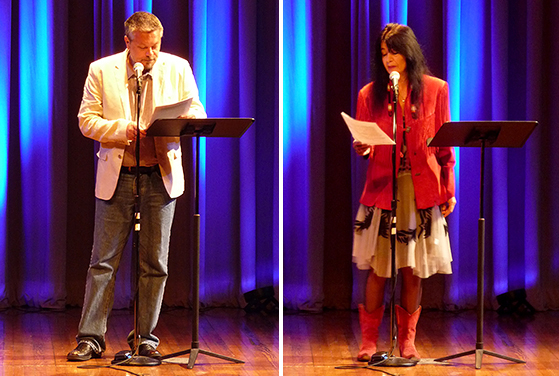
Mikhail Shishkin (pictured above left) is considered one of Russia’s finest contemporary writers, and his work has won all of Russia’s major literary awards. He read an excerpt from Vzyatie Izmaila (The Taking of Izmail), which was awarded the Russian Booker Prize in 2000. Although the novel is apparently non-linear, with no plot, no chapters, and no ongoing characters, the brief passage he read was a straightforward account of a man’s relationship with his mother, as seen through a series of childhood incidents, including a fight over that most precious of Cold War commodities, a pack of chewing gum. The story was very funny and moving, and made me want to read the rest of the book, although I’ll have to be patient—an English translation of The Taking of Izmail has yet to be published. (Get on to it, someone!)

Muscogee poet Joy Harjo (above right) chanted/sang “Equinox”:

I must keep from breaking into the story by force
for if I do I will find myself with a war club in my hand
and the smoke of grief staggering toward the sun,
your nation dead beside you.

I keep walking away though it has been an eternity
and from each drop of blood
springs up sons and daughters, trees,
a mountain of sorrows, of songs.

I tell you this from the dusk of a small city in the north
not far from the birthplace of cars and industry.
Geese are returning to mate and crocuses have
broken through the frozen earth.

Soon they will come for me and I will make my stand
before the jury of destiny. Yes, I will answer in the clatter
of the new world, I have broken my addiction to war
and desire. Yes, I will reply, I have buried the dead

and made songs of the blood, the marrow. 

A sort of collective I-feel-moved murmur went through the crowd when she recited the last few lines.

KincaidKrechel

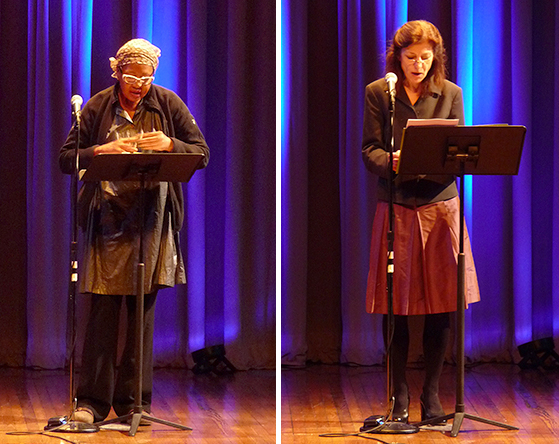
Jamaica Kincaid (above left) announced, “I’d much rather read from a book I didn’t write,” and proceeded to read from Milton’s Paradise Lost. How cool is that? As a disobedient child, Kincaid was made to copy out Books I-II as a punishment, but she claimed it was far from a punishment: she fell in love with the naughty protagonist.

German writer Ursula Krechel (above right) read from her most recent novel, Landgericht (State Justice), winner of the 2012 German Book Prize. It’s the story of Richard Kornitzer, a German-Jewish lawyer who flees to Cuba in 1933 to escape the Nazis, and then returns to Germany—and his wife—after the war to try and resume his old life. We’re big fans of Ursula here at Malvern (wearing our Host Publications hat, we published her bilingual poetry collection, Voices from the Bitter Core), and it was wonderful to hear her read.

James Kelman read something in a thick Scottish accent. I think it was about a leg wound.

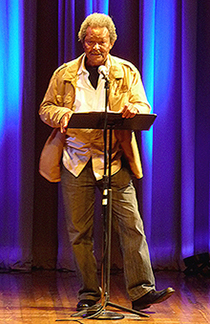
LovelaceAnd then there was my favorite, the Trinidadian writer Earl Lovelace, who was very, very funny. He read from the novel Is Just a Movie, which was awarded the 2011 Grand Prize for Caribbean Literature. The book recounts the misadventures of Sonnyboy, a minor and hapless figure in Trinidad’s Black Power movement. In the section Lovelace read, he describes what is expected of you when you’re hired as local color for a Hollywood movie being shot in Trinidad: “The natives’ role is to die.” Sonnyboy is outraged by the ease with which his fellow local extras take a bullet. His pride won’t let him die “like an ass”—“even as a child playing stick-’em-up, I composed my dying like a poem”—and so he resolves to die deliberately, with drama and dignity.
I began the exquisite choreography of my dying.
“Cut,” the director said.

Thursday Three #3: Age Will Not Weary Them

Today’s Thursday Three, our weekly assortment of oddities in triplicate, falls on April 25th, which is Anzac Day down under—a national day of remembrance. The acronym ANZAC stands for Australia and New Zealand Army Corps, whose members fought for the Allies in the First World War. And the date marks the start of the (disastrous) Battle of Gallipoli, the first major campaign in which the Anzac forces took part. (In total, 100,444 New Zealanders would serve in the war—roughly 10% of our population at the time—and we suffered one of the highest death rates per capita of any country involved.)

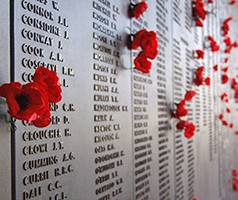
ANZAC DayFollowing the Second World War, Anzac Day’s commemorative scope was broadened, and it became a day of general remembrance for all those lost in battle. Every year on April 25th, people all over New Zealand and Australia don red poppies, attend dawn services, and trade stories about great-uncles who never made it home. So, if you’ll forgive this soppy antipodean disruption to our regular services, let’s do our bit with an Anzac Day Three.
1. When I was a kid, the BBC sitcom Blackadder was my favorite TV program, and my father and I watched every episode together (my mother found it too silly). For those of you unfamiliar with the show, it follows the exploits of Edmund Blackadder, a cynical and cowardly chap who attempts to improve his lot in life through a variety of “cunning schemes.” Each series was set in a different historical period: Blackadder first does his wheeling and dealing in the English royal court at the end of the Middle Ages; in the next series he reappears (as the great-grandson of the original Blackadder) as a Lord during the reign of Queen Elizabeth; and then he pops up again as the Prince of Wales’ butler during the Regency period. Finally, for the show’s fourth season, poor Blackadder must serve as a Captain during the First World War.

This last series starts off much like the rest: finding himself in a bit of a pickle (i.e. in a trench in Flanders), the wily Blackadder employs various farcical schemes in order to achieve his objective, which in this case is to land himself a cushy military desk job as far from the front line as possible. The series parodied the conditions of life on the Western Front, but it never strayed too far from the show’s typical ribald silliness—it was business as usual, comedy-wise, with the familiar daft jokes about weasels and willies and potatoes. (As you’ll see in the clip below, Blackadder takes constant delight in mocking the last name of his nemesis, the upper-class twit Captain Kevin Darling.)

So imagine me and my dad sitting down to watch the very final episode, excited to see how Blackadder will once and for all escape the battlefield. A cunning plan involving a pigeon and a cigarette, perhaps? Or will Captain Darling return to England’s posh green fields and let Blackadder take over his job as the General’s chief pajama folder? Nope, not going to happen. Blackadder’s luck runs out, and in the show’s closing scene the cackles on the laugh track become hesitant, then trail off. The jaunty theme tune slows to a funereal dirge. And my dad and I had to keep swallowing the lumps in our throats as we watched the final moments of Captain Blackadder:

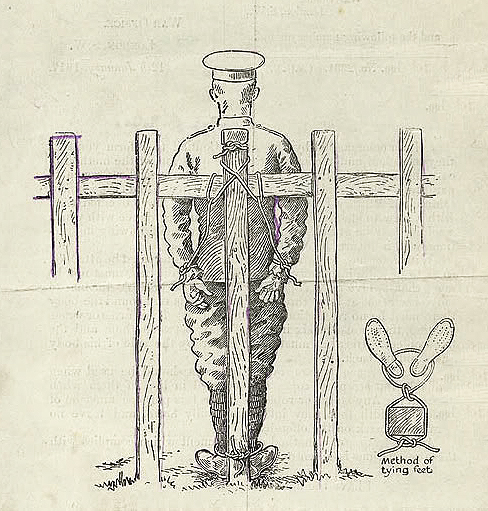
2. Conscientious objectors didn’t fare much better. New Zealand pacifist Archibald Baxter (1881-1970) refused to serve during the First World War—he claimed “all war is wrong, futile, and destructive alike to victor and vanquished”—but they sent him to the Western Front anyway, where he was beaten and tortured by army officers in an effort to get him to cooperate. He steadfastly refused to obey military orders, and was eventually subjected to Field Punishment Number One, also known as “the crucifixion,” an ordeal he recalls in his autobiography, We Will Not Cease:

field[The sergeant] took me over to the poles, which were willow stumps, six to eight inches in diameter and twice the height of a man, and placed me against one of them. It was inclined forward out of perpendicular. Almost always afterwards he picked the same one for me. I stood with my back to it and he tied me to it by the ankles, knees and wrists. He was an expert at the job, and he knew how to pull and strain at the ropes till they cut into the flesh and completely stopped the circulation. When I was taken off my hands were always black with congested blood. My hands were taken round behind the pole, tied together and pulled well up it, straining and cramping the muscles and forcing them into an unnatural position. Most knots will slacken a little after a time. His never did. The slope of the post brought me into a hanging position, causing a large part of my weight to come on my arms, and I could get no proper grip with my feet on the ground, as it was worn away round the pole and my toes were consequently much lower than my heels. I was strained so tightly up against the post that I was unable to move body or limbs a fraction of an inch…

A few minutes after the sergeant had left me, I began to think of the length of my sentence and it rose up before me like a mountain. The pain grew steadily worse until by the end of half-an-hour it seemed absolutely unendurable. Between my set teeth I said: “Oh God, this is too much. I can’t bear it.” But I could not allow myself the relief of groaning as I did not want to give the guards the satisfaction of hearing me. The mental effect was almost as frightful as the physical. I felt I was going mad. That I should be stuck up on a pole suffering this frightful torture, a human scarecrow for men to stare at and wonder at, seemed part of some impossible nightmare that could not continue.

Baxter’s autobiography was required reading when I was at high school, and for that it got filed in the BORING BOOKS section of my brain. But picking it up again as an adult, I’m amazed by Baxter’s courage and resilience. He recounts his experiences with incredible humility, and he makes a point of recording the many acts of kindness shown to him by the ordinary soldiers. His plain, straightforward prose reveals no bitterness, only sadness and bewilderment. It’s a moving account of the consequences of dissent.

I remember before I reached the front meeting men who had been there and thinking they looked hard and strange. Their faces had a drawn look and they seemed to have eyes like eagles. Now that I was amongst them I did not notice this. They seemed ordinary, but new arrivals looked as gentle as sheep.

3. And what do we do on Anzac Day? On Anzac Day we search the house for war memorabilia. There’s a box of medals in the drinks cabinet; no one can remember who the Star of Burma belongs to. There are also letters from my great-uncle Eric, who served with the Auckland Mounted Rifles during the First World War. He spent most of 1915 in Turkey, his horse tethered to a tree. He writes to his mother:

I forgot to tell you in my last letter that we had seen quite a number of swallows; the first we saw was on New Year’s Day, and we have seen them on several occasions since.

We are all hoping and living for the day we shall be in the thick of it, and it shouldn’t be long now—there are hundreds of our infantry boys to be avenged, some battalions were almost wiped out. But you needn’t worry too much about us, Mater, as there is a ten to one chance in our favour, and things are not quite what the papers say. Don’t believe all you read in them.

He was killed at Gallipoli a few weeks later.

My grandfather’s records from the Second World War are kept in the writing desk, beneath the Christmas wrapping paper. He would never talk about the war, and there isn’t much to go on; just an army logbook and a bundle of pay slips. He served in the Pacific for 796 days, and for this he received £39.16. He took with him to war a pocket-size New Testament and a photo of his wife.

His brother Harold also fought in the Second World War, in Tunisia, and tucked inside the logbook is a letter to their mother from Harold’s Company Commander:

Dear Mrs Hill,

I saw your son killed. It happened during an attack on a strong enemy position in front of the village of El Hamma, in the Mareth Line. He was with 2nd Lt. Friend (since wounded), his Platoon Commander, and his section, mopping up German pockets of resistance. He was endeavouring to get some Germans out of the bottom of a trench, but was shot through the head at very close range. He died instantaneously.

On Anzac Day we wear crepe-paper poppies and thank our lucky stars.