Taylor recommends: Parable of the Sower and Parable of the Talents by Octavia E. Butler
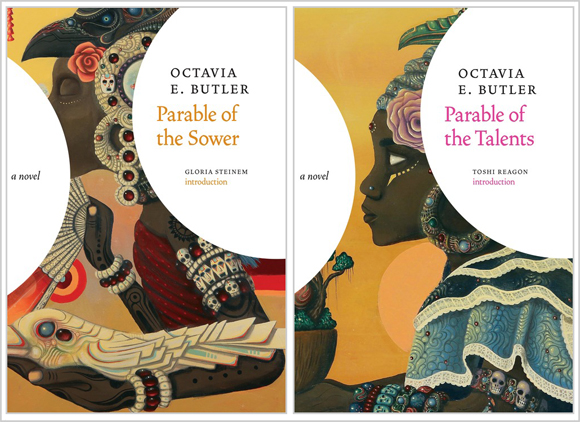
I don’t know why but it feels really reductive to think of these two separate books, written like five years apart, as parts of a series or a set. Or for that matter as anything at all that is separate. And it’s not that they’re just one long story that got cut in half. It’s more that there is a richness and a completeness to reading them in sequence that creates a totally immersive experience. They are lovely, violent, strange, and strangely prophetic, and predicted the future with shocking accuracy. They are full of wisdom and practical knowledge. They warn against ignorance. They warn that unpreparedness leaves us vulnerable, perhaps fatally. They warn against a future where corporate towns lead to indentured servitude. They warn about a future where slavery returns, not legally but as a black market. They offer hope for the continuation of the human race through space exploration, empathy, honesty, and effort.
These books aren’t for the faint of heart. They’re brutal and visceral, action-packed and full of fights, fires, and folks on the run. In the end though these books are just telling the story of the life of a woman, a bizarre and wonderful woman named Lauren Oya Olamina, who was a realist, survivalist, and visionary. They begin in 2024, when Lauren is fifteen, during an apocalypse that has no single flash point. It’s a time of drought caused by global warming so extreme that food and water have become scarce and valuable commodities. There are governments, and social power structures do exist, but in that corrupt sort of way that ends up being an iron rule that suppresses civil rights. Public schools and even some towns have been privatized, creating larger and larger wealth gaps. Homelessness is so rampant that it’s probably how the majority of people live. All in all it’s sort of like anarchy with the appearance of normalcy so everything is crazy dangerous and anyone who can afford to live in a gated or walled neighborhood does.
Young Lauren grows up in one of these communities, called Robledo, with her dad and stepmom and a handful of half brothers. Her dad is the community minister and a professor at a nearby college. Her stepmother is the teacher of the neighborhood school. Their day to day life has the illusion of safety, but Lauren knows this wont/can’t last forever.
And even that illusion of safety is pretty bleak. No one goes outside of the walls after dark. Because food and water are so expensive most people grow and raise their own food, food like acorn bread and rabbits. The police are also expensive, unreliable, and most likely dangerous, so kids sixteen and older are taught how to use firearms and help defend the neighborhood from intruders. Still though, nearly everyone in her community is pretty chill about their situation because they know they are quite fortunate to have all that they do have.
But Lauren sees a more dangerous and less luxurious time in her near future so she compulsively studies agriculture and survival skills in her spare time. She buries supplies and valuables in the backyard. Makes bugout bags and practices using them so that she’ll be ready to act on instinct and muscle memory if she ever needs them. She plans to survive no matter what because she feels that she has a calling of sorts in the world, a calling to teach people wisdom, goodness, and how to survive. She writes verses of poetry that are mostly truisms and sound very meditative and religious. She calls the collection Earthseed: The Books of The Living. Ultimately the goal of Earthseed is space exploration and migration as the only hope for continuing the human race.
The Books of The Living begin like this:
All that you touch
You Change.
All that you Change
Changes you.
The only lasting truth
Is Change.
God
Is Change.
O and yeah drugs are also sort of a huge deal in these books, but not like as a component of the plot, but more in a catalytic sort of way. Lauren’s mother was a drug addict who died giving birth and because of the drugs in her mother’s body Lauren developed “hypermempathy,” which meant that she physically and emotionally felt what she saw other people experiencing. It happened when she saw people laughing. It happened when she saw a wild dog get shot while they were in a canyon on one of their marksmanship practice trips. It happened even when people were just pretending to be hurt; in fact, once as children, one of her half brothers pretended to be wounded using ketchup as fake blood and Lauren actually began bleeding. Pretty gnarly. So her sharing, as Lauren calls it, was kept a very close secret so as to make sure no one could use it as a weapon against her.
Another drug that plays a major role is called pyro. Simple enough, it gave users a high that felt better than sexual pleasure when watching a fire burn. Naturally junkies burned whatever they could/wanted to make the high better. Naturally fires in urban areas make things a bit chaotic and during a drought in a society that for all practical purposes has no fire or police department, just about anything and everything burns all the way to ashes. All of this creates a cycle, which may or may not be set in place by the pharmaceutical companies, where the junkies get high at night and start burning small stuff like boxes and trash, then move on to bigger things like cars and houses, and in the chaos sober scavengers come behind stealing anything of value they can find, leaving more and more folks homeless and destitute and prone to a life of drug addiction.
So that’s a little about Lauren and the world she lives in as a fifteen year old. From here on it’s all plot plot plot so if you’re worried about spoilers this is where you should stop and read these books for yourself.
The Parable of the Sower
The story kicks off with Lauren being obsessive about all her things. She’s living at home in the walled/gated community of Robledo. We learn about Earthseed. We meet the fam, the boyfriend, the neighbors. We get a taste of daily life. We get a view of the landscape as Lauren’s dad and a few other adults take the older kids on a few controlled excursions to a nearby canyon to do some target practice.
Then one of her half brothers, Keith, runs away to live his own life outside of the walled streets. For a while he comes and goes, sometimes bringing money and gifts for the family that he presumably gets in a less than desirable way. Then he stops coming altogether and his parents have to go identify his body.
After that things get a little rough—the neighborhood gets broken into a few times so the community starts having a night watch patrolling but the thieves keep coming.
Then one day Lauren’s father doesn’t come home from work.
Then one night Lauren wakes up to total bedlam. The pyro junkies have broken in and started setting fire to everything. Lauren grabs her bugout bag and runs. In the streets people are screaming. People are fighting, shooting, bleeding, there’s smoke and fire everywhere. Lauren looks for her family but in all of the chaos she can’t find them and knows that if she wants to live she has to get away as fast as she can.
The next morning she regroups with two people, Harry and Zahra, from the neighborhood. She goes back to look for her family and to see what is left of her old life, but the whole neighborhood is unlivable and everyone she recognizes is dead. She digs up some cash and a gun that her dad had buried in the backyard and takes off to rejoin Harry and Zahra. They decide that living on the streets outside of LA isn’t sustainable and so set off on foot carrying everything they own to go north to Seattle or maybe even Canada in search of a better/safer place to settle.
Needless to say, this won’t just be a chill stroll all the way up the Pacific coast. It’s dangerous AF and they can’t really trust anyone, especially because of Lauren’s sharing. They’re scrappy enough though and eventually they start meeting good people along the way. They join up with an interracial couple, named Travis and Natividad, who has a young baby; two sisters Jill and Allie; and an older dude named Bankole who says he has a piece of land well off of the highway in Northern California. Lauren see this all as an opportunity to spread her ideas about Earthseed and a better way of life for everyone. As the group grows they begin to feel safer in their number, but move more slowly and can’t hide as well. They keep going though and keep picking up travelers knowing that they will never be safe or free as long as they are on the highway.
***MORE SPOILERS AHEAD***
Parable of the Talents
Five years have passed since the end of Parable of the Sower. They made it to Bankole’s land in Northern California. It’s well off of the highway, fairly safe, and the Earthseed folks have settled there. We learn this from Lauren’s daughter Larkin. We also learn that she was separated from her parents as an infant and was adopted, which she blames on Lauren for putting the formation of a religion ahead of raising a daughter.
The community is about 60 in number and call the settlement Acorn. It’s everything Lauren dreamed of. They have a school, they farm, they have weekly meetings where anyone and everyone has a voice. It’s all very democratic but Lauren is more or less the leader. Bankole is a physician and makes rounds to other nearby towns and settlements like Acorn. As a whole the Acorn community is in good enough standing with its neighbors and life has an easy flow to it.
On the surface the nation as a whole seems to have settled down a bit too, so much so in fact that the time of Parable of the Sower is now referred to as the Pox because of its apocalypticness. There’s also this new president, Andrew Steele Jarret, who’s a fundamentalist Christian intent on eradicating/converting “heathens” and/or non-believers. Jarret is a former Texas senator who created his own sect of Christianity called Christian America.
On one outing to Eureka, the largest nearby city, to pick up medical supplies and a few other things for Acorn, Lauren and a few others stop at a black market of sorts because they have heard one of their members has lost family to the slave trade and a handler by the name of Cougar is selling a girl that fits their description. It’s not the right girl, but when viewing all of Cougar’s wares, Lauren recognizes one of her half brothers, Marcus, that she believed to have been killed long ago. It takes a bit of maneuvering but they are able to obtain Marcus and bring him back to Acorn.
Lauren and Marcus do a little catching up. He tells her about being enslaved, how the slaves are forced to wear an electronic collar that delivers horrific pain to the wearer and is controlled by a master unit that the slave handlers wear like a belt. Lauren tells him about Earthseed and how their community functions. She encourages him to stay and become a part of it, but he is skeptical of her religion because it’s not the Bible that his father preached from when he was a child. Marcus feels like Lauren has placed her faith in the wrong things and eventually leaves Acorn to pursue a career in preaching.
Lauren is disheartened but is preoccupied giving birth and discussing with Bankole whether or not to leave Acorn for a less off-the-grid option. Bankole has been offered a job being the physician for a town nearby. He thinks it could be a wise option and that the town could really use his help, but she has reservations about what will happen to Acorn if she leaves.
One night while everyone is asleep a gang of armed Christian Americans break into Acorn and gases everyone before they can escape. Everyone is wearing a slave collar when they wake up. The women have been separated from the men. The children have been taken away. They are being punished for being a sinful cult. A few people try to escape at first, but it’s pretty quickly figured out that there’s no fighting through the pain of the collar and that escaping is implausible at best.
The enslavement is ruthless. Soon other prisoners are brought to Acorn, but talking is diffiucult and Lauren doesn’t want to risk getting lashes (shocks from the collar) for spreading cultish ideals like Earthseed. The goal and focus of every day becomes not attracting attention while always keeping watch for a way to escape…
… this isn’t the end of the story, but I think it’s a good place to end this. I hope you enjoy reading these books for the first time as much as I did.

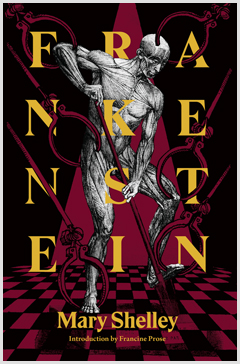 Out of the canonical monsters, could the monster in Frankenstein be the most relatable? Who doesn’t sometimes feel like an amalgam of rotting appendages that have to be animated back to life with electricity?
 Stephanie recommends
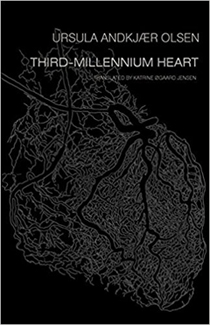
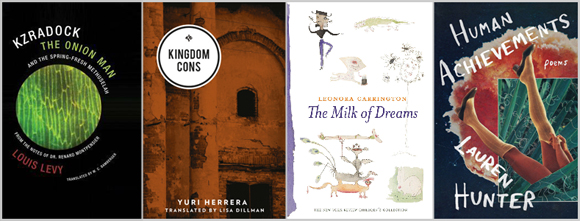
 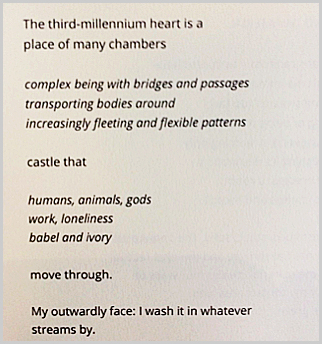 The first line of the book is the beginning of a definition of the title/title character: “The third-millennium heart is a.” That first line leaves its definition open, both welcoming readers into the book as vessels connected to it (by allowing them to complete the definition before the poem does) and also pushing readers headfirst into one of the book’s primary instincts: naming/defining/locating. “That is the structure, continued.”
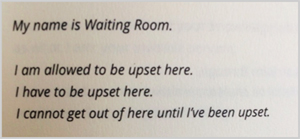 Throughout what I read as the first two sections of the single poem in this book, pages demarcated by the bold text “My Name Is Waiting Room” and “Namedrunk/Nameless”—are these phrases in bold poem titles? section titles? amplified refrains? yes / “that is the structure”—the speaker names and unnames the body/ies it inhabits.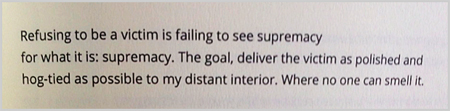
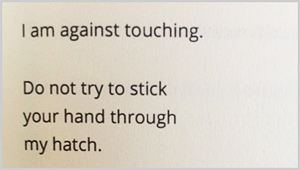 As a complex being, Third-Millennium Heart is self-conscious and arrogant. Afraid of itself as a language, it clings to equations. Empowered by its own diction, it rubs against itself: “thus fire was created.” The language, particularly with stunning inventions like “namedrunk,” rises out of itself only to revel in contradiction (literally “to say against” / or, maybe, diction that presses its body against another of its bodies). So “namedrunk” meets “nameless.” So paradox streams through us.
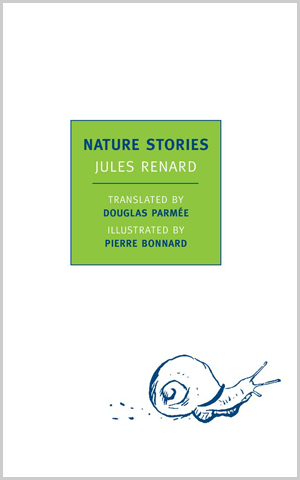 It’s hard to truly describe nature.
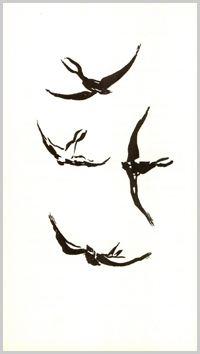 Take “The Caterpillar” for instance:
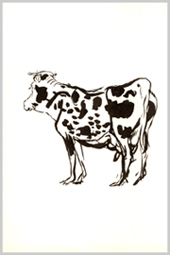 trifles that occupy its cage. The canary “washes himself in his drinking water and drinks his bathwater. He leaves droppings in both of them, indiscriminately.” The comedy arises out of human nature’s crude imaginings about what a canary should be. The speaker rails against the stupidity of the bird, it doesn’t know what do with its biscuit on a string, its sugar stick, its salad leaves, its “bathtub,” but, as it turns out, the real dummy is the one who put the bird in the cage in the first place. Completely fed up, the canary’s owner sets it free. Even then, the bird won’t do what it’s supposed to do, fly away—instead it hops around the windowsill.
 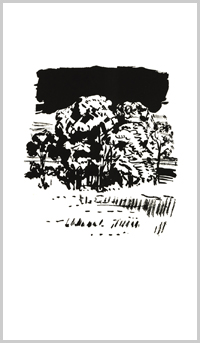 For those willing to give Renard’s jubilant writing style a try, his one-page description of trees alone is reason enough to buy this book.
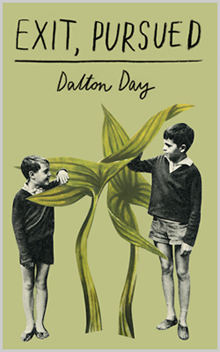 This book is the touch of a very small hand, and it is also the hand that holds that hand, and it is also the hand that holds that hand, and it is also the hand that holds that hand, and on and on for some great amount of time. As YOU and ME calmly discuss the distance between two people, clouds are formed. Nothing is certain beyond what you feel with your hands, beyond what is listed in the stage directions. And even then, maybe. The voice in the fog that you talk to when you can’t get to sleep. That is this book. And it knows you so well already.