Staff Picks: Before Lyricism

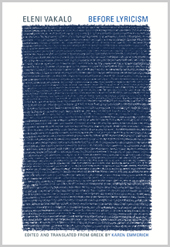
Stephanie recommends Before Lyricism by Eleni Vakalo:

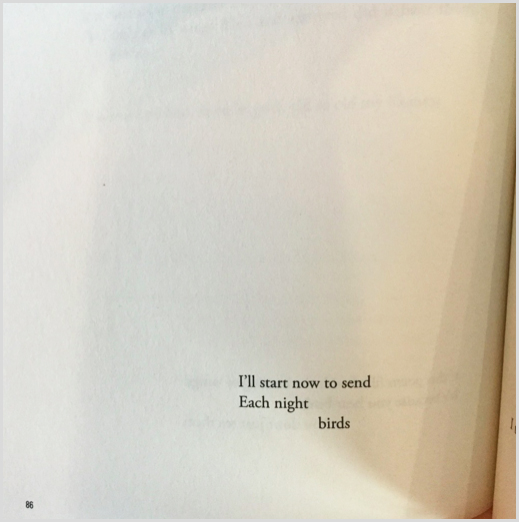
Before Lyricism by Eleni Vakalo—via translator Karen Emmerich and publisher Ugly Duckling Presse—is perhaps my favorite poetry book published in English last year, despite the book’s explicit discussion of poetry itself, which I confess is something I tend to loathe (and of course also something I hypocritically do myself as a poet). I mention this (and mention it early) only to encourage readers who might be quickly turned off by Poetry Talk in Poems to stick with Before Lyricism because the book is a beautiful and strange trek through entrancing turns of phrase and image.
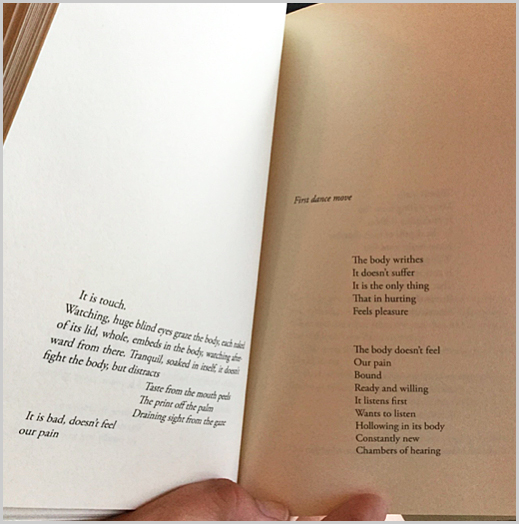
Turns of phrase as in lyrical expressions, yes. Also turns of phrase as in a series of words folding in on itself before expanding into additional meanings. And also turns of phrase as in a dance, the phrase a unit composed of bodily gestures, the dancer moving, turning. The poems in this book first and foremost are “about” no first and foremost, the text being concerned with the sort of ambiguity generated by turns of phrase.

While Vakalo is fond of introductory textual notes like “Poetic Fiction (in the style of an expressive ballet)” and “From the diary of the poem,” Before Lyricism embraces so many readings of the text, often line by line, that a reader uninterested in the Poetry Talk can quite easily just ignore it. The pleasure I first took (and ultimately return to) with this book is the pleasure I draw from its images and sounds. I see the word “poem” in the text and kind of skip it; I’d rather think of a bird as a bird than as a poem, you know? So if you feel similarly, it’s important to me that you know this gorgeous book is still for you.
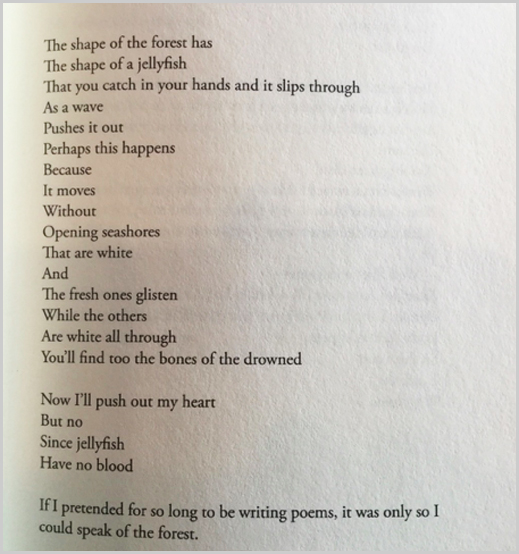
The poems in Before Lyricism—the first Vakalo book in English translation, courtesy a decade of dedication from Emmerich, recently awarded the Best Translated Book Award of 2018 for the work—are interested in composition (of art, of a body, of meaning, of image, of ourselves) as expressed through language/image/movement. Vakalo, a Greek art critic and art historian who lived from 1921 to 2001, writes in wild lines—wild in the sense that they seem to express freedom of movement, with no poem in the book adhering to a single visual form throughout its pages.

Or as Emmerich puts it in her translator’s note: “the six book-poems I present here are what Andreas Karandonis described as ‘experiment-objects,’ which treat the book as a tactile object with features to be explored as elements of poetic composition. Her pages and spreads often display sprawling yet deliberate assortments of prose, free verse, and even rhymed and metered lines, a mixture of styles and registers that can be both heard and seen.”

(Or as Vakalo herself writes in one of the poems: “hugging the wall touching the objects one by one adjusting their positions I come to know them.”)

Vakalo saw the six book-length poems collected here as parts of a larger whole. In addition to an interest in composition, each poem (“The Forest,” “Plant Upbringing,” “Diary of Age,” “Description of the Body,” “The Meaning of the Blind,” and “Our Way of Being in Danger”) interrogates pleasure and fear, which the speaker(s) might say are what exists before lyricism, before sense, before the sensory, before song.

And of course after, too.

“How we exist is governed by how we take pleasure,” Vakalo writes. Take pleasure as in how do we receive it? Take pleasure as in from what/where do we remove it? To where do we carry it? How do our bodies transport it? What changes to it or the landscape it came from or the body that receives it then occur? Anyone with an interest in not answering those questions will take pleasure in Before Lyricism, as I do each time I reread it.
Staff Picks: Magic for Beginners

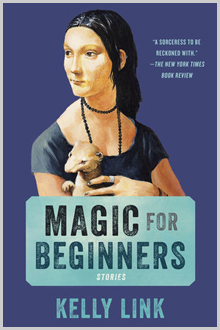
Mtn recommends Magic for Beginners by Kelly Link:

So, these stories are weird. But none of the people in them think they’re weird. A witch dies and comes back in the form of a cat to help guide her son into claiming her vengeance. An aimless youth lives and works at the roadside convenience store serving strange drifters and zombies that wander in late. A medium reflects on the many differences between ghosts and people as she assists a living man through the process of getting a divorce from his dead wife, who is still there with him. Nothing is out of the ordinary here, in these worlds, for these characters. To them, this is just normal. Just work. Just life.
This is a book for fans of works that use the surreal and absurd to explore the blessings and hardships of the mundane everyday, which I most definitely am. Link is driving back and forth down the expressway of what it is to be human. The pride of a first love and the fear of losing it. The monotony of workday after endless workday, broken only by sharp little jabs of uncertain future. Holding a family together through all of its flaws. The premise of each story is completely ridiculous (in the best way possible), yet you the reader feel right at home. Life is, after all, quite ridiculous.

And there’s a tension to it. A constant flutter of static electricity. At any moment, you feel as if something might change. That anything is possible. A “no-rules” sensation. It’s like being on vacation somewhere you’ve never been before with no plan and no tour guide. But with zombies and stuff. It’s an energizing feeling that keeps you eagerly turning each page. You’re drawn into these characters and all of their uncertainty, instilled with a fitful hope that everything will be ok, and a gentle trepidation that it very well might not be. And then you look up and realize that you feel that same sensation every day, waking up in the morning and laying in bed, silent and free to do nothing but wonder and worry, or staring out of a window during an idle moment at work, or waiting to meet someone who might not show up.

Although, if all my daily worries also included haunted houses and rabbit armies and meeting the Devil at a party, my life would be much more exciting. But Magic For Beginners at least lets you slip into that world for a time, with the realization that life in this world is strange and surreal enough as it is, magic or no magic, but (unsurprisingly) magic is at least much more interesting.

An Introduction to Page by Page: On Craft and Other Writerly Pursuits—and the Spark That Started It All

We have a brand-new interview series starting on Saturday, May 19th, at 7pm. Here’s host—and Malvernite—Julie Poole with more information:

A few weeks ago, I watched a BBC interview with Muriel Spark in which she explained her writing process step by step. The video starts with Spark, at her desk, shuffling stacks of her journals. “I begin at the beginning,” she states matter-of-factly with a detectable grin. She then proceeds to tell the interviewer how first she writes the title, her name, the words “Chapter One” at the top of the page, and then writes, revising when necessary, until the book is complete.

I loved Spark’s wry, utterly straightforward response. Of course it’s that simple! Do we ask dancers how they dance? No, it’s obvious; they put one foot in front of the other. Budding writers, however, often maintain hope that there’s some secret ingredient—a lucky rock or a desk position—that will cosmically bless a book with an effortless beginning and last until its final page. As Spark so comically observed, writing is simple; it’s all the other stuff that surrounds writing that’s a challenge.

As a fledgling writer myself, I appreciate learning about other writers’ strategies and techniques, since, on multiple occasions, I’ve received nuggets of wisdom that have saved me time, money, heartache, and most importantly kept me on the writerly path.

For Page by Page, a new interview series, I aim to sit down with individual writers—at all stages in their careers—to chat about topics such as, “the first book: tips on making it happen,” “strategies for submitting to journals and magazines,” and “how to use research to enliven works of poetry and fiction.”

It’s no secret that many of the lovely people who buy books and/or attend readings here at Malvern are also writers interested in discovering great books and also looking for ways to stay connected to their craft. I hope you will join me in exploring the world of writerly endeavors and all the extras that make up this wild and wonderful art. 

Staff Picks: Making It

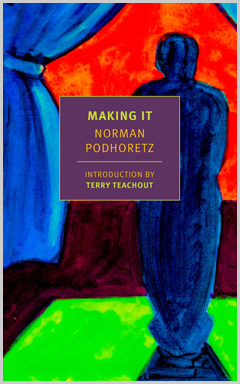
Julie recommends Making It by Norman Podhoretz:

According to Norman Podhoretz everyone worships Success—that buxom Goddess who nurses her four hungry babes: Money, Power, Fame and Social Position. And if we, mere mortals, can’t admit to bowing to all four minor deities, he’s convinced that each of us curtsies to at least one. “Success” as he quotes William James “is our national disease.” It is a disease stemming from a culture that leaves its citizens in limbo “teach[ing] us to shape our lives in accordance with the hunger for worldly things” even while it “spitefully contrives to make us ashamed of the presence of those hungers.”
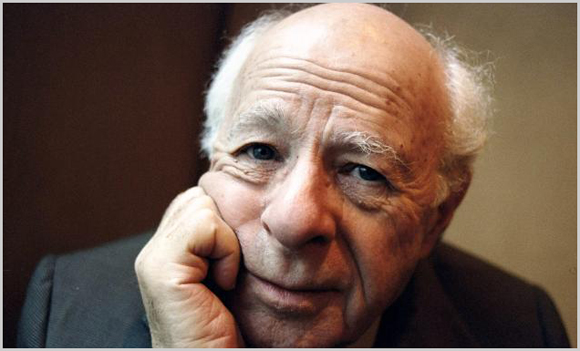
Like a moth to a flame, it was the title of Making It that caught my attention; here was a literary looking NYRB memoir that I could sneakily read as a self-help book or how-to guide. Podhoretz covers territory that holds a deep personal interest for me—his is a classic bootstrap story: poor kid gains admission into an ivy league school, Columbia, then heads off to Cambridge, returns to New York to land a job at Commentary, a prestigious magazine in Manhattan, gets welcomed into the fold of a tight-knit circle of literary hotshots, and ascends to further glory (with, of course, a few bumps along the way). If that storyline wasn’t enough of a sell, the opening introduction alone made me willingly toss more of my hard-earned bookseller money back into books. He writes:

Let me introduce myself. I am a man who at the precocious age of thirty-five experienced an astonishing revelation: it is better to be a success than a failure.

I, too, at the age of thirty-seven had recently struck upon this same idea! On my walk to work, I interrogated the very notion of “success” as it relates to the capitalist patriarchy for about the length of time it takes to sneeze (it’s allergy season here) and watched a glossy new Porsche drive by. Did I want to live like a Kardashian? Ew, gross. Did I want a bunch of hotels with my name on them? Hell no. But with some sixty-second soul searching, I concluded that I did indeed want to pal up with three out of four demigods, money, power, and fame. It would be nice, right?

Podhoretz is quick to clarify that success is not exclusively about money, “just as often it might mean prestige or popularity.” A job as a doctor, or, in today’s terms, someone with 500k Instagram followers. Growing up in Brooklyn to Jewish parents of modest means he understood that “the main thing was to be esteemed.”

Even as a young boy, Podhoretz was keenly aware that people belonged to different classes and that meant something: “I and everyone I knew were stamped as inferior: we were lower class.” The words “Slum child, filthy little slum child,” were flung at him by his teacher, Mrs. K, a woman determined to turn young Podhoretz into her pet project so that he might, with some polishing, win a scholarship to Harvard. “[S]he treated me like a callous, ungrateful adolescent lover on whom she had humiliatingly bestowed her favors. She flirted with me and flattered me, scolded me and insulted me,” he writes. The scenes that he recounts of Mrs. K teaching him to dress right, eat right, talk right are brutal, but also captivating to read. “Good manners to Mrs. K. meant only one thing: conformity to a highly stylized set of surface habits…” He did go on to succeed on Mrs. K’s terms and got into Harvard with a scholarship but it still wasn’t enough to cover all expenses so he attended Columbia.

For all his early success Podhoretz likens jumping the class barrier to moving to a foreign country. He writes:

That country is sometimes called the upper middle class; and indeed I am a member of that class, less by virtue of my income than by virtue of the way my speech is accented, the way I dress, the way I furnish my home, the way I entertain and am entertained, the way I educate my children—the way, quite simply, I look and live.

He describes the process of self-fashioning—from slum child to acclaimed critic and editor—with cool detachment, but just as swiftly comes a heartwrenching admission: 

It appalls me to think what an immense transformation I had to work on myself in order to become what I have become: if I had known what I was doing I would surely not have been able to do it. . . No wonder the choice had to be blind; there was a kind of treason in it: treason toward my family, treason toward my friends. In choosing the road I chose, I was pronouncing a judgment upon them, and the fact that they themselves concurred in the judgment makes the whole thing sadder but no less cruel.

I don’t think I’ve ever encountered the “disloyal” aspects of upward mobility articulated so poignantly before. As a first generation college student, who like Podhoretz also attended Columbia, I certainly related. (When I broke the news that I’d gotten into Columbia, I had to clarify that I wasn’t talking about the country. Indeed, both places were equally mysterious to many in my family.)

After Podhoretz rises far above the menial jobs that could have been his lot in life, he wonders if he could ever untie himself from ambition’s constant tug and disappear back into a simpler life. He toys with the idea of becoming a janitor in order to give up his desires for “things,” and his unsettling “need for power.”

I will admit it was a bit strange to develop such a fondness for a man who helped put the neo in neoconservative—perhaps hinted at best in a 2010 editorial Podhoretz wrote in the Wall Street Journal titled, “In Defense of Sarah Palin.” And there are moments in Making It that are cringeworthy, such as Podhoretz’s fixation with personal slights. When James Baldwin supposedly stiffed him a promised essay that went on to be published, not in Commentary, but in The New Yorker “[he] saw what a precious item had been stolen from [him],” that essay being “The Fire Next Time.”

The names associated with “making it” today aren’t writers, critics, or intellectuals, but billionaires with their own space vessels and walled off portions of islands. I confess I had to look up Commentary to see if it was still even afloat. It was a bit surreal to measure this book against the news today. Maybe it’s just me but success, now more than ever, seems to involve steamrolling over others, or using deceptive means to, say, gain the highest office in government. Podhoretz’s work is filled with hard-won insights into the human psyche: our fascination with having it all, our fear of having it all and losing it—this memoir is truly outstanding. I’m still haunted by what Lionel Trilling said to Podhoretz when he was a young writer; he said, “Everyone wants power. The only question is what kind.” 

Photo credit: JON NASO/NY DAILY NEWS ARCHIVE/GETTY IMAGES

In Praise of Barbara Comyns

Below, an excerpt from Malvern fave Taisia Kitaiskaia’s wonderful look at the work of English writer Barbara Comyns (you can read the full article here). We stock all of the books Taisia mentions, and we heartily echo her sentiments—Comyns is a fascinating writer and well worth checking out.

Fiction can be frustrating because, while very diverting, it often manages to exclude 99 percent of life on earth. Driven by plot and obsessed with psychology, modern novels tend to behave as if social and human relationships are the only things that matter, as if outer space doesn’t exist, Neanderthals never walked alongside our ancestors, deep-sea fish don’t swim in the dark with their treacherous lights, and our lives aren’t mostly just irrational streams of little pleasures, comforts and discomforts, sleep and dreams. Realist novels especially are disappointingly devoid of creatureliness—that wild, quick, raw stuff we are made of.

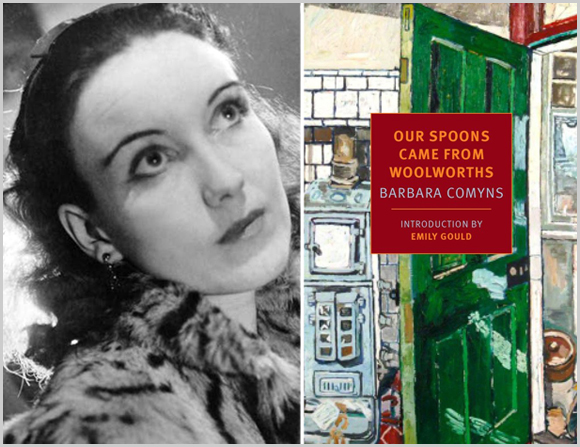
But sometimes I come across novelists whose work is alive with wildness. Barbara Comyns is one of these. An underlooked British author of 10 novels—also a painter, mother, evident beauty, breeder of poodles, seller of cars, and doer of other weird jobs to get by—Comyns (1907–1992) has seen a revival of attention after the recent reprinting of her 1985 novel The Juniper Tree. While I hope that this revival earns Comyns’s name a permanent place in the canon, so many women writers are forgotten again even shortly after being remembered. I want to cry, “Read this writer, she deserves it!” But Comyns, dead and gone, doesn’t care if you read her books. It’s you who is missing out.

It’s not as if Comyns’s characters are always pondering Neanderthals (they’re much too stressed), and her novels do sit comfortably enough on the realist shelf. Yet these books are unmistakably feral, thrumming with sinister enchantment and the magical-grotesque possibilities of transformation. When I first encountered Comyns, it was through Who Was Changed and Who Was Dead, which tells of a strange episode in an English village. I finished the short novel in one sitting and then stumbled outside, the book still in my hand. It was almost too alive to either hold or set down, so the thing sweated in my palm like a deranged, flooded, purple Polly Pocket, where a shifty gardener emerges from under the bridge with the body of a dead child, the plastic fairy stands with only one cellophane wing, a power-thirsty grandma hits at crows with her cane, and a tender baker weeps somewhere in the painted distance.

Comyns should have made it into Literary Witches: A Celebration of Magical Women Writers, my collaboration with artist Katy Horan, as she is one of the witchlier writers I’ve read. In addition to her work’s elusive feeling of magic and focus on domesticity—that enduring arena of the witch—it’s Comyns’s creatureliness that most qualifies her. Her books contain an astonishing number of wild things: slugs, insects, eggs, drowning peacocks, paddling pigs, mongooses in kitchens, ducks in drawing-rooms. Creeks and woods and lakes. And, most thrilling of all, her creaturely humans: the barefooted, unsupervised children muddying themselves by the river; the “beastly” (that great Britishism) power-holders, terrorizing and betraying; men and women described as kittens, birds, horses, and even named Mr. Fox; and the shivering animal selves of the female protagonists, hounded but seeking security and reprieve.

Her narratives themselves are wild beings of astonishing velocity and presence, fleeting, unstudied (Comyns was educated haphazardly by governesses in her own deranged Polly Pocket childhood, as described in her 1947 novel Sisters by a River). Her first person narratives are nearly breathless, the sentences like mice scurrying along the edge of the room, single-minded in their pursuit of survival: trying to please, trying not to be noticed, or to be noticed by the right people, trying to scrape by, scared they won’t make it. Comyns’s protagonists, too, are trying to survive, skirting around poverty and vicious, lousy men. These women tell their tales as a mouse might, if you stopped it in its tracks: matter of factly and without self-pity. The narrator of The Vet’s Daughter, Comyns’s most famous book, says of her father: “When I think of him kicking Mother’s front teeth crooked so early in their marriage, it really was a mercy he ignored me, or I might have had a cauliflower ear, or something equally disfiguring.”

Creatures can go many ways. They can be innocent, like the mice skirting around the patriarchy, and they can be beastly like the patriarchy itself. Many of Comyns’s characters are beastly, whether in outright cruelty, as with the father in The Vet’s Daughter, who not only physically and verbally abuses his family, but also sells many of his veterinary subjects to the vivisectionist; or in neglect, as with the autobiographical husband in Our Spoons Came from Woolworths, an arrogant painter who abandons his family. In Who Was Changed: “‘Father makes me hate men,’ thought Emma as she pumped water into the bucket. A slug tumbled out of the pump and she caught it and put it in a dark damp corner of the sink.” The viciousness of the patriarchy has never been so clear as in these books. But what is pleasing about Comyns’s novels is that they’re above easy moralizing, presenting the beasts as they come, knowing that they will sink and die and be reborn again as other creatures.

That leads me to Comyns’s enchantment. There isn’t much explicit magic in her books: The Vet’s Daughter is the only one with unexplained phenomena (and boy, is it wonderful) and The Juniper Tree is intentionally based on a fairy-tale. But all of her books feel like they’re set in the woods even when they take place in towns or cities, and in both the bleakest and most hopeful Comyns moments there is the ripe sense that everything could change. For better or worse, too, many of her novels follow the fairy-tale trope of women saved from poverty and pain by marriage. That the world can be enchanted without also being just or pleasant feels about right. Certainly there are writers who set their books in more thoroughly wild settings, and writers who use fairy tales and folklore more avidly and violently (like that other beastly Brit, Angela Carter). But this is what makes Comyns great: She demonstrates that as we carry out ordinary lives in cities, as we run around and try to make ends meet and find partners and friendly souls, we are little animals there, too… (continue reading).

Staff Picks: Joy of Missing Out

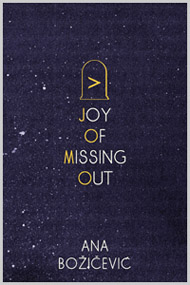
Julie recommends Joy of Missing Out by Ana Božičević:

Walking home from the first meeting of Line/Break (Malvern’s Poetry Book Club) I reveled in—and interrogated—a line from ol’ Walt Whitman, “Have you ever felt proud to get at the meaning of poems?”
Nope, not really. OK, well, maybe sometimes, but mostly, Great Godfather of American Poetry, poems leave me feeling stupid, wonderfully, happily stupid. What I end up understanding is only an outline, a shadow, a sense of all the ways in which a poem can inhabit feeling. It’s like holding hands with a ghost, and I love ghosts! If I do “get” a poem it’s usually a pretty bad one—far too easy to make sense of. I prefer mystification. 

I can’t help it, I’m utterly wedded to the idea that poems encourage alternative ways of thinking, they invite and embolden us to ask, “What if the world was this way?” In Joy of Missing Out Ana Božičević could have, at some point, asked herself several what if questions. What if there were poems out there that spoke about late-night lonely lurkings on the Interweb? What if mental illness was spoken about openly? What if flat, innocuous words like “like,” “emoji,” “facebook” could be infused with new meaning? What if it were possible to pump fresh blood into a term like “LOL” which, at this point, might as well be a laughed-out corpse? 

People, poets I mean, write about popular culture every day. Božičević has written poems with titles like “The Day Lady Gaga Died” (see Rise in the Fall). Others have dedicated entire works to a single pop figure (see Letters to Kelly Clarkson by Julia Block, or Mr. West by Sara Blake). Even what pops up on news feeds becomes fodder for poems. (See Daylight Savings Time Flies Like an Instagram of a Weasel Riding a Woodpecker & You Feel Everything Will Be Alright by Regie Cabico.) And now, anyone can be a pop figure. Social media has created hybrid famous people, “influencers,” and celebrity cats. We are a culture, in many ways, obsessed with technology, deriding it, revering it, needing it, shunning it. Google churns out more information than anyone could ever hope to absorb with just one measly brain. 

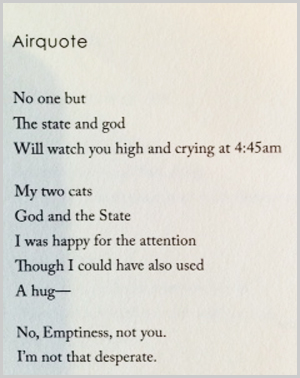
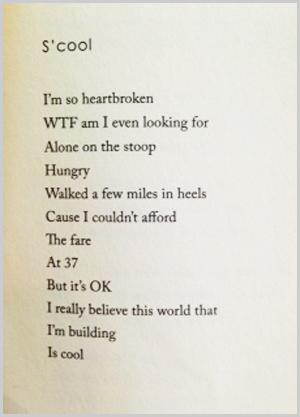
This is to say that, in the hands of a lesser poet, poems riddled with tech speak risk becoming imitations of imitations. The <3 imitates a smooch, deeper meaning can only go so far, unless you’re Božičević and you shape a book of poems around bigger ideas: love, loss, loneliness, and perhaps most importantly, estrangement, the feeling of being locked out of your own life. In the poem “S’cool,” she writes:

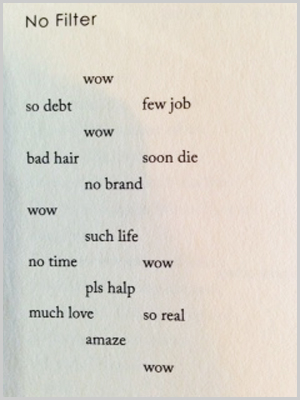
The last line echoes the elision in the title. The “s’cool” of hard knocks, the school of disappointment, the Newer New York School of Poets in an era when everyone is urged to build a “brand.” Božičević plays with this idea further in “No Filter,” a scattershot-spaced poem that reads:

This poem jostles between two states, amazement or “amaze” and a catalog of suck. I love this poem. It’s shorthand for a weakened attention span. Gone are the days of trying to reach Wordsworthian or Keatsian sublimes, a simple “wow” works instead. Or maybe the “wow” is a sarcastic teenager shrugging. Whatever the “wow” is, or represents, the poem manages to capture how I feel on a near daily basis.  

Božičević came to the U.S. at age nineteen from Croatia. She’s fluent in English, and she can’t help but call herself an American poetTo become an American poet also means gaining cultural fluency, not just in books, music, and art, but things like Tumbler, #__, Starbucks, 7/11, and CVS.

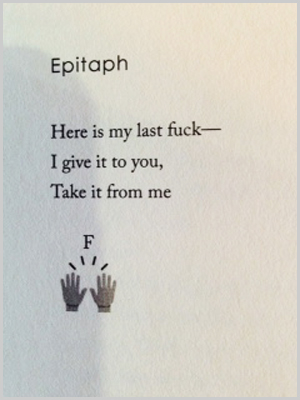
JOMO lays out all of the ways in which one can be an outsider. The speaker of the poems is positioned not only as being an outsider as an artist (poets are notorious outsiders) but as a woman, a queer woman, an immigrant, a non-native speaker (let’s remember this land’s first language was not English), and someone with a mental illness.

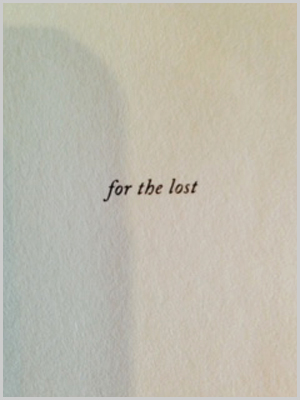
She outs herself in a variety of ways and these ways all lead back to the beautiful dedication at the beginning:

The lost don’t just need a voice to relate to, they need a little levity sometimes, and Božičević delivers on that front.

It’s devastating to wallow, even more so when it’s done with full awareness. Božičević uses humor as a way to shake off despair the way a wet dog does lake water. It’s both a distancing device and a means for getting closer. As a poet, she’s perhaps painfully aware of the almighty “reader,” the person who could easily stop reading, shut the book, and exit the poem forever. She embraces this prospect, teases it a little, and even dares the addressee to bounce.

I don’t think the only value of poetry is whether or not you relate to it on a personal level, that’s a very narrow experience of art in general, but, for me, being able to relate to a speaker is certainly a viable entry point because I read to connect as much as I read to learn. I found a genuine appreciation for lines such as “I’ll be so mad / If love turns out not to be a person,” or “Where’s my drugs,” or a “Moth is just a loser butterfly.”

Anne Waldman called Božičević “one of our most rambunctious and charismatic poets,” a real lifesaver, someone who can in fact make you feel better.

It’s fitting that JOMO begins with a blessing and ends with dancing; the last line of the book is “And I shake my ass,” which invites several readings, one literal, the action of ass-shaking, one that means, “And I continue to live,” and one, that, if taken in isolation, could mean “I jostle my donkey,” all of these interpretations are cause for celebration.