Staff Picks: The Hospital

Celia recommends The Hospital by Ahmed Bouanani:

“Would it surprise you if I said that one day I transformed myself into a spider, a weeping willow, and a cyclamen flower?” Ahmed Bouanani asks somewhere in the middle of his novel The Hospital, translated this year by Lara Vergnaud and published by New Directions. “On the whole,” he continues, “we’re talking about a stolen life.” Like a prisoner who, shut inside four walls, invents his own world.

There are books that you’ve never heard of before that, nevertheless, cast a spell of mystery over you once you’ve picked them up, and The Hospital was one of these for me. As soon as I’d finished reading, I wanted to know who Ahmed Bouanani was and why I hadn’t heard of him before. While The Hospital itself is a slim book, it feels as if it reaches out to the hidden network of a life’s work, as vivid and arresting as a long still shot at the beginning of a film. In 1991, Bouanani, known in Morocco as a director, author, and artist, would be called “the memorialist of a cinema without memory,” but by his death in 2011 most of his work was out of print or unfindable, in danger of being forgotten—if it had ever been published at all.

While Bouanani published only rarely during his life—one novel and three books of poetry—his daughter Touda and his friends describe a dozen unpublished works and claim that the published one had to be nearly pried out of his hands. Part of his reticence about publishing may have been political, for after a promising early career as a filmmaker, during which he won international acclaim for The Mirage, he was blacklisted by the Centre Cinématographique Marocain, which suspected him of being a communist. Shortly before his death, he confided to a young journalist for the Moroccan weekly magazine TelQuel that he had sometimes given his pieces to others to sign, in order to evade censorship.

Bouanani spent the last years of his life in seclusion, in the remote Moroccan town of Aït Oumghar. A few years earlier, one of his daughters had died. When he moved to Aït Oumghar after her death, a fire caught in the papers stacked in his apartment, and destroyed or damaged a collection of his unpublished manuscripts. In Aït Oumghar, he rarely went outside, and rumors circulated that he was drunk, or ill, or traveling in secret, or already dead.

Based on Bouanani’s own experience of being treated for tuberculosis, The Hospital unfolds in the closed cell of an inpatient ward, where the sick drop in and out of treatment, always tumbling back into the hospital’s enforced stillness, its dreams and frustrations, as the outside world spits them out over and over again. As I was reading, I’d find myself murmuring lines over to myself. Of a dream: “I was able to recognize the different butterflies my naked body attracted like a light: Urania, Vanessa, Bombyx, Argon, Machaon, and Phalene specimens, countless teeming larva and caterpillars.” Of waking: “Light the color of incurable sadness filters through the room’s broken windowpanes.” Of a long-ago memory of killing flies: “I lived like this for a long time, on the margins of a strange childhood, my monstrosity protecting me with its extraordinary warmth.”

It’s a line that, while used to describe the narrator’s own childhood, could easily apply to the younger patients of the hospital as well. Orphans or petty criminals, abandoned by family and society, they reinvent the world outside the hospital in their conversations, which are scatological, sexual, violent—but also convulsively powerful in their vividness, full of a kind of nightmarish play. One boy, called Guzzler, makes a game out of putting the other patients off their food at mealtimes, competing to offer the most revolting descriptions of the food they’re going to eat, of the patients’ various maladies, skin conditions, and scatological complaints. Another, Rover, invents a series of deaths in his family in order to have a night of freedom in the outside world, then returns with his illness to death’s waiting room. Another young man tells a story that explains their lingering existence in the hospital ward thus: the angel of death is a bureaucrat, and they are much too poor to bribe him into doing his job. Both their food and their wine is imaginary. They live on dreams.

The Hospital’s narrator appears to be Bouanani himself. He is writing a novel about the young men on his ward, spinning out the hope that he, at least, will live. They, by turns, mock and entreat him. “Write, for the fun of it, to piss off the world of neckties and hypocrisy,” advises one, and then later, having thought about the question a little more, he clarifies, “Whatever you do, don’t mention my diarrhea, it won’t leave a good impression, and, come on, what will future generations think about a guy like me?” Meanwhile, the narrator compares himself to “those long-ago voyagers who landed on islands on the fringes of the known world; their curiosity dulled quickly when faced with the impenetrable customs of a people hastily judged at first glance to be primitive and savage.” What can you say about the dead and the dying, when you yourself are destined to recover? How can one know which dying vision may turn out to be true?
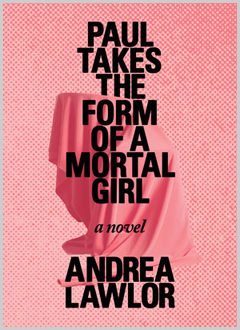
Staff Picks: Paul Takes the Form of a Mortal Girl

Celia recommends Paul Takes the Form of a Mortal Girl by Andrea Lawlor:

How should I begin talking about this book? I ask this question because sometimes it can be difficult to talk about novels that embrace happiness and laughter. If I mention that this book is hilarious, one wonders, is it going to sound, like, unserious? If I mention that I repeatedly laughed aloud and made my coworkers stare at me while reading this book in the store, will readers perhaps assume that I am just more amused than the average person by jokes about ‘90s queer theory and punk rock? Maybe, dear reader! But sometimes you find a book that moves so lightly through its changes that, although its subject may be heartbreak, failure, the AIDS crisis, and its hero’s inability to find a place to belong, it nevertheless buoys you up, makes you laugh at work, and assures you that this, too, shall pass.
Paul Takes the Form of a Mortal Girl is one of these books. The novel’s hero, Paul Polydoris, has an unusual talent: he can change his body at will, beefing up his arms to look like a muscle man, slimming down, making himself taller or shorter, growing a beard on command—and he can turn himself into a woman. He does so in the first scene of the novel, in which he first carefully coordinates his outfit to go to a lesbian punk show, and then, “stares at his penis until it shrinks [and] tucks itself into the tight little crawlspace of his former balls.” (NB: This is perhaps not the book for you if you don’t want to read descriptions of sex or genitalia. There are quite a few of them, explicit and haplessly funny. I’ll also say, at this point, that I’m using the pronoun “he” for Paul advisedly, for while he spends a large portion of the novel living as a woman, he always uses male pronouns in narration. Another, similarly fluid character effortlessly avoids using any pronoun at all.)

From the opening moment when Paul turns himself into a woman (his lesbian best friend, meeting him at the show, thinks he’s just doing an exceptionally good drag act), the novel circles around its central questions, teasing the reader without quite revealing any definite solutions. How did Paul become the way he is? What fuels his ability to change? Will he have to pick one form, or will he be able to stay varied and changeable, bisexual, bi-gendered, and fluid? Who will he hook up with next? Does the androgynous youth he keeps glimpsing in various gay hot spots know the secret of their shared shapeshifting? What’s up with the impossibly tough leftist lesbian he meets at Michfest, who can maybe talk to animals? Will he be able to juggle his half-dozen minimum wage jobs in order to make rent this month? What if he wants to make rent and buy the cool jacket he found at the vintage store?

The novel tackles these questions irreverently, letting Paul wander around, flirting his way to free coffee, skipping out on his college classes, baffling his friends and colleagues. He goes to an employee party for a sports bar, and, bored by the frat boy atmosphere, leaves and comes back as his own sister. He lets his best friend in on his secret and convinces her to go to Michfest with him. He does a knock-down performance of machismo at a leather bar. He moves to Provincetown to live as a woman with his new girlfriend. He has an enormous amount of sex—in bathrooms at parties, in bars, public parks, alleys, woods, and the comfort of his own bed. He is endlessly hungry to be seen, admired, loved. He is continually buying new records and clothes instead of paying his utility bill, in a kind of exhausted surrender to his endless need for new experiences. His life is a kind of balancing act. There are threats under the wire: he may lose his apartment. He may drop out of school. He may face homophobic violence, or rejection by the next person who sees him change his body.

Also, the book is set in the early ‘90s, and Paul has just fled from New York, where the AIDS crisis is still devastating the queer community. When he runs—to Iowa, Chicago, Provincetown, San Francisco, to the next hook-up, boyfriend, or girlfriend—he is running, in part, from death. Somehow, he always seems to escape the worst thing.

When tragedy does strike, it feels (as often enough in life) as if this is the end, the disaster, the worst thing. Will he ever get out of bed again? Ever wake up and not want to start the day by drinking? Ever find another person he wants to kiss? Yes, dear reader, he does—eventually. This is a book in which the love of life, though it doesn’t bring about any straightforward fairy tale endings, is strong enough to overcome sorrow. I’ll leave you with the novel’s last line (one can do this, with this book, without particularly spoiling anything): “He saw the city, as good-smelling and various as himself.”

Fun Summer Book Picks

Below, Malvernian Julie Poole (host of our Line/Break Poetry Book Club) has some splendid summer reading recommendations for y’all…


A customer came into the store and asked for a fun book that she could take with her on vacation, something “light” to read on the plane. At first, I panicked a bit, scanned the store thinking of all the heavy stuff we carry: sad poems; sadder sad poems; books with words like “death,” “dark,” “hell,” in the title, but then a few bright rays began pulsing from the shelves. Pick me, pick me, I’m fun, they said. So I thought, why not put together a grab-bag selection of fun? (Or, at least, books I consider fun.)

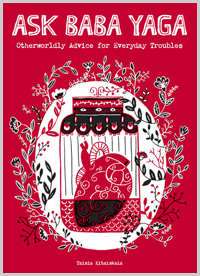
Ask Baba Yaga: Otherworldly Advice for Everyday Troubles by Taisia Kitaiskaia
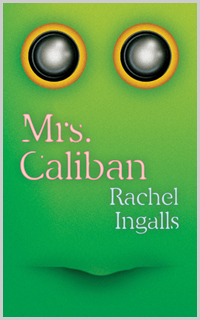
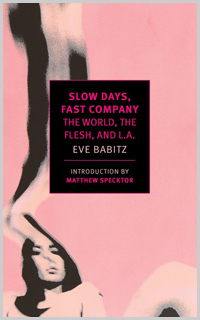
You can ask Baba Yaga anything, but that doesn’t mean she’ll respond. She has no time for soulless fools. The advice-seekers that she takes under her wing are humans made of flesh and blood and heart—they are funny, sad, desperate, frustrated, complainy, and utterly relatable. The week I started reading Baba was the same week I gave up the news, which had become so unpalatable I had no appetite for my oatmeal. Instead, I read Baba; and her voice along with the anonymous voices she spoke to were such a comfort to me that I missed them all when I finished the book. Baba doesn’t give advice of the predictable Dear [fill in the blank] ilk, nor does she attempt to fix things; she sends out a glittering slug trail of hope, a psychic transmission that emerges straight out of the dark void. She says “Each forager is a question mark; tail dipped always in the River of Hunger. The river is endless and loud, and if you listen too hard you’ll drown”—which I take to mean, “hang in there, buddy.”

Mrs. Caliban by Rachel Ingalls

No other book in the store makes me grin like a love-struck schoolboy than Mrs. Caliban. Don’t get too excited though because there’s a fifty percent chance that we’re out because I hand-sell this book to everyone. If I’m asked the question “What’s your favorite book right now?” I hem and haw a little, then say, “well, you might not be interested in this book (reverse psychology); it’s a little strange (true); it’s about a housewife’s love affair with a giant green fish-man (also true).” This little speech is typically quite effective—as is the New Yorker blurb on the cover that reads, “A perfect novel.” Even if you’re really not into webbed hands or protruding eyes, I believe readers of all tastes will find this book delightful. Ingalls wrote for Hollywood, she knows all the right buttons to push—drama, comedy, intrigue, mystery, crime, and, my personal favorite, oddball sex with amphibious creatures. Maybe I’m gushing a bit much, but I think Ingalls’ Larry could stand shoulder to shoulder with Mr. Darcy, Rochester, and Heathcliff, and be far more loveable despite his green skin.

Eve Babitz, see all (Eve’s Hollywood; Slow Days, Fast Company; Sex and Rage)

I separate my life into two distinct parts—before Eve Babitz and after. Pre-Babitz, I don’t think I understood the meaning of fun, in any sense of the word, and now at least I have a glimmer. It’s not that she writes about sex, drugs, and rock’n’roll, it’s that she writes about those things with a mixture of practical abandon and casual glee. In a story about the speaker’s cat, Rosie, buried the previous summer under a tree, she writes:

Whatever it was about Rosie, to untangle it would take me years of therapy and study of ancient scriptures and it wasn’t until I was on mescaline that I made the pilgrimage out to the back yard to think about Rosie.

Sober now for years, I can’t party like Babitz anymore (she’s 75 and probably can’t either), but I can read her work and be reminded of what the phrase “artistic integrity” means. As my coworker F says, “Eve Babitz does what she wants.” Her enthusiasm for relishing life’s experiences—be it drugs that I can’t do, or architecture that I hope to see one day, her writing makes no concessions. She can talk about Rainier beer in one breath and Stravinsky (her godfather) in the next—the essence of her work is a full-bodied appreciation of all that life has to offer—from taquitos to Rome.

Fair Play by Tove Jansson

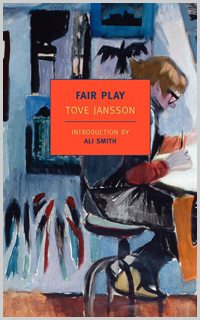
If a novel’s worth hinged upon how well it described the sea and cats, then Fair Play would be considered a masterpiece; and it certainly is to me. There’s nothing in the world like this slender book; it somehow hovers somewhere between film and poetry. I can hear water glucking against the boat’s bottom, the sound of pencils moving across the page. What better treasure exists than a story about two art-loving, art-making ladies in their twilight years, who bicker about film, family, and love—then retreat back to their private studios for some quiet. The cat and the sea are an anchor between them; it’s both a perfect love story and a rallying cry to make art.

A Fantastical Take on the Creative Self by Julie Poole

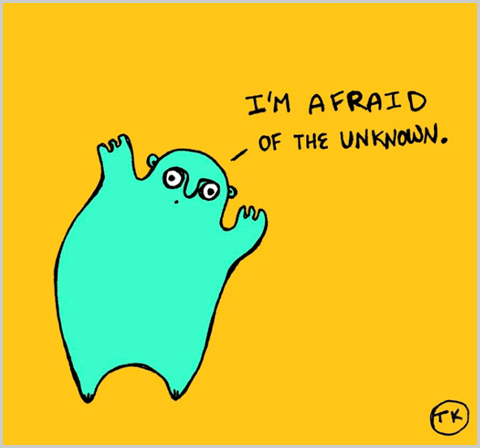
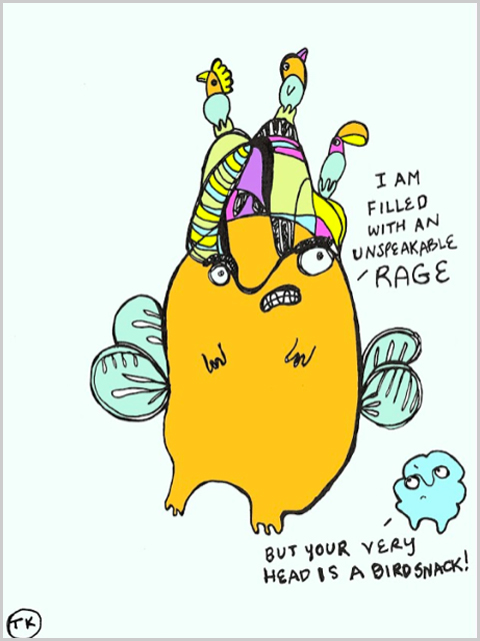
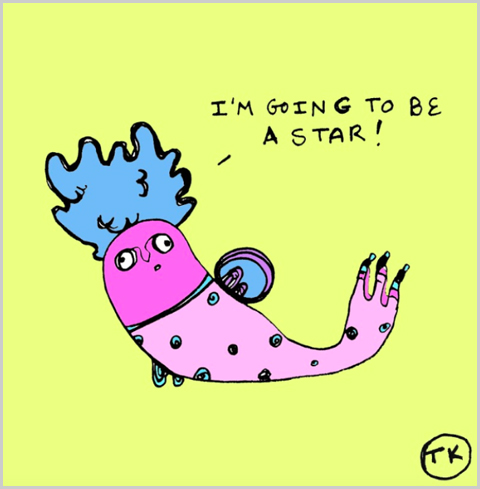
In honor of this week’s Page by Page event on the Art of Submitting Work, I slapped together a creative piece about my artistic alter ego, who I imagine as a large, grouchy, chip-loving Ogre. The category-defying and fabulously talented Taisia Kitaiskaia let me use some of her illustrations. You can find her books Literary Witches: A Celebration of Magical Women Writers and Ask Baba Yaga: Otherworldly Advice for Everyday Troubles on our local and bestseller shelves right now.


My Ogre-self is angry, rejection is getting under his leathery skin, he wants nothing more than to stay at home, eat BBQ chips in front of the TV, and waste his precious energy in fitful states of napping. He is deeply afraid to have hope for his future so he’s decided everything is just too hard; he refuses to see that there are multiple steps involved in any creative project and jumps straight to the conclusion that it’s impossible. He swats at the air, “impossible,” he says.

Each day he goes to work in his studio, pounding a hammer on a flat piece of wood. When he holds up his creation and sees that it’s still a flat piece of wood, he becomes upset and hurls it to the floor. Losing a grip on his vision, he’s blinded by self-torture. He sinks back into life-hating, counts his dirty dimes and nickels, which are barely enough for bus fare. He gets no pleasure from the small items that he does manage to buy—bread, butter, and BBQ chips—which he eats so quickly and without appreciation that he’s surprised when he looks down at his plate and sees only crumbs.

On the rare occasions that he does go outside, journeying to the store or post office, the rise of hopeful feelings tortures him. He’s pitied by nature and nature loves him; the birds, butterflies, and squirrels accost him, using their playful antics to try to make him smile or laugh even, but he chooses to ignore them and lives in a perpetual winter.

An Ogre, of course, is bound to run into a Faerie from time to time, and he is excruciatingly annoyed when they talk about what projects they’re working on (they’re always working on several things at once). He’s jealous; Faeries always spring to work quickly, they figure out what skills they have and what skills they need, and then they go about scheming, plotting, and planning their own greatness. They are confident in their artistic futures, in whatever shape that blossoming might take. The Ogre, on the other hand, believes deep in his huffy nature that he is practical, that Faeries live on another planet, they are delusional and are at risk of getting trapped and squashed like bugs because they wear their hopes and dreams on their gossamer sleeves. They are dreamers, and he doesn’t particularly like dreamers.

Trolls, he considers less of a threat. Trolls have large egos and surprisingly large social media followings, but anyone with an ounce of interest in art can see that they don’t really know what they’re doing. They peddle their wares and sometimes succeed but overall nothing they make lasts. Elves, he doesn’t mind much either, they are consummate freelancers; they’ll take on pretty much any assignment and do so without much in the way of individual flare.

When the Ogre does manage to put his work out there, he’s already expecting the worst. He presents his flat pieces of pounded wood and is crushed when people don’t seem impressed. The Ogre is an eternally wounded creature, and validates his own defeat again and again, by saying, “O me, O my, why try.” He goes back to his TV and potato chips, he sinks deeper into despair; he even spells it “dis-pair” adding an “i” for an extra “dis” to make himself feel even worse. It’s clear that Ogres are not blessed with the optimistic outlook of Faeries, the ego of Trolls, or the motivation of Elves.

Is it hopeless for the Ogre? It is not! Within each Ogre is an incredible amount of creative vision—their projects are typically large in scale and can take many years to complete. When the Ogre’s self-pity abates, in certain early hours, he jots down notes, makes drawings, etc. Soon he begins to rise with the sound of the birds and before long he has himself a routine. He turns on his desk lamp and little by little makes order out of chaos, for just as long as his self-critic shuts up. He hears a very faint voice that says “keep going.” Make no mistake though, he’s still miserable, but for short spans of time that misery escapes his focus. This brief respite from grumbling does him a world of good, and slowly his creation will begin to take on a pleasant aura.

With time, the Ogre will begin to see the pieces of his vision slide together like dovetail wood joints. The Ogre’s disposition changes. In fact, he even makes friends with Faeries and values their encouragement and energy! They seem to exhibit a blind faith in him. When he speaks about his project, they don’t laugh. Their encouragement provokes him to work harder. Soon his creation becomes more important to him than his habit of negativity—his creation begins to glow, yes glow. As he works, it begins to emit a beautiful humming sound—it starts to come alive. He blows off the remaining wood chips, dusts and polishes it until its magnificence is more magnificent than he could have ever imagined. Did this creation really come from him? It did! With a calm and collected mind, and a bit of bodily exhaustion, he unveils his creation to the public to great acclaim. He has a very difficult time absorbing the nice things people have to say so he stays quiet. His identity as a creator feels more solid now, like wood. He’s worn a path so that his next creation will follow a similar pattern, the lows will still plague him, but they will be expected and not feared this time. In the future, his creations will look back at him with love and thankfulness, he’ll smile at them and nod.

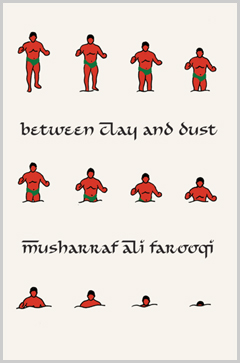
Staff Picks: Between Clay and Dust

Celia recommends Between Clay and Dust by Musharraf Ali Farooqi:

Between Clay and Dust is many things—a twilight romance, a coming of age story told from a distance, an elegy for a lost world. Set in Pakistan just after the partition of India and the end of the British colonial regime, the novel follows Ustad Ramzi, the head of a renowned wrestling family, and Gohar Jan, a once celebrated courtesan who finds herself increasingly alienated from her community. The two share a quiet, unconsummated romance, for Ustad Ramzi has taken a vow of celibacy, and Gohar Jan has sworn never to devote herself to one man. While their relationship provides the story’s framework, the novel expands outwards, asking what kind of legacy this pair can leave in a society undergoing changes that may leave each of their professions unrecognizable. The effect is of watching a story unfurl through a telescope: every detail stands out clear and visible, and yet you have the feeling that the things you are seeing are already lost, and if you reach out to touch them you’ll find only air.

I love Farooqi’s simple and precise prose, which rarely flaunts its presence, but dwells lovingly on details. A wrestler training for an important fight wakes up in the morning and drinks “milk in which the flowers of blue lotus and barberries, sandalwood powder, dry endive, myrobalan, and green cardamoms had been soaked,” does a grueling exercise regimen, and then rests and eats “a kilo of rabri…one and a half kilos of roast meat…a preparation of gold foil, pearls, and green cardamom in butter,” and, in cold weather, “a soup made from five chickens.” The novel describes the emotional lives of its characters with the same precise simplicity. Gohar Jan, hurt by Ustad Ramzi’s reticence towards her, reflects that “the graciousness that allowed people to accept and grant small kindnesses had no place in Ustad Ramzi’s heart. For the first time, it also occurred to her that it gave him a certain privilege in his relationships: he could neither be dismissed as a stranger nor held to any commitment to anyone.”

While Ustad Ramzi and Gohar Jan are both childless, each has an heir, and much of the novel is devoted to exploring what their legacy will be. Ustad Ramzi has a troubled relationship with Tamami, his much-younger brother. Tamami should by rights be the heir to the wrestling clan, but his rocky relationship with Ustad Ramzi keeps him from taking up his brother’s mantle. Ustad Ramzi is strict with himself and others, while Tamami is both wildly ambitious and painfully sensitive. As much as they both want the same thing—to reconcile and preserve their family’s legacy—neither knows how to accommodate the other’s feelings. Gohar Jan, meanwhile, has an adopted daughter, named Malka, who loves her dearly—but as the courtesan’s patrons die, lose their wealth, or abandon her, Gohar Jan decides that she cannot let Malka pursue the life that she herself has led, and resolves to send her away to a different kind of future.

There is no exact answer to what the future can hold, only questions. Malka passes out of the novel and into a new life, which Farooqi’s readers do not get to see. As for the rest—it is a story of how things end.

Staff Picks: Seiobo There Below

Celia recommends Seiobo There Below by László Krasznahorkai:

It’s difficult to find a quotable sentence from László Krasznahorkai’s Seiobo There Below. Which is a shame, because I would like to open this review not as a review, but simply by throwing you, the reader, into the deep end of this book. To read it is a lot like swimming, actually—you hold your breath. You ask yourself if you can get to the end of the next sentence without coming up for air. And they are long sentences, baroque and difficult and careening, propulsive sentences that you feel against your eyes like pressure deep underwater. Eventually you find a rhythm, like an underwater swimmer.

Or, if you don’t like that metaphor, here is another, from László Krasznahorkai himself: “who could believe it, that it would be possible to come down from there, from the bridge over the creek to the city—completely freely, without breaking—impossible, he would say, the path is so steep, there are so many turns, and the bicycle would accelerate so much, that in seconds the whole thing would be a labyrinth of speed.” Far from ending there, that sentence goes on for several more pages, like the headlong bicycle rushing down the hill, without brakes, about to overturn at every moment, and yet never overturning. A labyrinth of speed!

At first glance, you might call Seiobo There Below a book of short stories, but in truth it’s a novel. What binds the chapters together is not a shared plot or characters, but a tightly cohesive set of concerns about art and its power to cause awe, passion, terror, hope and despair. The chapters move fluidly through space and time—a Noh actor momentarily embodies the goddess of beauty, a destitute immigrant in Spain finds himself confronted by a pair of too-real angels in a medieval painting, a tourist in Greece tries to visit the Acropolis, a Renaissance artist suffers from uncontrollable rages. Each chapter visits and re-visions the possibility of salvation and destruction through beauty. The unruliness of the text itself, the way it demands your full attention, making no concessions to ease of reading, makes it at once immersive and unapproachable, a book that you have to read with your entire body—like swimming, like riding a bicycle—as much as your eyes. In the second chapter, there is an untranslated crossword in Italian, whose clue for number 54 across includes the name of the ancient queen whom the following chapter is about. 

When I gave the book to a friend, she got to this chapter and then texted me and said, “Did I mistakenly tell you that I wanted to read 500 pages by a Hungarian madman?” Then she read the rest of it, found the translator, and interviewed her for the Paris Review. It’s a novel that works that kind of alchemy—disbelief, then fascination. One thinks, at first, that it is a merciless book, but then there are moments of close attention that become a kind of compassion. Take, for instance, a Buddhist monk watching an ant cross a temple step: “lifting up its little ball of head… it stops, turns around, and just as sprightly as it can, goes again backward in the crack, and all the while the early spring sun shines on it, at times a draft of the wind strikes it, you can see the ant struggling not to be carried off by the wind, little ant, says the abbot, shaking his head, little ant in the deep crack of the step, forever.”

Or take this sentence: “Because not to know something is a complicated process, the story of which takes place beneath the shadow of the truth.”