
Staff Picks: The Governesses

Celia recommends The Governesses by Anne Serre:
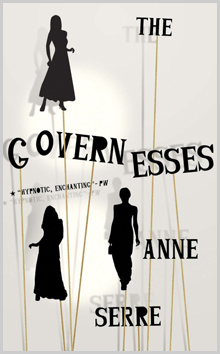
Sometimes an ordinary piece of information startles you. For instance: reading about Anne Serre in preparation for writing this review, I discovered the publication date of the original French version of her novel The Governesses: 1992. I regret to inform you that I stopped reading right there, closed the tab of French Wikipedia on my browser, and will be offering you absolutely no anecdotes from Anne Serre’s life.

It’s not that the date itself is implausible, but that it had the strange effect of providing an anchor point for a book that feels as if it has sprung fully formed from the air. The Governesses could as easily be a Victorian experiment by the likes of Christina Rossetti, or a novel written just this year, and still on the cutting edge. It’s difficult to picture Serre writing it, in the same way that it’s difficult to picture the craftsmanship of a Fabergé egg, that perfect, jewel-encrusted world unto itself. And yet this is a novel that asks its reader to think deeply about the act of creation, and about the nature of the created world.

The premise of the novel is familiar: a family hires a governess. Or rather, three governesses. Two look after the troop of small boys (only boys) who roam the gardens of the manor house, climbing trees and catching frogs. The other cares for the old man across the way. But the governesses do very little teaching or child-rearing, and there are too many little boys for them to be the children of Madame and Monsieur Austeur, who own the house, and the old man spends most of his time glued to his window, watching the governesses wander through the gardens of the house. They, aware of his gaze, don’t seem to mind. Sometimes they strip nude and make up tableaus, to entertain themselves and him. Sometimes they encounter a strange man in the gardens, and then they chase him down and eat him. Or make love to him. It’s approximately the same thing, really.

The whole slim novel teeters between the extremes of two powers: on the one hand, there is the wildness of the governesses, their changeable passions, the transporting force of their desire. Planning a party, “they had clanged so many cymbals and banged so many drums that every man and woman for miles around, and even a few curious dogs, had come trotting over to gaze hungrily at the scene through the garden gates.” And, at the other pole, the bestilled equilibrium of the Victorian novel, the setting in which nothing can ever truly change, and every new event is assimilated back into the status quo. So, when the governesses come to the manor house: “all the trees they had ever known—the ones in the school playground, for example, and the ones outside grandma’s house and along the road to the beach—came rushing into Monsieur and Madame Austeur’s garden, lining up side by side with the elms and the oaks, and then disappearing inside them. The same thing happened with houses, barns, chateaux, and whole towns. They all came storming in through the wide-open gates the morning of the governesses’ arrival.”

The manor house eats the governesses’ past, and they become—what? Part nymph, part maenad, part prim young ladies. There’s a tyranny beneath the beauty of Anne Serre’s fiction. How many remembered trees does it require to make one of those imaginary oaks or elms? What is this thing, the novel, that takes no account of the outer world, bowing only to its own internal structures? The governesses, for all of their wildness, are trapped within a cyclical, enclosed world, in which all of their reckless libertinism cannot upset the status quo. Take them outside of it, and they are nothing.

And so within the novel’s wild flights of fancy, there is a core of melancholy.

Staff Pick: I Don’t Think of You (Until I Do)

Rebekah recommends I Don’t Think of You (Until I Do) by Tatiana Ryckman:

Tatiana Ryckman’s voice radiates from the pages of her 2017 book I Don’t Think of You (Until I Do). Her musings on the emotional turbulence of a long-distance relationship are authentic, honest, and raw. For those who have gone through a long-distance relationship, this book is a heartfelt commemoration of that experience, a comforting blanket of solidarity. And for those who haven’t, the narrator’s emotions are so deep, so human, so universal, and so elegantly expressed that they will captivate from the start. Unafraid to give voice to the smallest, to the pettiest, to seemingly insignificant and foolish feelings, Ryckman absolutely nails the exploration of the human condition in all of its facets––its inconsistencies, its weirdness, and its beauty.

For the entirety of the novella, Ryckman never specifies the genders of the lover and the loved. By leaving her characters pronoun-less, Ryckman erases any potentially distracting gender markers, establishing a closeness and inclusiveness that blurs the boundary between book and reader. Suddenly, a story and an experience that seemed to belong to Ryckman’s narrator becomes the reader’s as well. The feelings emanate from the text, uninhibited by specifications and labels. The genderless narrator could be anyone; the emotions are everybody’s.

It is rare to find a book that approaches emotionality with such a frankness and willingness to delve into the nitty-gritty. Ryckman rejects the embarrassment that many authors feel when dealing with private emotions and the visceral ways in which they physically manifest. Grappling with the emotional roller coaster of believing that a distance, no matter how large, could never defeat love while simultaneously being forced to face the insurmountable loneliness of day-to-day life causes the narrator to engage in behaviors that might seem strange. But human beings do odd things when confronted with harsh realities. Things like distractedly watching porn to reconstruct a missing sense of intimacy, fabricating an imagined imposter who steals the lover’s affection away, or mapping associations with the lover onto everyday objects, like hairbrushes, become coping mechanisms. In all of their abnormality, the narrator’s actions never seem contrived, and this is where Ryckman’s talent really shines.

Ryckman returns time and again to religious terminology to accentuate the depth of the narrator’s infatuation. The narrator essentially worships at the altar of their love, trying to keep it alive and to imbue it with some sense of tangibility as its lack of physical immediacy constantly threatens its existence. In an early moment of reflection, the narrator states, “I prayed at the foot of my memories,” memories so firmly rooted in the past yet colored by a yearning for an imagined ideal future. Insecurity, jealousy, and a perpetual fear of the end become pleasurable. They become ways to keep the flame of something so distant burning. In order to preserve their desire, the narrator elevates the beloved to the level of a god while self-transforming into a martyr.

Ryckman’s musings do not follow a traditional story arc in the conventional sense of the word, but it’s still possible to trace a progressive development in the narrator’s self-perception as they navigate the ever-increasing muddiness of their relationship. At the beginning, the relationship essentially consumes the narrator: “I hadn’t thought of you as The Other, only as The. As Me. So much so that I could not delineate between my image of you and the parts of you that had inserted themselves into my image of myself.” The alternative version of their beloved, desperately created to fill the void caused by their physical absence, swallows the narrator’s individuality. However, progressively over the course of the text, Ryckman subtly shifts the way in which the narrator talks about their lover. Barely perceptible at first, it becomes apparent that the narrator, with the healing passage of time, is slowly beginning to reclaim their identity, with all the pitfalls and relapses mandated by the process of letting their partner go. In one of the most empowering lines of the book, the narrator says, “I remembered that just because you weren’t there, didn’t mean I was alone” (77). More than just a testimony to the difficulties of long-distance relationships, Ryckman’s novella details the sometimes painful and sloppy yet inspiring journey of self-discovery.

Keeping Austin Weird—And Well-Read

When one of our favorite writers and customers, the brilliant Edward Carey, gives us—and Fernando!—a shout out in the Boston Globe, well, we can’t help but boast just a little. You can read the full interview here.

BOSTON GLOBE: What are you reading currently?
CAREY: It can be a bit tricky reading for myself while I teach, but what I’m enormously excited about is Tears of the Trufflepig by Fernando A. Flores. I know him. Fernando is keeping Austin weird. His novel is sort of futuristic. It’s just bonkers.

BG: Is that typical of the kind of novel you like?

CAREY: No. I don’t really read that much futuristic stuff. The best book I read over the summer is The Hospital by Ahmed Bouanani published [for the first time in English] by New Directions. It’s one of the top 10 books I’ve ever read. It’s so strangely brilliant. Bouanani’s no longer with us, but he left us a few books.

BG: How did you come across that book?

CAREY: I’m always impressed by whatever New Directions puts out. We have amazing bookstores in Austin, including Malvern Books, which specializes in smaller presses. They have incredible displays of things you might miss, and this was there.

Photo credit: Tom Langdon

Staff Pick: Fires

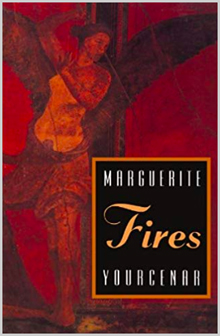
Celia recommends Fires by Marguerite Yourcenar:

The first line of Fires is, “I hope this book will never be read.” This isn’t an accident—in her introduction to the novel’s English translation, Marguerite Yourcenar reaffirms her desire that no one should read it, and acknowledges that writing an introduction under such circumstances seems preposterous. Why should you read this book that wasn’t intended to be read, then? Because it’s the deeply personal account of a doomed love affair, in which Yourcenar weaves the ancient past and the troubled present of Europe deftly together. Because it’s a love story about falling out of love, and going on with life. Because it’s an incredibly impassioned, complex vision not just of a single unhappy love affair, but also of the relationships between men and women, between women who love one another, between the past and the present, and between the individual and her destiny. Because I am obsessed with Marguerite Yourcenar, and I’m fairly sure that you, dear reader, ought to be as well.

Marguerite Yourcenar is best known for her erudite and layered historical novels, Memoirs of Hadrian and The Abyss. These books reconstruct the ancient world so thoroughly that, reading them, it seems that Yourcenar has a direct line into the past, which allows her characters to speak through her. And, indeed, Yourcenar very much conceptualized her relationship with her characters this way. She told one story in which, having taken Zeno, the hero of The Abyss, into a bakery with her, she accidentally lost him and had to return later to pick him up.

Fires, however, is an early novel that has the seeds of these later books, but also uses history in a way that is all its own. Written in 1936, under the shadow of the Second World War, Fires is ostensibly the chronicle of a doomed love affair, a kind of psychomachea, in which Yourcenar, embodying various characters from classical history and myth—Phaedra, Achilles, Clytemnestra, Sappho—examines the various facets of love, desire, and despair. It is a book that asks us to think deeply into the past, and particularly into the stories of classical women, and bring them into conversation with the present. Over the Trojan War looms the impending shadow of the Second World War, the receding shadow of the First. The story of Antigone becomes a very modern story of civil war. And Phaedra, descending into Hades, finds it transformed into the modern day hell of the subway system.

As much as each story is a record of a particular moment in a love affair, they are also an exploration of the difficulty of establishing oneself in a gendered world. So, for instance, Achilles, pictured disguised among the women of Skyros before the Trojan War, is torn between his love for his companion, Deidama, and a passion for the newly arrived Patroclus. The violent conclusion of this love triangle is also a crisis of gender: will Achilles remain among the women, disguised as one of them—will he become a woman—or will he depart for the Trojan War and become a man? This isn’t only a question of gender identity in the strict sense, but of the role he will play in society. When one of his female companions leads him out of the palace on Skyros, she contemplates, momentarily, taking his place: “since,” Yourcenar writes, “the most discerning of gods or butchers could not have distinguished this man’s heart from her own.” But ultimately, she does not go. She remains a prisoner, buried, Yourcenar says, alive.

I tend to suspect that Yourcenar found the constraints of her gender equally restrictive. In her personal life, she was a bisexual woman who had a reputation for falling passionately in love with gay men (Fires is said to be inspired by her break with her editor in France, who admired her work deeply, but, to her distress, was not interested in women, and by the beginning of her relationship with Grace Flick, an American academic who would become both Yourcenar’s translator and her long-term partner). As a novelist, she developed a reputation as a “masculine” writer, a woman who captured the voices of men so well that, critics wrote, one could forget her gender entirely, so uninterested did she seem in the domestic lives of women. But in Fires, as in much of her early work, she is intimately concerned with what it is to be a woman dying to escape the constraints of gender—to love another woman, to be a hero, to stand on equal footing with men and be accepted by them, to stand against the workings of an unjust government.

It would be a mistake if I managed to end this review without including at least a little bit of Yourcenar’s extremely beautiful prose. Here is Sappho, transformed, in Yourcenar’s telling, from a poet into an acrobat, performing along the Mediterranean between the two World Wars:

With one pull, she brings herself to the last support her will to die will allow: the trapeze bar swinging in midair transforms this creature, tired of being only half woman, into a bird; she glides, sea gull of her own abyss, hanging by one foot, under the gaze of a public which does not believe in tragedy. Her skill goes against her; no matter how she tries, she can’t lose her balance; shady equestrian, Death has her vault the next trapeze. She climbs at last higher than the spotlights: spectators can no longer applaud her, since now they can’t see her. Hanging onto the ropes that pull the canopy painted with stars, she can only continue to surpass herself by bursting through her sky.

Staff Picks: Fireflies in the Mist

Celia recommends Fireflies in the Mist by Qurratulain Hyder:

Qurratulain Hyder occupies a strange place in literary history. Critics who know her work compare her with Gabriel García Márquez and Milan Kundera in the scope of her masterful imagination, and cite her as a precursor of Salman Rushdie in her fierce anti-colonialism. In 1989, she won India’s prestigious Jnanpith Award for Aakhir-e-Shab ke Hamsafar, translated in English as Fireflies in the Mist. Hyder translated her own work from Urdu—or, as she called it in reference to her magnum opus, Aag ka Darya (River of Fire, in English), she “transcreated” them, freely adding and subtracting passages, rewriting, and restructuring chapters. But, for all the praise that she received from those in the know, she hasn’t achieved the same place in the canon of world literature as many of her male contemporaries to whom she is most frequently compared. As I read Fireflies in the Mist, I wondered if there was not some bias at work here. For one thing, Urdu, despite its long and vibrant literary tradition, is not widely translated into English, and, like much Indian writing in translation, tends to be eclipsed by English-language novels from the subcontinent. For another, there’s the fact both the jacket copy and a number of English-language reviewers of Fireflies in the Mist seem to be under the truly puzzling impression that it is a love story—rather than a sprawling and incisive examination of women’s experiences in the Bengali independence movement.

A love story it is not, I am afraid—although there is love at work, romantic and familial, and marriage, and quite a bit about what happens after marriage, what makes it equal or unequal, successful or a failure. More than that, it is a story of the Quit India Movement in Bengal, its bravery and idealism, and also its disappointments and failures. Hyder’s erudite and lyrical writing draws on poetry, song, and dance from both English and Indian traditions, and her work deals with colonialism and its aftermath with both biting, clear-eyed anger and deep sadness. It is perhaps the most tragic bildungsroman I have read—the story of a generation’s attempt to make the society in which they lived anew, and of their dreams’ shortcomings.

At the novel’s beginning, the young women who will be its heroes are steeped in hope and idealism. All of them are budding communists, immersed in the Quit India movement, certain that the end of British colonial power will bring about a new era of justice, religious harmony, and social and economic equality. They make friends with each other across the lines of class and religion—Deepali Sarkar, the novel’s heroine, is a Hindu girl from an impoverished family, while her best friends, Rosie Bannerjee and Jehan Ara, are the daughter of a local Christian pastor and of a Muslim Nawab, respectively. For a while it seems like their bonds of friendship will be emblematic of the strength of the new political order. At this stage, the novel is full of exciting and slightly madcap adventures. Deepali dresses up as a veiled maidservant to spy on a British official and warn the local communist activists about upcoming police raids. She wins a scholarship to Santinekitan, the academy founded by Rabindranath Tagore, to study Indian classical music, and then fibs to her father about a student group collecting folk songs in order to travel to the Sunderbans to meet with another communist leader, the larger-than-life Rehan Ahmed, who crosses India disguised mostly as a wandering ascetic of various faiths—now “a gentle monk of Krishna,” now a Baul fakir who sings as he travels from house to house carrying secret messages.

Even at this point, however, there are clouds on the horizon. When Deepali carries a secret message to Uma Roy, a rich radical who has studied in England, Uma treats her with disdain, mocking her for her ignorance and suggesting that her political beliefs are mostly an excuse for her to chase boys. Deepali’s father, a doctor who runs a free clinic for the poor (and finds himself perpetually short of money as a result), lets her have her freedom, but Rosie and Jehan Ara’s families both disapprove of their political beliefs, and expect their daughters to be obedient, quiet, and to marry men that their families have chosen. For a while, the end of the British colonial regime looks like a path to a new kind of life for the three friends, encompassing not only racial and economic equality, but also new opportunities for women.

But even among their fellow radicals, there’s no consensus about what the place of women should be, just as there’s no real consensus about how far class equality should extend. Rehan Ahmed, the charismatic Marxist leader who falls in love with Deepali, idealizes his mother, who, having lost her fortune and married a man her uncle chose for her, spends her life serving her husband “in dutiful silence.” In his first love affair, he tries to convince his beloved to run away from her parents with him in the night, and, when she refuses, berates her: “If you do not have the guts to defy your autocratic father, how will you fight in the revolution alongside your comrade husband?” The idea that his would-be wife might simply be exchanging one type of autocracy for another does not occur to him.

The ending of Deepali’s love story, however, is comparatively bright. Her friends, Jehan Ara and Rosie, meet more chilling fates. Jehan Ara’s marriage is arranged by her parents, to a man they both know is a bad match for her. Rosie, in prison for her activism against the British government and abandoned by her family, meets a handsome lawyer with radical sympathies, who takes on her case and pays her bail. “I am going to take you home as my wife,” he tells her, the second time they meet. It’s not a question. She marries him. So each character must make her peace with a world that, in the end, is less revolutionary than she had hoped, and choose either to accommodate herself to society, or to rebel, and face the price: loss of stability, of a family, a home, a nation.

Towards the end of Fireflies in the Mist, there’s an image that begins to appear over and over: “Mother [Kali] sits in the marketplace of the world, flying her kites. She cuts off one of the millions of her strings and when the unattached kite flies, it reaches cosmic space. Mother claps her hands and laughs…” Is it an image of dissolution, or of freedom? There’s not much justice or resolution on display in Hyder’s novel, and what happiness there is, is as fleeting and fragile as those kites sailing into the void. There is, however, a new generation, who will carry on their parents’ and grandparents’ struggle—perhaps successfully, perhaps in vain. The novel’s original Urdu title, Aakhir-e-Shab ke Hamsafar, translates literally as “Fellow Travelers into the Night”—and, like fireflies, they seem to be so, groping out the shape of things in a world full of enclosing darkness and mystery.

Staff Picks: Lone Star Noir

Rebekah recommends Lone Star Noir, a collection edited by Bobby Byrd and Johnny Byrd:

As editor Bobby Byrd so aptly states in his introduction to Lone Star Noir, “Texas, in all its many places, bleeds noir fiction.” From its hot and humid Gulf Coast to its isolated backroads country and its sprawling metropolises, Texas, with all its diversity, harbors endless possibilities for mystery. Published by New York-based Akashic Books as part of their successful Noir series, the Lone Star edition features a range of Texas-native or Texas-enthusiast authors who capture the multiple facets of this state that make it the ideal setting for crime, violence, and intrigue.

The first installation in the collection, “Phelan’s First Case” by Lisa Sandlin is a perfect example of quintessential detective fiction. This story follows Detective Joe Phelan as he grapples with his first case, which eventually leads him to a rundown barn in the overgrown wilderness surrounding Beaumont. Sandlin’s evocative imagery is disturbing (she describes the missing child, the subject of Phelan’s search, as a “naked gargoyle” with “blinking eyes protrud[ing] from sunken holes”), which exudes major True Detective Season 1 vibes. Couple descriptions like that, which can make your skin crawl, with snappy dialogue that could belong in a hardboiled crime novel, and you’re in for a classic noir treat.

Moving south from Beaumont to Galveston, Claudia Smith gives us “Catgirl,” which may or may not detail the lives of a coven of witches (it’s never actually confirmed if they are witches though). Living in a shabby beachfront bungalow, this family of girls dances unnervingly around bonfires, recites creepy children’s rhymes, and sings Stevie Nicks songs. It’s demonic, it’s spooky, it’s weirdly beautiful, it’s totally matriarchal. And since it’s almost October, it’s the perfect way to start getting into the Halloween spirit.

But Lone Star Noir is not all serious. Tim Tingle’s sardonic voice shines in his story “Six Dead Cabbies,” which is told from the perspective of an eighteen-year-old narrator who falls into bad company with a grizzled, slightly threatening, grown man named Denny. The fact that a middle-aged man would want to hang out with a bunch of teenagers seems like a bit of a red flag, and Tingle’s narrator humorously notes this as he reflects on his choice of companion, saying, “None of us ever questioned the logic of a forty-five-year-old man running around with teenagers. Bobby, Charles, Eddie, and me, we were cool teenagers, cool enough to be Denny’s buds, that was our reasoning.” Naturally, of course, the tale takes a darker twist once the narrator learns that Denny is, in fact, a serial killer, and not just his mentor in petty crime.

As Austinites, the location I’m sure we all want to hear most about is Austin, and Jesse Sublett’s “Moral Hazard” does not disappoint. It is clear from the start that this story is an ode to Cormac McCarthy, one of the most famous and stylistically unique authors within the Western genre. Sublett even goes as far as to name his Robin Hood-esque criminal with a heart of gold “the Kid” (likely a gesture to the character of the same name in McCarthy’s Blood Meridian). Additionally, his main villain is obsessed with McCarthy’s gritty novel No Country for Old Men, which features a truly terrifying, ruthless hitman, if any of y’all have ever read the book or seen the film adaptation that came out a few years back. It goes without saying that if you’re a fan of McCarthy, you’ll appreciate the subtle (and sometimes not-so-subtle) nods to the author set against a backdrop of familiar Austin scenery.

Those are just a few examples of the stories included in this collection, and there’s so much more, ranging from tales about bounty hunters and gambling to kidnapping and prostitution. In each, the things that make Texas Texas, things like the famous pecan trees, the expansive landscapes that seem to extend for miles and miles, the laidback molasses-like pace of life, are all vividly painted. In each, Texas becomes a character in itself. And just like the Lone Star state, Lone Star Noir has something that will satisfy everyone’s craving for a good mystery.