
James Joyce turns up at the writing workshop with the last sentence of “The Dead”:
His soul swooned slowly as he heard the snow falling faintly through the universe and faintly falling, like the descent of their last end, upon all the living and the dead.
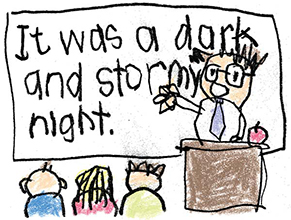 Nathan reckons the alliteration is way over the top, and tells James to tone it down a little. No, make that a lot. Everyone agrees, except for Mark, who likes alliteration, but no one ever listens to Mark because mostly he just talks about Kerouac. Beverly (hip, ironic Beverly; not your Aunt of the same name) asks if it isn’t a little popular fiction to talk of souls swooning? Claire S. agrees, and wants to know, what does it even mean, his soul swooned? Paul Merritt Jnr. says James is a slave to the rhythm—“You’re writing prose, man, not poetry”—and Meek Ruth (that’s what they all call her, behind her back) wonders, quietly, if she’s the only one who doesn’t really get the bit about the descent of their last end? Rebecca says she doesn’t really get it either, and that the word slowly is, like, totally redundant, because swooning already implies slowness. (Mark isn’t sure about that.) Paul Merritt Jnr. agrees with Rebecca, and adds that the repetition of falling and faintly is pretty uncalled for. “Why not just, snow fell in the churchyard?” he asks, and Meek Ruth bites her lip.
Ah yes, it’s workshop time! To Master the Fine Arts or not to Master the Fine Arts? Let’s pretend some lovely readers have asked Malvern Books questions about MFA programs, and we’ll all sit around with our cups of tea and our choccie biscuits and try to come up with some thoughts.
My name is Karl. I am a stockbroker. I would like to write a thriller in which a submarine is stolen by a despot! I get excited just thinking about it! But I need help with the words and would like to do an MFA. Is it true that MFA programs do not like books about submarines?
It’s not quite true that MFA programs utterly shun books about submarines. In every MFA program, there will be two or three students chosen to represent genre fiction. (And genre fiction will be said in rather the same way you say fecal smear.) There will also be one Republican, and one or two people who can barely form sentences but have had interesting life experiences (someone who was once a cheesemonger in a tiny French village; someone who was falsely imprisoned for cock fighting, etc.). All of these students will be treated politely in class, and people will workshop their stories with the usual rigor (i.e. rigor will vary). But Karl, please know that you will be ridiculed in the bars late at night. If you can handle this, by all means apply.
I asked my husband to lock me in the spare room so I’d be forced to write, but I just climbed out the window. And we live on the third floor! Will the demands of an MFA program make me more disciplined? Help me!
You poor thing. I sympathize. No, really: I’ve been there. Am there. Always. And does an MFA program help? Well, there are deadlines, it’s true. Every so often you’re supposed to hand something in to be workshopped. But if you don’t hand something in, nothing much happens. A man in a cardigan will frown at you and maybe one cantankerous fellow student will say I feel like you’re not, like, engaging with us in this process, and that’s about it. Nobody else will give a shit and nobody will stamp a red F on your front door. If you’re accepted into an MFA program, you will almost certainly leave with an MFA, even if you only write seventeen words (and assuming you set no fires). In other words, there are deadlines, yes, but the consequences for messing up are not very scary. It’s still going to be up to you to make yourself sit down and write, and if that is a problem for you, an MFA program is not necessarily a solution. However, you’ll be in a new place, surrounded by people you want to impress, and you’ll have a lot of time on your hands—and this might just be enough to force you to write. (Probably not, though, if I’m being honest. Probably not.)
I write really weird, experimental stuff. Like Ben Marcus on acid mixed with Ayn Rand mixed with the messiest jazz you ever heard in your life. Will an MFA program destroy my unique voice?
Golly, you sound awful. Anyway, yes, the horror of homogenization! There’s an assumption that MFA programs are snapping up experimental geniuses and forcing them to write careful little novels about ancestry and relationships and secrets from the past and whatnot. Take, for example, the particularly miffed Ruth Fowler, who insists that “the Creative Writing MFA is the singularly most devastating occurrence to hit literature in the 20th century, churning out writers of utterly indistinguishable competence.” Oh boy! If only a few creative writing classes had that much influence! Alas, Ms. Fowler credits the workshop process with far too much power to change a writer’s style: if an MFA program churns out dull-but-competent writers, it’s because most writers are dull to begin with. It’s not like you enter a workshop clutching a ream of experimental prose poetry about existential robot sex and leave with a tedious crapfest in which an aimless young woman cleans out her father’s attic after his suicide and discovers his journals and visits her unknown Latvian grandma for the first time and blah blah blah. There are thousands of people writing that same novel, god help us, and some of them attend writers’ workshops, where they continue to write that novel. The workshop removes the adverbs, changes Claire was angry to Claire crumpled the soiled antimacassar into a ball, and axes the first chapter. The writer then delivers the novel to an agent, who says, “Can we make the grandmother French? Latvia is so 2009…” and voilà, a new literary voice emerges! But the essential dullness of the novel has everything to do with the writer and very little to do with the MFA program.
And if you’re dull, I’m afraid no amount of have you thought about maybe deleting the third paragraph? is going to make you any less dull. You might produce several suitably odd and interesting sentences when forced to do one of those arbitrary creative writing exercises (“your story must feature a lemon, a cat, a passing sense of ennui, and a troop of dancing turds”), but the minute you finish stage-managing the dancing turds and return to your own manuscript, you will write When the car hit the telephone pole, time seemed to stand still. Of course, by the end of the workshop, the car’s chassis will crumple like a discarded candy wrapper and time will seem to uncoil like a shimmering band of ribbon— but it’s still the same old story. Sorry.
So… what are you saying? I’m confused!
If you’re a brilliant writer, a workshop won’t ruin you (James Joyce knows perfectly well to ignore the fools). If you’re a bad writer, it won’t do you much good. And if, like most of us, you’re a shows-promise-needs-work kind of writer, well, time spent writing, that’s the ticket! MFA programs can provide you with that time; so can a cabin in the woods, or a holiday from work, or the insane ability to get up at 5am and sit down at the dining room table with a pen and a piece of paper. Whatever works for you, my dear. Let’s not get ourselves so worked up about it.
Full disclosure: I have 1.5 MFAs—because I like to do things by one-and-a-halves, yo!—and I can’t say I regret the years spent muddling my way through them. I didn’t write all that much at the time (see: new town; new country; cheap beer; writing is scary; am colossal coward, etc.), but here’s the thing: if you do an MFA, you will meet your people. There will only be three or four of them. And you might have met them anyway, at a bookstore, or maybe waiting in line for antidepressants at the Rite Aid, but probably not. Certainly not all three or four of them. And your people, those lovely, clever people, will cheer you up when you’re moping and chastise you when you’re lazy and, when you finally get around to showing them a few pages, they will give you red pen marks you can trust and tell you things that are true. For those three or four people, certainly, it’s worth it.
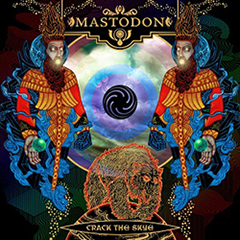 Mastodon is one of the most, if not the most, prominent bands in the heavy metal/rock music scene. They formed in Atlanta, Georgia in 1999. The amazingly talented quartet consists of Troy Sanders as bassist/vocalist, Brent Hinds as guitarist/vocalist, Bill Kellihier on guitar, and Bran Dailor as drummer/vocalist. Mastodon is one of the more notable bands deriving from the New Wave of American Heavy Metal. Other bands from this category include Pantera, Clutch, and Biohazard. Formed out of a mutual admiration for stoner rock bands such as the Melvins and Neurosis, Mastodon also derives influence from classic rock bands such as Led Zeppelin, Rush, and Thin Lizzy. Added to this mixture is a hint of grind-core influence from bands such as Pig Destroyer, Stormtroopers of Death (SOD), and Carcass. Mastodon uses all these elements to create an extremely unique and original sound.
 Every single word at
  Recovered from AWP yet? Isn’t it cozy to imagine that writers all over the country spent yesterday tucked up in bed with a pile of shiny new books, a bottle of Advil, and a plate of greasy meat bits? Here at Malvern Books, we’ll offer a graceful no comment on the more sordid excesses of the past week, and simply say, golly, yes, we met heaps of lovely people and came home with a ton of books.
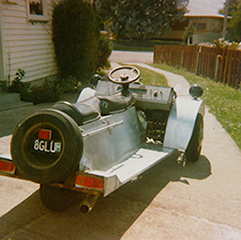 You gather up a week’s worth of books—a backpack full of Maeve Binchys and James Micheners and ghost stories—and head out to the trike. Ah, the trike! That’s it in the photo, the three-wheeled beast your dad built. You sit in the middle, hoping no one will see you. You drive through the streets of Hamilton and people point at you and stare. What an odd sight, a family of foolishly tall people on a clattering buggy! A dad with a crazy beard, a kid with crazy hair, a mum with a massive bag of books strapped to her back.
 You meet back at the front desk to check out your books. The nice old lady librarian asks you about school and you say something polite but odd. Our class got an axolotl. It smells bad. You’re allowed to check out as many books as you want; you usually take as many as you can fit in the backpack—ten, fifteen. And then it’s time for dinner at P&M Plaza, a peculiar shopping mall in which the cafeteria—orange and green carpet; cheese and onion sandwiches; rugby on the TV—is for some reason in the middle of the wedding dress department. You eat your hard-boiled egg and soggy chips surrounded by polyester gowns. You want to get started on Mysteries of Britain, but your mum says “Not while you’re eating,” which is totally unfair because your dad is watching the rugby and how is that any less rude? And then back to the trike. Fifteen minutes of humiliation and you’re home.
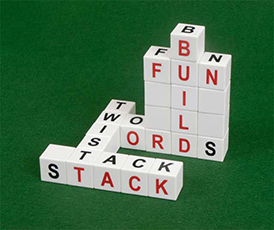 Today we have an assortment of bits and bobs that we will nattily tie together under the theme words. First up, word games: my name is Tracey and I am a