Welcome to our first Thursday Three, a round up of a trio of odds and sods*, old and new, that have fancied our tickle here at Malvern this week.
First up, a movie recommendation: you really should see Beyond the Hills, the new film from Cristian Mungiu, director of the brilliant 4 Months, 3 Weeks and 2 Days:
Set in grimmest Romania in the depths of winter, Beyond the Hills is the story of two friends, Voichita and Alina, who grew up together in a bleak and seedy orphanage (is there any other cinematic kind?), and who are reunited at the beginning of the film after some years apart. The troubled Alina has been working as a barmaid in Germany (this is possibly a euphemism for something kind of gross), and she returns to Romania to persuade Voichita to come and join her. Voichita, however, has found God: she’s now a novice at a remote and austere Orthodox convent, and she refuses to leave. It’s clear the two girls were once extremely close—it’s hinted that they were lovers, though it’s possible the intensity of their relationship has taken on an exaggerated significance in the mind of poor Alina—and Alina is heartbroken to find that her role in Voichita’s life has been usurped by God, and by his representative on earth, the convent’s formidable priest, whom the novices call “Papa.” Stuck in the middle of nowhere, with a distant friend who offers biblical homilies in place of real comfort, Alina becomes increasingly unstable—there’s a seizure, an attempted suicide, and a little light arson thrown in for good measure. Not to give too much away, but if I tell you the movie was inspired by the real-life case of an exorcism gone awry, you’ll see where this is heading.
It’s a long and meandering film, full of lingering, meticulously composed shots, and it’s as austere as the place it portrays: there’s no music, and many seemingly crucial plot details are left vague. What makes the film so riveting is Mungiu’s refusal to take sides: this is not an anti-religious screed, but rather a complex portrait of a murky moral world, where confused and frightened people do whatever they can to hold on to what is dear to them. You’ll want to see it with a friend, so you can have someone to argue about it with afterwards.
Next up, the Michel Houellebecq interview in The Paris Review is maddening and hilarious and well worth a read. Here’s an excerpt:
INTERVIEWER
You’ve said that you possibly had an American side to you. What is your evidence for this?
HOUELLEBECQ
I have very little proof. There’s the fact that if I lived in an American context, I think I would have chosen a Lexus, which is the best quality for the price. And more obscurely, I have a dog that I know is very popular in the United States, a Welsh Corgi. One thing I don’t share is this American obsession with large breasts. That, I must admit, leaves me cold. But a two-car garage? I want one. A fridge with one of those ice-maker things? I want one too. What appeals to them appeals to me.
And finally, here’s a short and charming clip about a Norwegian man who has been dubbed “the most easily scared guy in the world,” and who should also be declared “the best-natured guy in the world”:
* Do Americans say “odds and sods”? I’ve lived here for seven years now, and I still find myself asking “do you say this?” on a near daily basis.

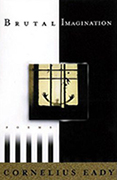 In his 2001 collection,
  A quick GO READ THIS from me today: go read
  Refused is a highly talented Swedish hardcore punk band, which was formed in Umea, Sweden, in 1991. Its five members consist of Dennis Lyxzén as vocalist, Jon Brännström and Kristofer Steen on guitar, Magnus Höggren on bass, and last but definitely not least, David Sandström on drums. Debuting in 1993 with the EP This Is the New Deal, the group delivered a unique sound that rapidly received attention throughout the underground hardcore/punk scene. In 1998, they released the classic album, The Shape of Punk to Come. Sadly, they disbanded soon after this release due to artistic differences, but reunited again shortly after. This reunion would be short-lived, however. In total, they released five EPs and three full-length albums before splitting up in 1998.
 Were you forced to memorize lengthy bits of the
 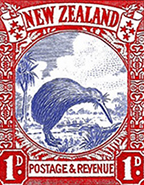 First up, you have to master the New Zealand accent. You must sound pleasant, earnest, and a bit dim, and you should probably mumble, because you are at all times discreetly dissolving that giant lump of mutton at the back of your throat. You should also speak with a rising inflection, so that everything you say sounds like a question. (Certainty is terribly impolite.) And keep your lips as close together as possible when you talk; remember, you are trying to keep the flies from entering your mouth.