Poetry, A & B

It’s April, which means it’s National Poetry Month. It’s also National Anxiety Month and National BLT Sandwich Month (“the second most popular sandwich in the United States”), and this trinity of nationwide awareness can be no coincidence—so let’s fix ourselves a bacon sarnie, crack open the Xanax, and settle in for the first installment in Malvern Books’ arbitrary and occasional Poetry A-Z series.

A is for Aubade

troubadourIf a serenade is an evening love song, an aubade is its early bird equivalent. Aubades often recount tales of adulterous lovers who must part company as the sun comes up, and they were quite the thing in the freaky Middles Ages, when troubadours roamed the world, playing their annoying fiddles and reciting aubades to anyone who would listen. The aubade then passed out of fashion for a while—sixteenth-century poets preferred to bang on about unrequited love, which meant very little romping at dawn—but the form enjoyed a brief revival in the seventeenth century, with John Donne’s “The Sun Rising,” in which the poet chastises the “busy old fool, unruly Sun” for disturbing two lovers in bed. Now that reciting poetry under someone’s window at 5am is likely to get you arrested, the aubade has lost much of its appeal. Still, the marvellous Mr. Larkin gave it a go; here’s an excerpt from his “Aubade”:

Slowly light strengthens, and the room takes shape.
It stands plain as a wardrobe, what we know,
Have always known, know that we can’t escape,
Yet can’t accept. One side will have to go.
Meanwhile telephones crouch, getting ready to ring
In locked-up offices, and all the uncaring
Intricate rented world begins to rouse.
The sky is white as clay, with no sun.
Work has to be done.
Postmen like doctors go from house to house.

A is also for Auden, W. H.

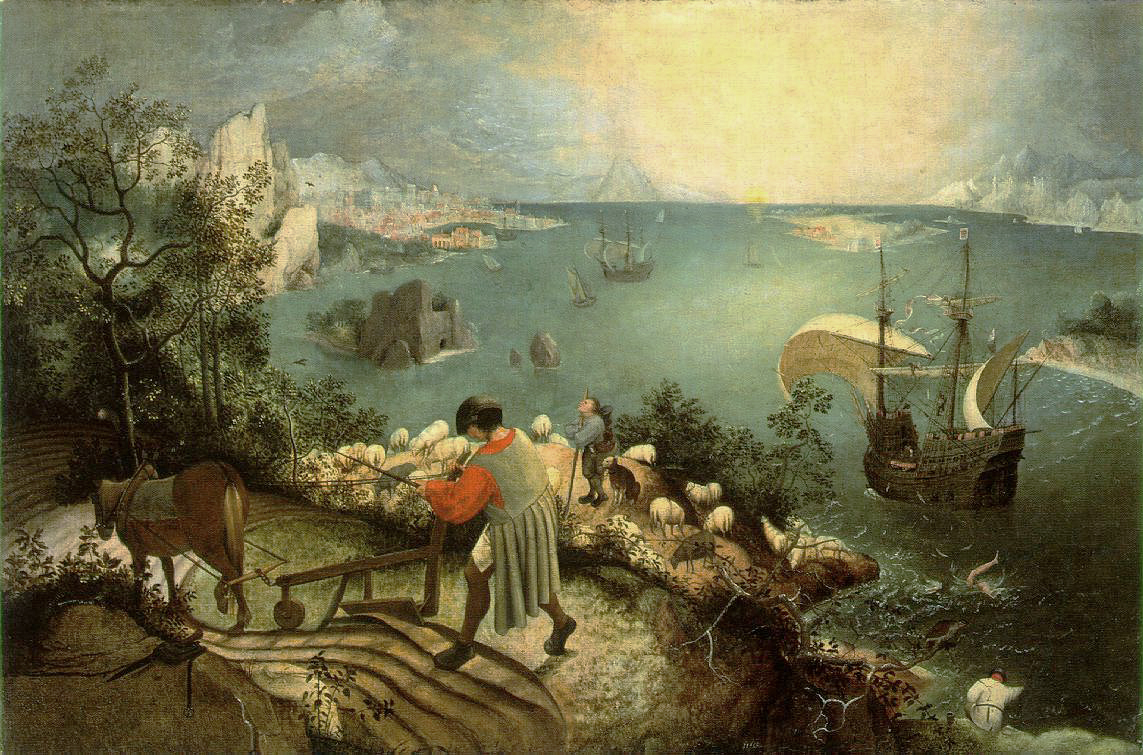
Creative writing teachers love the “poem about a painting” exercise, in which you take your class to an art museum, dump ’em in front of a Jackson Pollock, and then chortle to yourself as they spend the next twenty minutes trying to come up with synonyms for drip. In “Musée des Beaux Arts,” Auden stares hard at Brueghel’s Landscape with the Fall of Icarus and shows us how ekphrasis should be done:

IcarusAbout suffering they were never wrong,
The Old Masters; how well, they understood
Its human position; how it takes place
While someone else is eating or opening a window
or just walking dully along;
How, when the aged are reverently, passionately waiting
For the miraculous birth, there always must be
Children who did not specially want it to happen, skating
On a pond at the edge of the wood:
They never forgot
That even the dreadful martyrdom must run its course
Anyhow in a corner, some untidy spot
Where the dogs go on with their doggy life and the torturer’s horse
Scratches its innocent behind on a tree.
In Breughel’s Icarus, for instance: how everything turns away
Quite leisurely from the disaster; the ploughman may
Have heard the splash, the forsaken cry,
But for him it was not an important failure; the sun shone
As it had to on the white legs disappearing into the green
Water; and the expensive delicate ship that must have seen
Something amazing, a boy falling out of the sky,
had somewhere to get to and sailed calmly on.

B is for Bly, Robert

I know, I know. Robert Bly. Mr. Iron John. He’s just so… embarrassing. Whenever I hear his name, I picture a gaggle of chubby accountants standing in a circle in a moonlit forest, howling pointlessly at the moon. After a while they grow tired, these lardy, booming babies, so they lie down in the mud and share tales of man-sadness. Now that I no longer kill wildebeests with my bare hands, my life has lost all meaning! Now that my wife has been promoted to Head of Marketing at Zappos, my penis has stopped working! They are sheepish at first, ashamed, but after a while they grow bold. They are men, damn it! They paint their faces with mud and admire one another’s terrifying pubic hair. DUMB. Still, men’s movement nonsense aside, Robert Bly writes some lovely poems. He’s very good at birds and seals and weather. Here’s an excerpt from “August Rain”:

The older we get the more we fail, but the more we fail the more we feel a part of the dead straw of the universe, the corners of barns with cow dung twenty years old, the belt left hanging over the chair back after the bachelor has died in the ambulance on the way to the city. These objects ride us as the child who holds on to the dog’s fur; these objects appear in our dreams; they are more and more near us, coming in slowly from the wainscoting; they make our trunks heavy, accumulating between trips; they lie against the ship’s side, and will nudge the hole open that lets the water in at last.

I recommend Eating the Honey of Words, a collection spanning fifty years of his work. Just ignore the icky title, and skip all poems featuring spirit horses.

Might of Megadeth

This week Adam introduces us to the masterful Megadeth…

MegadeathThere are four different bands that are generally referred to when discussing the origins of thrash/speed metal. This group has been given the nickname “The Big Four.” The four bands consist of Metallica, Megadeth, Slayer, and Anthrax. These bands are responsible for the birth of speed metal, as they were the first of their kind to emerge from the glam rock scene, which had consisted of more radio friendly, pop oriented groups such as Poison, Motley Crue, Cinderella, and Twisted Sister. When the Big Four began releasing their more aggressive, harder sounding style of metal, they gained a tremendous following in the metal underworld, which was growing tired of bands whose members were cross-dressers who would always sing about having sex or being in love. Of the four bands that make up the Big Four, Megadeth was the most prominent.

Megadeth is fronted by guitarist/vocalist Dave Mustaine, who is worshipped and idolized by thousands of heavy metal connoisseurs and admirers. What makes Mustaine such a prolific figure in the birth of thrash metal is that not only is he the front man of Megadeth, but prior to forming Megadeth, Mustaine originally played guitar for Metallica when they were first formed. He was later fired, however, because of his drinking and ongoing reckless acts of unpredictable behavior. Metallica’s front man James Hetfield is quoted in the Megadeth Behind the Scenes documentary saying the following about Dave Mustaine: “We started to all feel that he was on the road to killing possibly all of us.”

When Metallica moved from San Francisco, where they originally formed, to New York, where they were set to record their first album, their first order of business was to get rid of Dave Mustaine. According to Mustaine as well as the members of Metallica, their chosen method of firing him was rather deceitful, if not cruel. The three members of Metallica at the time, James Hetfield (guitar/vocals), Lars Ulrich (drums), and Cliff Burton (bass), woke Mustaine up as he was sleeping on a mattress in the back of their tour van and told him he was fired, without offering any explanation or a second chance for him to change his ways. They then told him they were going to drop him off at the bus terminal where he was to take the four-day ride back to San Francisco by himself. When he returned to the City by the Bay, Dave Mustaine’s first mission was to form another band to get back at his former band mates of Metallica, thereby creating Megadeth.

The first line up for Megadeth consisted of Dave Mustaine on guitar and lead vocals, Chris Poland on lead guitar, David Ellefson on bass, and Gar Samuelson on drums. Mustaine at first only planned on playing guitar for Megadeth, but during auditions for lead singers, it was felt that none of the potential singers could match Dave’s intensity as a front man. It was from there on that Mustaine would become the lead singer as well as guitarist of the newly formed Megadeth.

Megadeth’s first album was entitled Killing Is My Business… and Business Is Good. This album immediately grabbed the attention of metal fans, who were more than eager to catch a glimpse of the band fronted by the man who was too maniacal for Metallica. As successful as their first album was, Megadeth would prove themselves as titans of speed metal even more so with their next album, entitled Peace Sells… but Who’s Buying? This album consists of legendary metal tracks such as “Wake Up Dead,” “Devil’s Island,” and the title track “Peace Sells.”

“Wake Up Dead” is the opening track to Peace Sells… but Who’s Buying? and it instantly kicks off with the intense ferocity and musical attitude that would become Megadeth’s trademark.

Dave Mustaine’s guitar solo at the end of this song is played in the Phrygian Mode, giving it a sound that would be used by many other metal acts that would follow. The song is about a woman named Diana, who Dave Mustaine was cheating on his girlfriend with at the time. In the song, Mustaine sings about coming back from a night on the town with his lover Diana, and his attempt to get back in bed safely without his girlfriend at the time figuring him out. The opening lyrics to this song portray this:

I sneak in my own house
It’s four in the morning
I’ve had too much to drink.
I’ll say I was out with the boys
I creep in my bedroom, and slip into bed
I know if I wake her, I’ll wake up dead

Megadeth has gone on to release twelve more albums since Peace Sells… but Who’s Buying?, but Peace Sells would arguably be their most astounding album. Megadeth has been around for over two decades and have still managed to stay together, despite numerous line up changes and the near fatal overdose of Dave Mustaine himself. They continue to this day to stun the metal audience with their musical integrity and extraordinary playing.

What’s Your Emergency?

People ring the emergency police number for the daffiest reasons. For example, this woman troubled the good folk at the Avon and Somerset Constabulary with her concerns regarding a hungry squirrel:

And that brings us, ever so tangentially, to an item of literary news: you should go read Corwin Ericson’s new book, Checked Out OK, a baffling and hilarious compilation of hundreds of police log items from small towns in Western Massachusetts:

9:55 a.m. – A Rolling Green Drive resident told police that his girlfriend has been receiving poems at her Hadley workplace from a 60-year-old man. Amherst police advised the man to contact Hadley police about the problem.

12:51 a.m. – Police assisted people who were observing the salamanders crossing Henry Street.

Other reported concerns include people licking the road and ducks behaving oddly.

How Do I Get My Book Published?

Yes indeed, that is a link-bait title: How do I get my book published? is the webbernet’s third most googled inquiry, after How do I get vomit out of my shoe? and HOW DO I TURN OFF CAPSLOCK? So, following on from our somewhat unhelpful “Should I Get an MFA?”, we present a guide to getting that creepy manuscript of yours into the hands of unsuspecting shoppers.

First up, ask yourself if you have written a good book. You probably haven’t; most books aren’t good. Of course, some books that are not good still get published.

Bad Book

But unless you are recounting that one time you were shot in the face by your husband’s frolicsome teenage lover, you should probably assume your book needs to be good in order to be published. Here are some signs your book is not good:

  • It contains the sentence “As they were resting, Mariuccia prepared a delicious stew with the lukewarm placenta.”
  • Your book is called Peas: The Hidden Menace.
  • You find the whole you’re/your thing so darn confusing.
  • There is only one female character in your book, and her name is Antigone Bean. She wears smudgy blue eyeliner and a dirty denim jacket. She has a tragic past, but cannot speak about it. She draws willows in notebooks. She is irresponsible and irresistible!
  • You would describe your book as being about “finding” something—love; self; self-respect. (Unless that something is your keys, in which case I am very curious how those 80,000 words are going to play out, Nicholson Baker.)
  • You wept a lot while writing it.

So far, so maybe not not-good? Great! Show your book to several cruel and clever friends, and ask them to be brutal. Make sure one of them has a talent for proofreading, since almost any manuscript with a mistake on the first page will be rejected. Do not think “But it doesn’t have to be perfect! The publisher will fix it!” Most people who work in publishing love words, and endeavor to use them well; if you don’t demonstrate a similar love of language, they’re going to think you’re a clodpate. Also, please remember that publishers drink heavily from 11am onwards, and the drink makes them cruel. They are looking for reasons to laugh at you. Don’t give them the satisfaction!

Note that you will need to send this potentially not-utterly-shit book to an appropriate publisher. This is a tricky step for many people. I used to work for a company that published cookbooks—that was all we published: muffins; sausages; quick and easy meals for two—and yet we received many, many submissions from memoirists, children’s book authors, and poets. Dear Sir [my vagina has already condemned you to the dustbin, you dickwizzle!], I have written a children’s book entitled Lester The Giraffe Goes To The Crematorium. It is a confronting tale for children aged 3-5. Would you be interested in publishing it? No! No! Unless Lester the Giraffe can be turned into a nice casserole in twenty minutes and served with a side of blanched escarole, no! What is wrong with you? This step is not difficult. Here we go:

Identify the type of book you have written. Go to a bookstore. Find a book of the same type. Now take out a pen and write down the name of the company that published that book. Bingo!

Finally, the submission itself. Some publishers will only accept submissions that have been vetted by an agent, in which case you’ll need to find an agent. Good luck with that. Other publishers are happy to glance at any old tat that shows up in their slush pile. Some agents and publishers only want to see a query letter, while others prefer to receive the entire manuscript. It’s a crapshoot. If google won’t help you discover the particular requirements of your prospective agent or publisher, I’d just go for broke and send ’em the entire thing.

Your manuscript should be presented in the dullest font imaginable. If you insist on using a whimsical, curlicued font—it’s just so me!—let me save you some money on postage and tell you to promptly throw your manuscript into a pond. Also, do NOT bind your manuscript into some kind of book facsimile. Nothing makes a publisher laugh harder than evidence that you took a trip to the printing department at Kinkos. (Also, everyone knows that the printing department at Kinkos is situated in the midsection of Satan’s fiery rectum.) Here is a conversation that has taken place nowhere ever:

“So, Robert, shall we publish A Fiery Fondness or Make Mine a Mochachino?”
“I like the second one, Jemima. The manuscript has been thoughtfully bound to look quite like a book, and therefore I think it would be more suitable as a book. You see, because I possess no imagination, or indeed any basic cognitive abilities, I appreciate that the author has taken the time to show me that this manuscript could indeed be successfully formed into a book shape.”
“Great, Bobby! Me too!” [High fives.]

No sir, you will not fool anyone into thinking you have written a book just by making it look like a book.

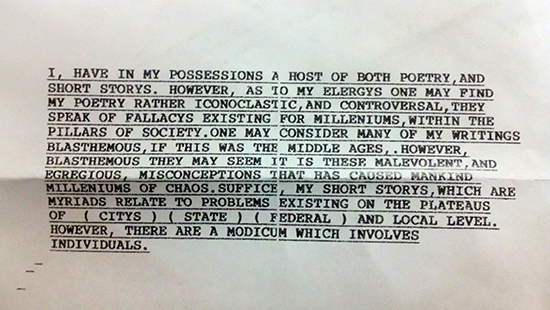
You’ll need to include a cover letter. Don’t make it odd. Here is an example of an odd cover letter we once received:

Cover Letter

Don’t do that. In your cover letter, do not state that your chiropractor enjoyed the book, or that you once had a short story published in the online journal Sunny Summer Tuesdays. No one cares. Do not use fancy paper; you are not inviting the publisher to a garden party. Also, please be aware that writing “I retain all copyright to my work”—or drawing a little © on every page of your manuscript—will instantly reveal you to be nuts; writers who are paranoid about their ideas being stolen are the maddest of the mad. No one is going to steal your daft idea—and if they did, writing “I retain all copyright to my work” in your cover letter is not going to make a blind bit of legal difference in your awesome lawsuit against Bob’s Rectangular Books Inc. Do not mention the possibility of an advance, you gauche bastard. And do not mention that writing the book has healed you in any way. That’s just gross. (As Maya Angelou once said, “Your eczema? Your business!”)

You should also include a one-page synopsis of your book. Make it interesting. If you cannot write an interesting synopsis of your book, I’m afraid you will need to write another book.

I hope this has been helpful. And fear not—if you find you have no talent for writing, you can glue an empty Fresh Direct box to a fox carcass, title it Darling Hunter: Mind Waves III, and call yourself The Mighty Stan. The world of conceptual art will welcome you.

Assorted Astonishments

Here we have a grab bag of artsy bits and bobs for your mid-week delectation. First up, if you live in New York, you should hurry along to the loveliest space in the city, Grand Central Terminal’s Vanderbilt Hall, to check out this galloping wonder:

http://vimeo.com/58803818#at=0

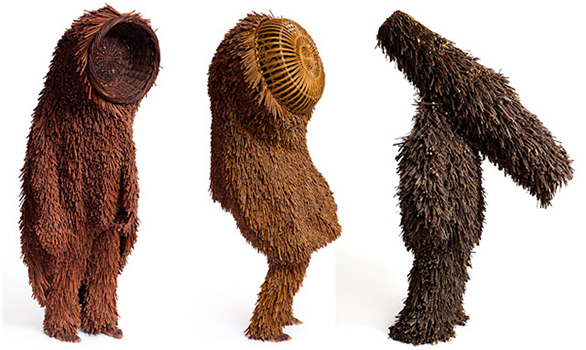
Dancing, noise-making horses in Vanderbilt Hall! Artist Nick Cave (this guy, not this one) creates soundsuits, full-body costumes that make music when you wriggle about. His first soundsuits were made out of twigs:

Soundsuits-Twigs

And then he moved on to space costumes and furry friends:

Soundsuits-Space Soundsuits-Hair

Here’s Cave talking about how the soundsuits came to be:

These look so joyous and silly, and are quite possibly the best thing you could encounter on your lunch-break stroll through Grand Central. Be sure to take a friend, or befriend a stranger, so you can trade secrets (or proposals) at the whispering gallery in front of the Oyster Bar.

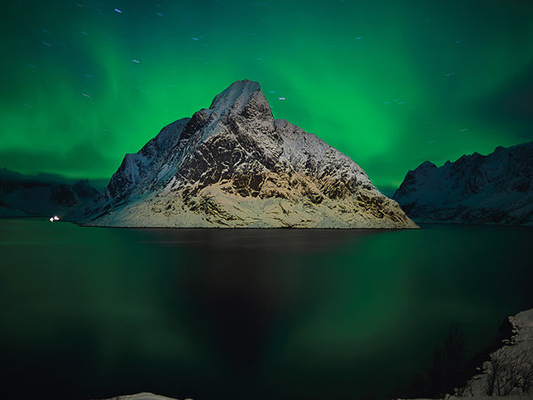
Next up: the Northern Lights. Karl Ove Knausgaard has written a short and lovely essay to accompany Simon Norfolk’s photo series, “The Magical Realism of Norwegian Nights”:

Northern LightsOh, that Arctic light, how concisely it delineates the world, with what unprecedented clarity: the sharp, rugged mountains against the clear blue sky, the green of the slopes, the small boats chugging in or out of the harbor, and onboard, the huge codfish from the depths, with their grayish-white skin and yellow eyes staring vacantly, or on the drying racks, where they hung by the thousands, slowly shriveling for later shipment to the southern lands. Everything was as sharp as a knife.

We love Knausgaard, and Simon Norfolk is well worth checking out, too. He’s best known for his eerie photographs of war zones and supercomputers: in this interview, he describes war photography as documenting “the military sublime.”

simon norfolk

And finally, from Bill Bryson’s A Short History of Nearly Everything (a book my father has read six times, and can quote from at length, which is what makes Christmas dinner such a special occasion in our household), a few words on the astonishing atom:

Atoms really get around. Every atom you possess has almost certainly passed through several stars and been part of millions of organisms on its way to becoming you. We are each so anatomically numerous and so vigorously recycled at death that a significant number of our atoms—up to a billion for each of us, it has been suggested—probably once belonged to Shakespeare. A billion more each came from Buddha and Genghis Khan and Beethoven, and any other historical figure you care to name. (The personages have to be historical, apparently, as it takes the atoms some decades to become thoroughly redistributed; however much you may wish it, you are not yet one with Elvis.)

My Name is Tracey and I Watch Cats

I worry about my brain. I think it’s broken. I blame these little guys:

I used to read Kafka; now I watch cat videos. When I was a kid, I read a book a day. They weren’t the most challenging books—Jill and Her Pony; Misadventure at the Gymkhana; Jill’s Pony goes to the Glue Factory!—but still, they kept my brain busy. Reading occupied all of my spare time, and my most frequent whine was “Just let me finish this chapter!” When I wasn’t reading, I was devising methods for future reading; my parents were strict about lights out, so reading into the wee hours involved some cunning. I tried reading under the covers with a flashlight, but I was quickly found out, and the flashlight was locked away in a cupboard. Then I discovered that if I turned on the hall light and angled my bedroom door just right, I could read in the beam of light—so my parents removed the lightbulb, and for the rest of my childhood we felt our way down the dark hallway at night like the soon-to-be-slaughtered in a horror movie. Cue another brilliant plan: the sofa in the living room faced away from the hall door, so if I crawled silently out to the living room, I could slide myself and Jill’s pony under the sofa without anyone noticing—and the noise from the TV would disguise the sound of my pages turning! This plan worked well until, peeping out from under the couch one night, I accidentally witnessed some post-watershed TV debacle involving a man, a woman, and a very bloody pair of scissors, and had to confess my sofa-crime the next day in order to receive PTSD counseling from my mother. She gave me a hug and told me TV wasn’t real, and then my parents moved the sofa to the other side of the room.

All of which is to say: reading used to be really important to me. And now I watch cat videos. I watch videos of people in Russia driving eccentrically. I look at photos on Facebook. Here is a photo of a bowl of ramen that is about to be eaten by that Swedish woman I met once at a party. I play Candy Crush Saga (don’t pretend you don’t play Candy Crush Saga). I look things up on Wiki—last week I looked up sea otters, Catherine of Aragon, and the tiny island nation of Palau—but I remember nothing. I tell myself I’m reading an insightful Longform essay about autism, but really I’m just google-imaging fat tuxedo cat (try it; you’ll squee yourself). My brain wants screen candy.

kindleI thought the Kindle might help—I’ll trick myself into reading by putting my book on a tiny screen!—but the Kindle is such an appalling device that mostly I just end up ranting instead of reading. I know, I know, a bricks-and-mortar bookstore dissing the Kindle—quelle surprise! But seriously, what a daft piece of technology. It looks like it was ripped from the dashboard of a 1982 Lada. The user interface was designed with someone other than a human being in mind (an excitable squirrel, perhaps?); it’s awkward to hold in bed, where all the best reading is done; and even with the font set at its tiniest size, it takes about three seconds to read a single page, meaning that every three seconds you have to jab at that dim little screen and hope the very next page comes up. Sometimes the very next page does come up; sometimes you jab a little too far to the left and the previous page comes up—ah, previous page, what happy memories of three seconds ago!—and sometimes the Kindle gets all whimsical and skips gleefully to an entirely random page, at which point you realize it was never intended to be used as an e-reader, but rather was designed to be a challenging electronic game called Find My Page! You can try to find your page by selecting “Go To” and then the chapter, but this is no help if you don’t remember the name of the chapter you were just reading, or if the chapters are hundreds of pages long. Or you can “go to” a Loc (location) in your book, but alas this is impossible, because you don’t know your location. Why would you? It’s an entirely meaningless number; a long book has thousands of locations; and memorizing the location at the bottom of each tiny, stupid page would take longer than reading the tiny, stupid page itself. So you’re screwed! Silly you! Pick a location at random, go back, pick another one, and now get ready to jab at that tiny, stupid screen eighty-three times until you reach the very next page. See? Ranting, not reading.
Nope, the Kindle didn’t work. I think the only way to rescue my poor brain is to risk public humiliation. So here’s the Malvern Books book group pledge: in the next two weeks, I will read and finish a book (an actual book, with booky smells, obviously; not a mere collection of dimly lit locations), and then I shall come back here and tell you all about it. If I don’t keep my pledge, feel free to call me a colossal nitwit, and we can all stop pretending there’s any hope for my neurons. I’ll give in and buy a little bib and a sippy cup and just stare at poorly shot ten-second films of cats falling off counters for the rest of my days. You can mop the pixelated dribble off my chin when you come to visit me at the home.

If you’re feeling similarly afflicted with internetitis, or if, you know, you just want to read a book, feel free to join me. Our book group requires no baking, no use of the phrase I just couldn’t relate to his character, and there will be no ten-minute breaks in which we discuss crafts and Kegels. I will serve Negronis and day-old beans. And the book we’ll be reading is Spring Snow, the first novel of Yukio Mishima’s The Sea of Fertility tetralogy. Mishima was recommended to me by two dear friends. That other dear friend, Wiki, tells us that Mishima (1920-1975) is considered one of the most important Japanese authors of the twentieth century and, more interestingly, that he founded a private militia and committed suicide by seppuku after a failed coup d’état (dude totally stole Joyce Carol Oates’ exit strategy!) Here’s a 1969 interview in which he looks dashing whilst discussing Japanese nationalism:

So, who’s in? Let’s step away from our screens and spend the next two weeks immersed in Mishimaland. If you’re reading the Vintage Books edition, you’ll need to tear through twenty-eight pages a day, which should still leave a little time for—