Beside the Seaside

Apologies for the brief silence here at Malvern Books. We thought we’d escape the heat and take a little seaside break. The past few days have been spent paddling, reading, grilling, napping, and Backgammoning. Meanwhile, Operation Build a Bookstore is going swimmingly: the paint is up; the carpet is down; and a zillion books will soon be making themselves at home on our spiffy new shelves. And speaking of bookshelves, our rented vacation spot has a pretty nice set:

Cape Cod

A bit of an improvement from the dingy bach bookshelves of my childhood, which invariably contained seventeen Readers’ Digest Condensed Books and a well-thumbed copy of The Clan of the Cave Bear that fell open at the dirty bits. In contrast, the offerings on this beachy bookshelf include Rilke’s only novel, The Notebooks of Malte Laurids BriggeStephen Greenblatt’s Shakespeare biography, Will in the Worldand Anne Lamott’s Help, Thanks, Wow: The Three Essential Prayers (which she discusses in this NPR interview). Plenty to choose from, then—but it won’t feel like a proper beach vacation until I nod off in a rickety lawn chair with a Michener in my lap.

Poetry, J

Poetry Month is officially over, but that’s no reason to abandon our arbitrary and occasional Poetry A-Z series…

J is for Jackson, Laura Riding
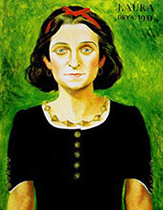
Laura JacksonLaura Riding Jackson (1901-1991) was a renowned American poet, essayist, and critic. She was also a woman with a hell of a lot of names, and she could occupy any one of a number of spots in a Poetry A-Z series: she was born Laura Reichenthal; was first published under the name Laura Riding Gottschalk; subsequently dropped Gottschalk and went with Riding; and finally adopted Laura Riding Jackson as her authorial name from 1963 onwards. Since we’ve reached J in our poets’ alphabet, we’re going to go with Ms. Jackson.

Jackson was born in New York, grew up in Brooklyn, and was educated at Cornell University, where she first started writing poetry. Her early work attracted the attention of the Fugitives, an influential group of young Southern poets and scholars whose members included Robert Penn Warren, John Crowe Ransom, and Allen Tate. They published her poetry in their eponymous literary magazine, The Fugitive, in 1923, and formally invited her to join the group in March 1925. When the group awarded her the prestigious Nashville Prize for poetry in 1924, they praised her “sound intellectuality” and “keen irony,” and noted that her poems were “concerned with profound issues.”

Around this time, Jackson’s first marriage, to her former Cornell history tutor Louis R. Gottschalk, was dissolving. The couple divorced in 1925, and at the end of that year Jackson moved to England. She’d been invited to Blighty by the poet Robert Graves and his wife Nancy Nicholson, and she moved in with the couple as soon as she arrived. Although this arrangement seemed to work for a while, it must eventually have become a rather difficult ménage à trois: Jackson jumped out of a fourth-floor window in 1929, nearly killing herself. This drama prompted Graves to leave his wife—quite the literary scandal at the time—and move with Jackson to Deià, Majorca. There they continued to run their small publishing company, Seizin Press, which put out a magazine, Epilogue (1935-1938), and published avant-garde writers like Gertrude Stein. With the outbreak of the Spanish Civil War in 1936, the couple left Majorca and lived in England and France before moving to America in 1939. They parted ways shortly afterwards, and Jackson began a relationship with the critic Schuyler B. Jackson.

In 1941, Jackson renounced poetry—she later claimed it was because she found poetry incompatible with truth. She married Schuyler Jackson and they moved to a citrus farm in Wabasso, Florida, where Jackson withdrew from public life. Together, the couple devoted themselves to a new task: producing a comprehensive study of language that was intended to offer “a fundamental re-evaluation” of the way words work. Schuyler Jackson died in 1968, and Jackson continued working on the project after his death; their book, Rational Meaning: A New Foundation for the Definition of Words, was posthumously published in 1997. It does not sound like a fun read.

Jackson hasn’t had the best press over the years. Virginia Woolf called her “a shallow, egotistical, cock-crowing creature” and William Carlos Williams referred to her as “a prize bitch.” She was blamed for breaking up Graves’ marriage, and she further damaged her reputation by sending lengthy, admonishing letters (referred to as “Lauragrams” by one frustrated reviewer) to anyone she believed had misrepresented some aspect of her life or work. Some critics see this as proof of an egomaniacal need for control, but a more generous interpretation is also possible: how could Jackson refrain from insisting that details matter when she was obsessed with “truth” and devoted her career, first as a poet and later as a scholar, to the notion of “a linguistically ordained ideal”?
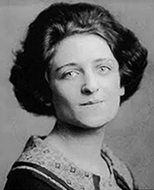
Laura JacksonIn any case, it seems a little unfair that so many discussions about Jackson as a writer seem to become messy squabbles over whether she was a homewrecking control freak or a misunderstood (if pedantic) romantic. What matters is the work itself, and there’s no denying that during the first half of her life, Jackson wrote some of the most original, serious-minded poetry of the twentieth century. She was prolific, producing eleven volumes of poetry between 1926-1939, and highly regarded by many of her peers. Berryman hailed her as “the peer of any woman now writing poetry in English” and Auden called her “the only living philosophical poet.” In fact, Graves once wrote the young Auden a letter in which he reprimanded Auden for imitating Jackson’s style. For a taste of her best work, I recommend the series “The City of Cold Women” (1924), published in its entirety in Poetry. Here’s an excerpt:

The Lovers

They come glowing to the gates of the city,
Armed with tenderness,
Resolute to parade
Beneath the windows of the cold women,
With their gifts warm on their shoulders.

The women sit frigidly smiling in their frames,
And their eyes are the eyes of Medusa.
Who but lovers,
Who but unslaked lovers may be starved so?

There is one bird left in the city of the cold women,
Forager of doorsteps,
Cosset of cold women.
It is sweet carrion they scatter to him.

* * *

Voices

Are there words thin enough for such thin lips?
Smiles are more tenuous than laughter,
And their only echo is pain.

* * *

Houses

The roofs of the city are a bleak mist
Brooding over the sharpness beneath them:
Walls stroked to corners by the hands of the cold women,
Fireplaces for irony.
We shall not wonder at rimed mirrors—
Windows give up their secrets,
Not mirrors.

In the houses of the city of cold women
There are shadows.
They may be children,
They titillate the light so bashfully.

There are tired lilies, propped to apathy.
Thursday Three #7

This week’s assortment of stuff in triplicate has no theme whatsoever. Or perhaps that’s a little defeatist? What I should say, rather, is that the theme of this post has yet to be determined, but I am quietly confident that you, astute reader, will immediately spot the common thread in this seemingly random rug of nonsense.

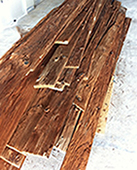
Mushroom Wood1. Malvern got wood. (Sorry.) Yes indeed, the mushroom wood has arrived and will soon be affixed handsomely to various Malvernian walls. Isn’t she lovely? For those of you lacking knowledge vis-à-vis all things timber, mushroom wood isn’t actually made from mushrooms—it’s usually made from cypress, cedar, or hemlock. It gets its fungal moniker from its day job: it’s used to make the bins in which mushrooms are commercially grown. Once the wood has done its bit for mushroomkind, it can be recycled as lovely, low maintenance, eco-friendly siding. You’d be well advised not to line your bathroom walls with this stuff, however—it’s possible that the wood might still contain a few wee mushroom spores, and mushroom spores tend to… blossom when things get damp.
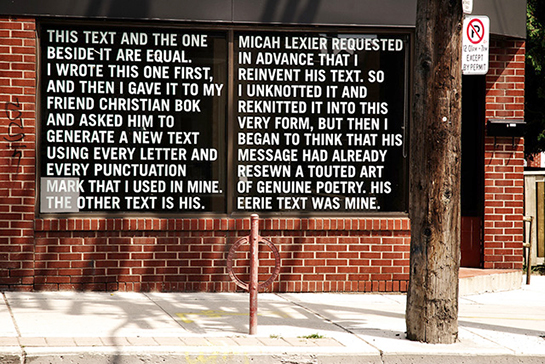

2. I very much like this collaboration between artist Micah Lexier and poet Christian Bök:

Lexier and Bök

Eerie indeed! What does one call a paragraph-long anagram? One commenter suggests it should be an anagraph, while another plumps for paragram. In any case, I love how Bök’s reinvented text becomes curiouser and curiouser as he runs out of letter options—and yet that final line is so perfect, I wonder if he set aside the letters for it right from the beginning? I like to imagine that “resewn a touted art of” was frantically cobbled together from leftover letters. I also like to imagine that if I’d been in charge, that phrase might have read “his message had already rated stoneware tofu genuine poetry.” Bök is best known for his poetry collection Eunoia, which won the 2002 Griffin Poetry Prize. It’s an intriguing project: the book has five chapters, and each chapter consists of words that can use only one of the vowels (so in Chapter A, for example, a is the only vowel that makes an appearance). Bök claims he read the entire Webster’s dictionary five times while working on the book. And for his next trick, Bök will soon be making a string of DNA write a poem.

3. Finally, in anticipation of July 4th and your imminent departure for vacationland, here’s a glum little quote from Alain de Botton’s On Love:

The future has some of the satisfactions and safety of the past. I recalled that as a child every holiday grew perfect only when I was home again, for then the anxiety of the present would make way for stable memories. I spent whole childhood years looking forward to the winter holidays, when the family took two weeks to go skiing in the Alps. But when I was finally on top of a slope, looking at pine-covered valleys below and a fragile blue sky above, I felt a pervasive, existential anxiety that would then evaporate from the memory of the event, a memory that would be exclusively composed of the objective conditions (the top of a mountain, a fragile blue sky) and would hence be free of everything that had made the actual moment trying. The present was unpleasant not because I might have had a runny nose, or been thirsty, or forgotten a scarf, but because of my reluctance to accept that I was finally going to live out a possibility that had all year resided in the comforting folds of the future. Yet as soon as I had reached the bottom of the slope, I would look back up the mountain and declare that it had been a perfect run. And so the skiing holiday (and much of my life generally) proceeded: anticipation in the morning, anxiety in the actuality, and pleasant memories in the evening.

Poetry, I

Poetry Month is officially over, but that’s no reason to abandon our arbitrary and occasional Poetry A-Z series…

I is for Inez, Colette

Colette InezI couldn’t think of a poet whose last name started with the letter I, so I asked google to help me out, and google said, hey, you silly sausage, how about Colette Inez? Nice job, google! (And if you’re reading this today, June 26th, please google the word gay and enjoy the celebratory rainbow doodle.)
Colette Inez was born in Europe in 1931 under grimly romantic circumstances:

I was conceived in Paris, the unexpected outcome of a love affair between a French archivist and a French-American priest whose mother claimed Irish descent. In her ninth month, my mother crossed the border into Belgium where I was born and soon after packed off to the Catholic sisters, my stern caretakers for the next eight years.

At the age of eight, with Europe on the brink of war, Inez was sent to America, where she spent her adolescence in a fairly menacing Long Island foster home. She found solace in literature, turning to the works of Emily Dickinson, Robert Frost, and Robinson Jeffers, who moved her with his “disdain for mankind and love of hawks, horses, and cliffs.” She won her first poetry competition while she was an undergraduate at Hunter College, and this gave her the necessary confidence to immerse herself in the New York poetry scene. She began attending readings at the 92nd Street Y and hanging out at poetry cafés in the Village. After graduating in 1961, she initially found work “in the blur of big corporate offices” as a switchboard operator and secretary, before beginning her teaching career. Over the years she lectured at a number of universities, including Bucknell, Cornell, the New School, and Columbia, where she was a long-time faculty member of the undergraduate writing program.

Inez has published ten poetry collections and a memoir, The Secret of M. Dulong. Her first collection, The Woman Who Loved Worms (Doubleday, 1972), won the Great Lakes Colleges Association National First Book Award and was reissued by Carnegie Mellon University Press in 1991. More recent volumes include the excellently titled Spinoza Doesn’t Come Here Anymore (Melville House, 2004), and Horseplay (WordTech, 2011). She has won numerous awards, including two Pushcart Prizes, and has received fellowships from the Rockefeller and Guggenheim Foundations and from the National Endowment for the Arts.

Her poetry is direct, fiery, and ebullient, full of sentiment but seldom sentimental. She’s also a courageous and deeply personal writer, unafraid to examine the legacy of her peripatetic and troubled childhood. In an essay for the Poetry Society, Inez had this to say concerning the issue of identity:

I’d have to describe myself as a narrative, lyric poet who writes in American English. I am an American citizen, long and well-married to a Brooklyn-born freelance writer whose parents were immigrants from the Polish Pale. I am an American whose roots are European although I certainly keep in mind that my true ancestors were also one-celled plants floating in water. My interests are varied, yet the mysteries of my French family and their history continue to inform and . . . haunt my work.

Here are a couple of my favorite Inez poems:

The Tuner

Choose how the forest
was deprived of a tree.
Blight, wind, fire?
I once lost a cantankerous man,
who tuned pianos.
Tall, an oak to me,
he goaded music from the keys.
I almost see him biting on his pipe,
tamping down the London Dock.
Blown back leaves, birds, moths,
the gestures here.
Pendulum, tool box auctioned off.
Summer roars another blast of green.
“I like to see a piano perspire,”
he’d say to me, slamming the lid
of the Baldwin.

* * *

Blind Mouths

He looks at a circle
of mouths.
Nothing to say.

His grandparents sit
in another blind time,
each in a circle
of worrying eyes.

The children, away,
rolling like hoops,
a distant park
eating their screams.

In the speed of hunger
his parents meet,
two round mouths
to devour their child.

Round as moons
the mirrored plates
reflecting the rooms
in a widening haze
of losses and blame.

The bicycle locked
in the fog of old toys,
wheels, two mouths
of spokes and dust.

Nobody speaks.
The table is cleared.
He looks at a field of snow,
the whiteness longer
than he dreams,
a blizzard of scraps
confusing the house

large as a van
devouring roads
as it moves through the years
pregnant with his furniture.

Tuesday Tidbits

Here’s a little link love for y’all on this hot and humid Tuesday:

  • Big BrotherLionel Shriver’s new novel, Big Brother, is getting mixed reviews. The book is a fictionalized account of Shriver’s struggle to “rescue” her obese brother, who died of a heart attack in 2009 (just days after Shriver published this article about their relationship). It sounds like a… tricky subject for a novel, and reactions to the book have been decidedly mixed. While the Telegraph’Elena Seymenliyska gives Big Brother high marks for originality and sensitivity, John Crace of the Guardian takes great delight in skewering it in six-hundred acerbic words, and Zoe Williams calls it “more an exorcism of guilt than a functioning novel.” Meanwhile, the Independent’s Carole Angier declares that while Shriver is “wonderful at the things she is always wonderful at,” like pace and plot, the novel’s unreliable narrator is ultimately “annoying” and self-defeating. As always, such conflicting reviews make me extra keen to read the novel myself and pick a side. (BTW, this review in the Age wins the Best Title award.)
  • In an essay in the Guardian, Kathryn Heyman asks why there are so few women in the London Review of Books and is told by the Review’s editors that… it’s complicated. Hardly, she retorts:

By publishing a literary journal with about 70% male contributors in every edition, the implicit message is that male writing is better than female writing. If you believe this to be the case, have the courage of your convictions and admit it, so that we can acknowledge what the argument really is. If however, you believe that women writers are equal to male writers, then try harder. It isn’t complicated. It’s simple.

  • Want to save yourself the price of a movie ticket? Avoid Sofia Coppola’s latest deep-as-an-eyeshadow-pan music video movie, The Bling Ring, and instead check out Nancy Jo Sales’ “The Suspects Wore Louboutins,” the Vanity Fair essay on which the movie is based. (Fun fact: the burglarizing brats had to break into Paris Hilton’s house five times before she noticed anything was missing.)
  • KanyeKanye West uttered some sublime nonsense in the New York Times a couple of weeks ago; this slideshow reminds us he has been full of (genius) wind for a long, long time. As the Man himself says, “Damn Ye, it’d be stupid to diss you / Even your superficial raps is super-official.”
  • In the Philadelphia Review of Books, esteemed Malvern pal Lee Klein has published a thoughtful review of the second volume in Karl Ove Knausgaard’s six-volume My Struggle series. I’m halfway through the book and finding it every bit as riveting and astounding as its predecessor.

Many Happy Muldoons

Let’s raise a pint of Guinness and say sláinte to poet Paul Muldoon, who turns sixty-two today. Muldoon was born in County Armagh, Northern Ireland, and was educated at the Queen’s University of Belfast, where he studied under Seamus Heaney. He has lived in the United States since 1987, and is currently Howard G.B. Clark Professor of the Humanities and Chair of the University Center for the Creative and Performing Arts at Princeton University—and, as if that isn’t enough of a career mouthful, he’s also the poetry editor of The New Yorker, a guitarist in a rock band called Rackett, and an amateur actor. He has received numerous awards, including the T. S. Eliot Prize, the Irish Times Poetry Prize, the Pulitzer Prize, and the Griffin International Prize for Excellence in Poetry. Most importantly, he owns this insane hound:

Paul Muldoon

Muldoon’s poetry is often contrasted with that of his former mentor, Heaney, with Heaney cast as “the people’s poet”—his poetry is better known and he enjoys greater popular success—and Muldoon as “the poet’s poet,” a writer whose work is too cryptic and obscure for a more general readership. It’s true that Muldoon loves wordplay and allusion, and his poetry is full of wit and riddles. (In a New York Times book review, Peter Davison remarked that Muldoon is “doubtless a dab hand at crossword puzzles.”) But if you don’t mind putting in a little work, there’s a lot of fun to be had with Muldoon’s postmodern high jinks. In honor of his birthday, let’s enjoy a little Muldoonery…

Symposium (you can hear Muldoon read it here)

You can bring a horse to water but you can’t make it hold
its nose to the grindstone and hunt with the hounds.
Every dog has a stitch in time. Two heads? You’ve been sold
one good turn. One good turn deserves a bird in the hand.

A bird in the hand is better than no bread.
To have your cake is to pay Paul.
Make hay while you can still hit the nail on the head.
For want of a nail the sky might fall.

People in glass houses can’t see the wood
for the new broom. Rome wasn’t built between two stools.
Empty vessels wait for no man.

A hair of the dog is a friend indeed.
There’s no fool like the fool
who’s shot his bolt. There’s no smoke after the horse is gone.

* * *

The Fish Ladder (from Maggot)

Forty years since I proved a micher
and ate blackberries
along the plank road by a dilapidated weir
that had somehow failed to pave
the way from being a local eyesore

to something on which we might rest assured,
a corduroy causey thrown down by Caesar
across the Fens
being cut and dried by comparison.
Though a flax dam

in which our enthusiasm may be damped
as we grope
towards clarity with the high-strung
sea trout and salmon
is not to be confused with the bog hole

in which my father proved a last ditcher
during World War II, a flax dam may be the very
pool in which we find ourselves in the clear.
Less and less, though, will bog water stave
off the great gobs of gore

that come and go like Jonah’s gallows gourd
from the wound where a doctor still views his tweezer
through the lens
of day-to-day life in a Roman garrison.
Even Jonah has run himself ragged as he swam

against the workload with which he’d been swamped
those last few months in the hope,
I expect, of skipping a rung.
Sometimes the more we examine
things, the less we understand our dual role

as proven escape artist and proven identity switcher.
Just look at how two ferries
have gone down within plain sight of the pier
but only one tatterdemalion wave
has managed to stumble ashore.

And here’s Muldoon reading “A Hummingbird”: